Last Updated: October 14, 2026
Last Updated: October 14, 2026





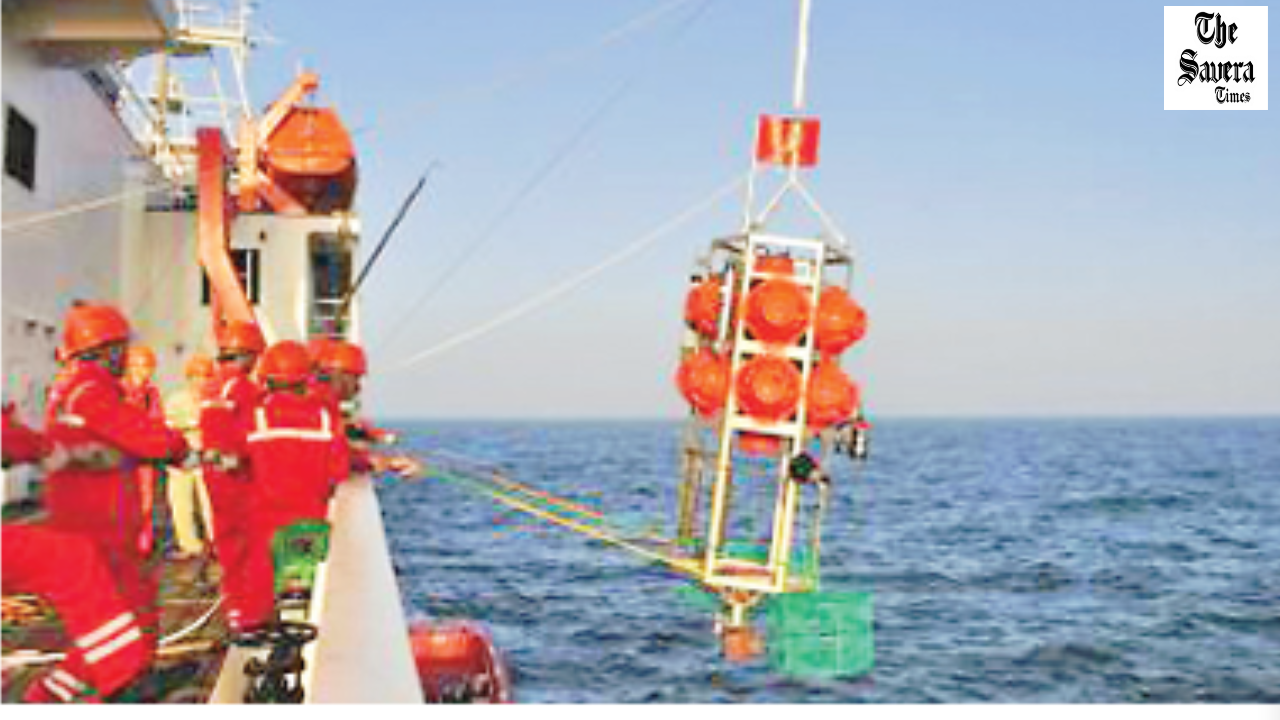
China is expanding its presence through infrastructure, civilian, quasicivilian and dual-use instruments, not just artificial islands and military bases. Beijing is increasingly relying on a diverse set of civilians, quasi-civilian and dual-use instruments that expand its presence in contested waters without requiring a major military escalation. Discussion about China’s maritime ambitions has focused on artificial islands, military assets: warships, missiles and airstrips, but the recent developments reveal a broader strategy. The appearance of a temporary Chinese platform near Scarborough Shoal in June attracted far less attention than a naval exercise or a coast guard confrontation would have generated. Yet the episode may prove more revealing than either. The assumption regarding China completing the physical foundations of its regional strategy with the islandbuilding campaign looks “premature”. The extensive reclamation work reported at Antelope Reef demonstrates that Beijing remains willing to expand its footprint when strategic conditions are favourable. More importantly, recent activity points to a shift in emphasis. The focus is no longer limited to creating fixed military facilities. Attention is increasingly directed toward maintaining a continuous presence through a wider ecosystem of infrastructure and services. Activities like Coast Guard patrols, communications systems, scientific expeditions, fisheries management measures and floating platforms all contribute to that objective. This approach offers significant advantages. It reinforces Chinese claims while reducing the risk of triggering the kind of international response that accompanied the original island-building campaign. The floating platform at Scarborough Shoal looks modest in size and temporary, which shows how China can establish a semi-permanent presence without undertaking a major construction project. Such structures occupy an ambiguous space between civilian and governmental activity. They are easier to justify politically than military installations and easier to deploy than permanent facilities. Many of these instruments used by China in the contested waters operate in a similar grey zone, be it the vessels that collect scientific data while extending state presence or Coast Guard ships performing law-enforcement functions while advancing sovereignty claims. The most important development may therefore be institutional rather than military. China’s objective is not only to maintain access to contested maritime areas but also to normalise its role as the primary authority operating within them. For regional actors, the challenge is that many of the tools involved fall outside traditional deterrence frameworks. Naval power remains relevant, but it is often ill-suited to respond to scientific surveys, fisheries regulations or temporary civilian infrastructure.
Jerusalem: The Israel Defence Forces (IDF) said in a statement on Wednesday that it had killed a Hamas...

US President Donald Trump has promised that if the Republican Party retains control of both houses of Congress,...
New Delhi: American singer Mary Millben on Wednesday made an explosive claim about the Delhi protests, alleging that...

Prime Minister Narendra Modi on Wednesday wished Pope Leo XIV a speedy and complete recovery. The Pope underwent...

A large group of Harvard University alumni expressed concern on Wednesday over the alleged negative propaganda and campaign...

US Secretary of State Marco Rubio will visit India and Uzbekistan from October 17 to 22. During his...
Aries: The day will be auspicious...