Last Updated: October 15, 2026
Last Updated: October 15, 2026





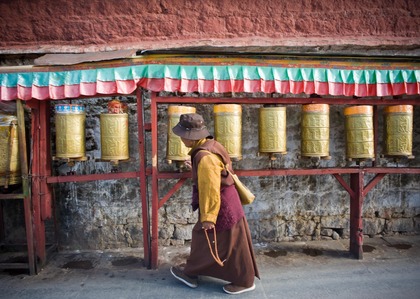
China’s education policies in Tibet are increasingly becoming a battleground over identity, history and cultural preservation. The Eurasia review, said in a report that educational reforms implemented under the Chinese Communist Party (CCP) are reshaping how Tibetan children understand their own heritage. The struggle for Tibet extends beyond politics and territory and has become “a battle over memory, identity, and the right of a people to tell their own story”. Tibetan students are increasingly being taught narratives that portray Tibet as an inseparable part of China while minimising or omitting Tibet’s distinct political, religious and cultural history. School curricula often emphasise the role of successive Chinese dynasties in Tibet while downplaying periods of Tibetan self-rule and the wider historical influence of Tibetan civilisation across Central Asia and the Himalayan region. Educational content increasingly presents the Chinese Communist Party as the primary force behind Tibet’s development, reducing Tibetan history to a prelude to what Beijing describes as the region’s “liberation” in the 1950s. The declining presence of Tibetan Buddhism, literature, folklore, oral traditions and indigenous knowledge systems in educational materials. Particular attention is drawn to language policies. Citing research by human rights organisations, the report claims that nearly one million Tibetan children have been placed in state-run boarding schools that primarily operate in Mandarin. It also notes that revisions to China’s National Common Language Law in December 2025 made Mandarin the principal language of instruction across schools, replacing earlier provisions that allowed minority languages to serve as teaching mediums. These developments risk producing generations of Tibetans increasingly disconnected from their linguistic and cultural heritage. Protecting Tibetan heritage requires more than preserving monuments or religious sites. A civilisation survives when its history, values, and language are passed from one generation to the next. Schools play a decisive role in that process. When educational materials fail to reflect Tibetan perspectives, students lose access to the intellectual and cultural foundations of their own society. Tibet has been an inseparable part of China since ancient times. However, it cites scholars and Tibetan leaders who dispute that position, pointing to historical research and primary-source documents that describe Tibet as having functioned as an independent political entity. Rejecting the rewriting of Tibetan history is therefore not only a defence of the past. It is an investment in the future of one of humanity’s most distinctive cultural legacies
Jerusalem: The Israel Defence Forces (IDF) said in a statement on Wednesday that it had killed a Hamas...
US President Donald Trump has promised that if the Republican Party retains control of both houses of Congress,...
New Delhi: American singer Mary Millben on Wednesday made an explosive claim about the Delhi protests, alleging that...

Prime Minister Narendra Modi on Wednesday wished Pope Leo XIV a speedy and complete recovery. The Pope underwent...
A large group of Harvard University alumni expressed concern on Wednesday over the alleged negative propaganda and campaign...
US Secretary of State Marco Rubio will visit India and Uzbekistan from October 17 to 22. During his...

Aries: The day will be auspicious...