Last Updated: October 21, 2026
Last Updated: October 21, 2026





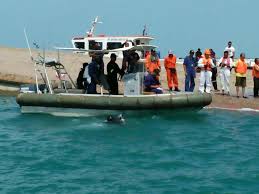
After Iran demonstrated that it can exploit its geographical advantage to use the Strait of Hormuz as a chokepoint and monetise transit through the narrow waterway by charging a fee on ships, the trend appears to be spreading, with Indonesia sending a signal that it is contemplating similar steps to raise revenue from the Strait of Malacca.
Critical sea trade passages are no longer deemed safe and neutral. Instead, they are increasingly viewed as assets that can be regulated, priced, or leveraged. About 50 per cent of India’s crude and almost 90 per cent of its LPG and LNG imports pass through Hormuz, making it India’s single biggest energy vulnerability.
Since the closure of the Strait of Hormuz, India has been routing 70 per cent of its crude imports via alternative, longer sea routes (the Arctic and the Baltic). This includes West African and Russian crude. But this will be economically unsustainable in the long run. India has a large exposure to Malacca-linked trade. While India’s crude imports are not heavily dependent on Malacca, more than a third of its global trade, especially with Southeast Asia, transits through this strait.
Malacca is India’s trade artery, while Hormuz is its energy lifeline. If transit through critical trade corridors such as Hormuz and Malacca is subject to taxes or regulatory control, the impact on a country’s economy is not marginal, but systemic. Not only will costs rise with such unpredictability, but exposure to political decisions beyond India’s control is bound to increase.
Transit itself becomes subject to political and economic negotiation. India has begun making investments in port infrastructure, expansion of domestic refining capacity, and efforts to build strategic petroleum reserves, all of which contribute to resilience. The development of island territories such as the Andaman and Nicobar Islands, and proposals for a transshipment hub in Great Nicobar, offer additional strategic options.
Their proximity to the western approaches of Malacca allows for better monitoring of maritime traffic and enhances India’s presence in a critical region. India could possibly reduce exposure to problematic choke-points by sourcing more oil from the West, Russia, and Africa. It can rely more on overland and multi-modal corridors and invest more in regional connectivity. But the most sustainable response for India lies in reducing the share of energy that actually passes through long maritime routes.
Development of domestic electrification of transport and expansion of renewable generation and non-fossil baseload capacity directly reduce exposure to choke-point risk and, crucially, convert external dependence into domestic capacity, the article explains. Further, if India can bolster its buffer mechanisms and strategic reserves, it can at least provide better resilience against market volatility, even though powerless to handle transit constraints.
Indonesia’s position on the Strait of Malacca may or may not translate into near-term policy. Even so, it introduces a new layer of strategic risk. For India, responding to this requires more than incremental adjustments. It calls for a more integrated approach by linking energy planning with maritime strategy and economic policy with geopolitical assessment.
Nearly 100 new cases of dengue have been reported in Pakistan's Khyber Pakhtunkhwa province in the last 24...
Following violent protests and looting in France, the government has decided to impose new curfews in different areas...

North Korea on Tuesday strongly criticized the ongoing joint military exercises between South Korea and the United States,...
US Secretary of State Marco Rubio said on Tuesday that India and the US are very close to...
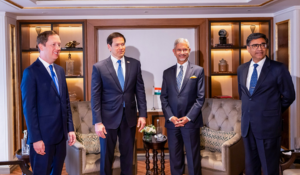
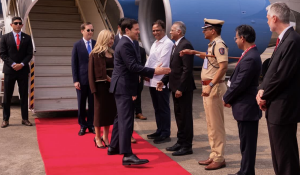
US Secretary of State Marco Rubio arrived in Mumbai on Tuesday for his second visit to India. During...
Defense Minister Rajnath Singh on Tuesday described terrorism as one of the most serious threats to peace and...
Aries: The day will be auspicious...