Last Updated: October 21, 2026
Last Updated: October 21, 2026





Sheena Sandhu
If Punjab’s fields tell one story of crisis, its classrooms tell another. The state’s youth unemployment rate touched ~20% (15–29 years, Apr–Jun 2025)—higher than the national average. The solution is not just jobs, but skills that line up with jobs.
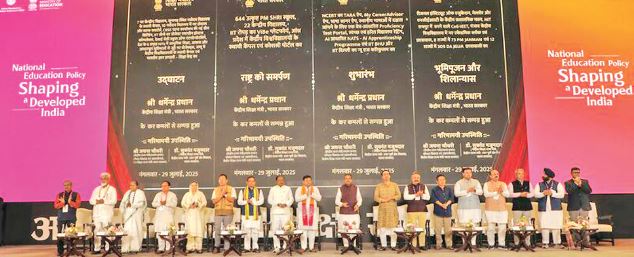
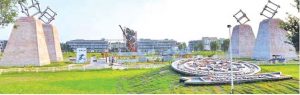
The Centre’s Rs 200.99 crore infrastructure push at the Central University of Punjab, Bathinda, launched in July 2025, signals intent. Academic blocks, 600-bed boys’ hostel, 400-bed girls’ hostel, and an international hostel—all funded via HEFA—will serve 10,000+ students, especially from rural belts.
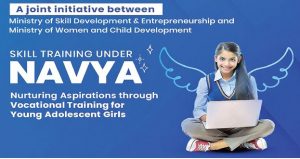
But hardware is only the start. PMKVY 4.0’s NAVYA initiative, launched June 2025, trains girls aged 16–18 in drones, AI, robotics and soft skills. With 30% reservation for women in ITIs, this is the first genuine attempt to push Punjab’s daughters into future-ready roles. The test: whether Ludhiana’s textile hubs and Mohali’s IT parks hire them.
ITI upgrades are being rolled out under the National Scheme for ITI Modernisation (Rs 500 crore in Punjab)—adding courses in automation and green tech. A Confederation of Indian Industry study notes a 25% skill mismatch in Punjab’s workforce. Bridging that mismatch is what separates “educated unemployed” from employable graduates.
The Ek Bharat Shreshtha Bharat exchange program has given Punjab’s students exposure to states as far-flung as Manipur and Maharashtra. Such tours, reaching thousands annually, are as important as labs: they widen aspiration, reduce parochialism, and build confidence in mobility.
At the cutting edge, institutes like IIT Ropar are embedding AI-driven curricula, while BRIC–NABI Mohali brings science students into biotech and bio-manufacturing. For a state stereotyped as only producing farmers or emigrants, these are pipelines into global careers.
Yet bottlenecks remain. Only ~54% of schools nationally have internet access (UDISE+ 2023–24); Punjab reflects the gap. Teacher training is lagging; NEP requires annual upskilling but coverage in Punjab districts is still below 70%. Without teachers who can use smart boards or guide AI tools, hardware investments will underperform.
Budgets, though, are promising. The Centre’s Rs 1.48 lakh crore education and skilling allocation in 2024–25 (up 13%) is serious money. Punjab should tie its own youth budget explicitly to outcomes: employability rates, not just training completions.
The migration pipeline is not inevitable. If Bathinda’s new hostels, NAVYA’s girl coders, upgraded ITIs and IIT Ropar’s AI labs work in sync, Punjab’s youth will not need to chase visas. They’ll build futures at home—and sell skills abroad on their own terms. Delhi has laid the foundation. Chandigarh’s role is to connect the dots, and fast.
(The writer is a retired civil servant, views are personal.)
Reduced water levels at Har Ki Pauri and other Haridwar ghats have inconvenienced pilgrims during the Upper Ganga...

Six people returning from a Dussehra Mela were seriously injured when a car hit them on National Highway...

A bus travelling from Pachiound to Ramnagar fell into a gorge at Gulli Gula in Udhampur district. Nine...

Start your day with The Savera Morning Brief, bringing you the latest news from India and around the...

Union Home Minister Amit Shah will pay tribute to police martyrs at the National Police Memorial in New...
Four more people, including two women, have been arrested in the Tiger Shroff firing case. Delhi Police are...
Aries: The day will be auspicious...