Last Updated: October 22, 2026
Last Updated: October 22, 2026





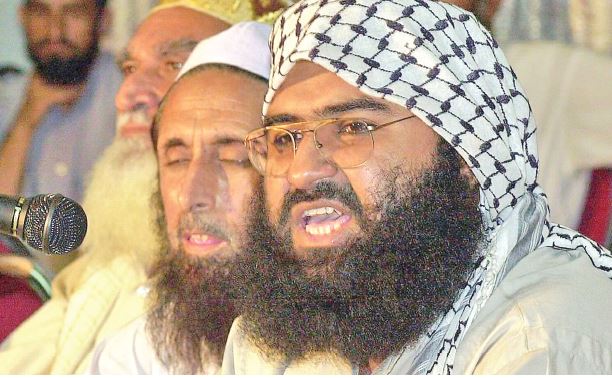
In a new and alarming development, Pakistan-based terror group Jaish-e-Mohammed (JeM), designated as a terrorist organisation by the United Nations, has launched a women’s unit called Jamat ul-Muminat. The initiative, aimed at recruiting and indoctrinating women under the pretext of religious education, marks a shift in the group’s strategy.
According to a report by NDTV, JeM has introduced an online course titled Tufat al-Muminat (“Gift for the Faithful Women”) that seeks to collect funds and attract female recruits. The course is reportedly led by women closely related to senior JeM leaders, including the sisters of the group’s founder, Masood Azhar, who remains a UN-designated global terrorist.
The 40-minute online sessions, beginning November 8, will be conducted daily and focus on women’s “duties” in relation to Islam and jihad. Each participant is required to pay a 500 Pakistani rupee fee—around Rs 156 in Indian currency—framed as a “donation”. Registrations are being taken through online forms, allowing the group to reach participants across Pakistan while keeping its activities under the radar of security agencies.
Officials monitoring JeM operations believe the course is a cover for indoctrination and recruitment. Sources told NDTV that the group is targeting women from financially vulnerable backgrounds and those linked to JeM’s existing network of religious centres in Bahawalpur, Karachi, Muzaffarabad, Kotli, Haripur, and Mansehra. These women are being trained not only for propaganda but potentially for operational roles, including logistics and intelligence support.
The initiative follows an announcement made by Masood Azhar on October 8 at JeM’s headquarters, Markaz Usman-o-Ali in Bahawalpur, where he revealed plans to create a women’s wing. Eleven days later, on October 19, JeM organised another event, Dukhtaran-e-Islam (“Daughters of Islam”), in Rawalkot, Pakistan-occupied Kashmir, to promote the new wing and expand its outreach.
JeM chief Masood Azhar has reportedly appointed his younger sister, Sadiya Azhar, to head Jamat ul-Muminat. Her husband, Yusuf Azhar, a senior JeM commander, was killed earlier this year during India’s Operation Sindoor—a targeted strike on JeM’s Bahawalpur base in retaliation for the April terror attack in Pahalgam, Jammu and Kashmir.
Sadiya will be assisted by other women linked to JeM’s top leadership, including Azhar’s other sister, Safia, and Afreera Farooq, the wife of Umar Farooq. Umar Farooq was a key conspirator behind the 2019 Pulwama suicide attack that killed 40 CRPF personnel and was later neutralised in an encounter with Indian forces.
Officials say JeM’s decision to recruit women reflects a strategic adaptation. A senior counter-terror official told NDTV that “after Operation Sindoor and the Pahalgam attack, JeM’s leadership realised that female members could be used to evade security scrutiny and support operations through logistics, communication, and propaganda.”
For decades, JeM, a Deobandi extremist organisation, barred women from active participation in armed jihad. However, intelligence assessments suggest that Masood Azhar and his brother Talha al-Saif have now authorised the inclusion of women in both ideological and operational roles.
Experts say the shift mirrors tactics used by groups such as ISIS, Boko Haram, Hamas, and the LTTE, all of which have deployed women for recruitment, propaganda, and even suicide missions. Women operatives often attract less suspicion, allowing terror groups to expand influence and bypass conventional security measures.
The online nature of JeM’s new campaign also reflects an evolving trend in terrorist recruitment. With Pakistan’s conservative social restrictions limiting women’s physical mobility, online platforms offer a low-risk channel for indoctrination and coordination. Authorities believe JeM’s “course fees” may also serve as a mechanism to raise funds while avoiding international financial scrutiny, despite Pakistan’s commitments under the Financial Action Task Force (FATF) to curb terror financing.
The creation of Jamat ul-Muminat is being viewed as one of JeM’s most significant internal reorganisations in recent years. It comes at a time when the group faces operational setbacks and financial pressure following repeated counter-terror operations by Indian forces and international monitoring of its activities.
JeM, founded in 2000 by Masood Azhar after his release from an Indian prison in exchange for hostages during the IC-814 hijacking, has been behind several major attacks in India, including the 2001 Parliament attack, the 2016 Pathankot airbase assault, and the 2019 Pulwama bombing.
Analysts believe the establishment of a women’s unit underscores JeM’s attempt to rebuild its networks and sustain recruitment after losing key operatives. While Pakistan has long claimed to be acting against such organisations, intelligence reports suggest that JeM continues to operate under new fronts and names.
As JeM expands its reach into the digital sphere and recruits women to its cause, counter-terror experts warn that the development signals a potentially dangerous evolution in extremist tactics in South Asia.
Pakistan's Defense Minister Khawaja Asif has questioned alleged plans by senior government officials to permanently settle abroad. He...
The Baloch Liberation Army (BLA) has claimed responsibility for carrying out 34 operations between October 9 and 20...

Russian President Vladimir Putin said on Wednesday that Russia's first tanker carrying 40,000 tons of diesel fuel will...

Ten people were killed and 44 others injured in a horrific road accident in Pakistan's Punjab province. The...

North Korean leader Kim Jong-un's influential sister, Kim Yo-jong, and a military marshal inspected fortification work along the...

New Delhi: US Secretary of State Marco Rubio has assured India that America’s relations with any country in...

Aries: The day will be auspicious...