Last Updated: October 1, 2026
Last Updated: October 1, 2026





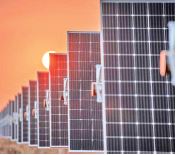
India’s solar energy sector, a cornerstone of its renewable energy ambitions, faces growing risks from climate change, according to a new study published in the journal *Energy and Climate Change*. The research warns that surface solar radiation (SSR), the sun’s shortwave energy that reaches the Earth’s surface, could decline by up to 10 per cent in central, southern and eastern India under intermediate and high emission scenarios.
The study highlights that solar energy is highly sensitive to atmospheric and meteorological conditions. Even small changes in SSR can significantly affect the output of solar photovoltaic (PV) systems. Since solar panels typically last 20–25 years, developers need to consider how climate change could reshape long-term solar potential.
“Our results suggest that solar developers need to look beyond annual averages and consider regional and temporal variability,” said Ashwin Jadhav, doctoral researcher at Savitribai Phule Pune University. He explained that while northwestern India remains relatively stable for long-term investment, southern and eastern regions show greater variability, where hybrid systems combining solar with wind or storage may be more reliable.
India has made rapid strides in building solar capacity. As of August 31, 2025, installed solar capacity stood at 123,130 megawatts (MW), with nearly 14 per cent contributed by five southern states, according to the Ministry of New and Renewable Energy. However, solar generation in July 2025 was 12,100 MW, reflecting the persistent gap between capacity and actual output. An earlier Climate Analytics report noted that weather conditions, including cloud cover and aerosols, were among the key factors behind this shortfall.
Jadhav said that long-term changes in atmospheric conditions have already been observed, with periods of “global dimming” caused by higher aerosol levels followed by “brightening” when conditions improved. These shifts, coupled with increasing extreme weather events, are already influencing solar availability across India.
The study assessed SSR projections under three climate scenarios — low, intermediate and high emissions — for future periods up to the end of the century. Under a low emission pathway, India could see minor declines in solar radiation, particularly in the south and west, while parts of the Indo-Gangetic plains and northeast may record small gains. Under intermediate emissions, reductions of 0.5 to more than 1 per cent per decade are expected across most of the country. Under high emissions, declines could exceed 1 per cent per decade nationwide, with the steepest falls over central and peninsular India.
Researchers linked these reductions mainly to rising atmospheric turbidity and heavier post-monsoon cloud cover. They called for adaptation measures such as region-specific solar park planning, climate-resilient technologies and advanced forecasting systems that integrate cloud and aerosol data. Jadhav said further research will examine seasonal variability and extreme weather impacts on PV performance and grid reliability.
The Savera Times Evening Wrap brings you the top India and world news, covering major developments across politics,...

Pakistan-based LeT terrorist Mohammad Asif alias Hashim Moosa, wanted in the Pahalgam terror attack case, was killed in...

The Supreme Court has ruled out both a complete firecracker ban and unrestricted 24-hour use, indicating that permissible...
The Centre has approved higher MSP for all mandated Rabi crops for the 2027-28 marketing season, with safflower...
Traders’ organisations have withdrawn the October 2 “No UPI Day” protest after meeting Finance Minister Nirmala Sitharaman over...

Ahmedabad: A Nigerian national allegedly acted as a link between a Gujarat-based wanted accused and a wider drug...

Aries: The day will be auspicious...