Last Updated: October 12, 2026
Last Updated: October 12, 2026





~Abhishek Vij
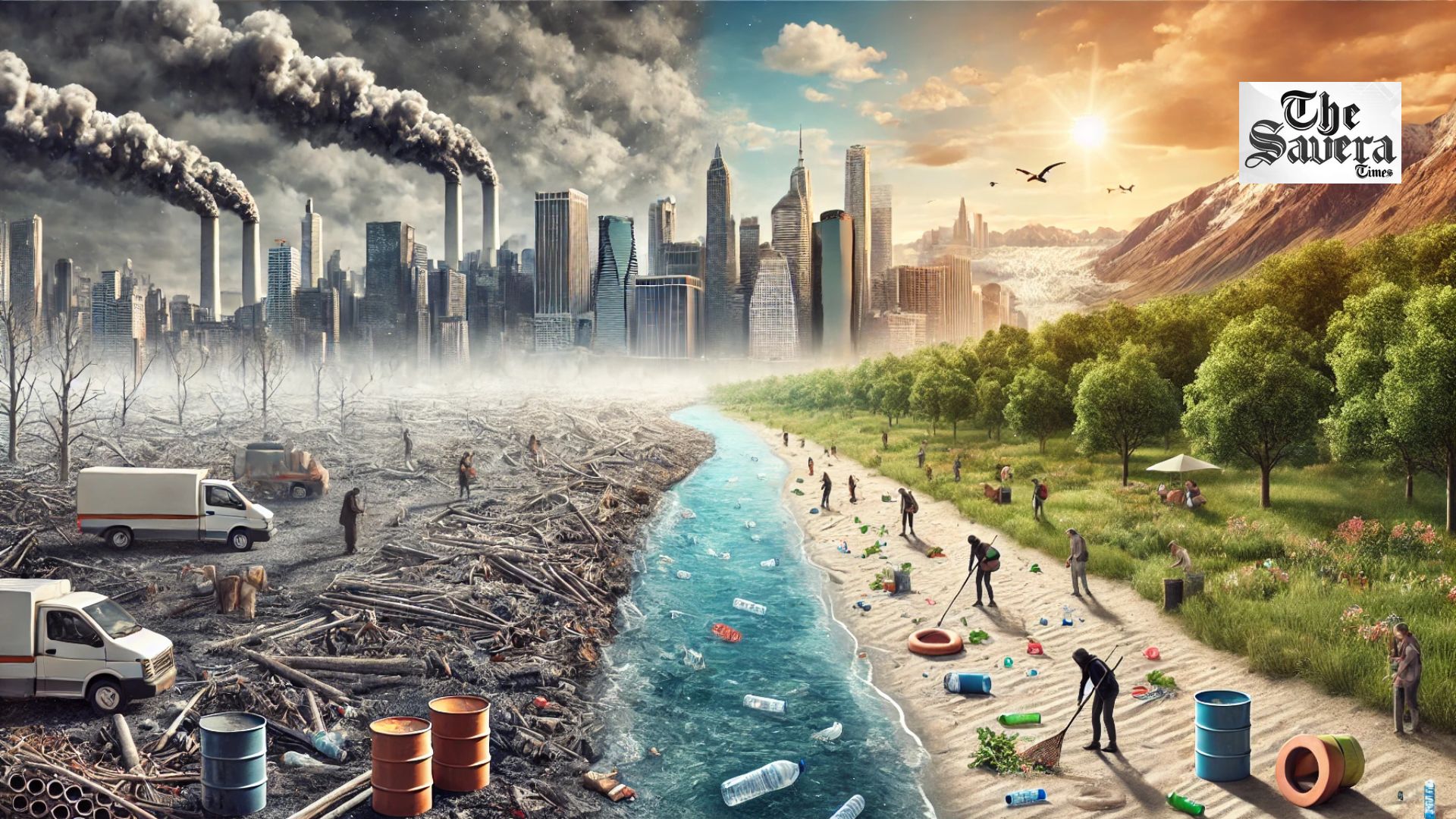
Last week, in his 135th episode of “Mann Ki Baat,” Prime Minister Narendra Modi spoke about the unprecedented climate change. He said that countries around the world are facing the resulting natural disasters, but the world lacks a coherent plan to control them. The Prime Minister’s statement is absolutely correct, as the world’s richest nations are urging the developing nations of the Global South to fight the battle to control environmental pollution and global warming. The United States is not taking this crisis seriously.
Uncle Sam’s country is shirking its responsibility by claiming that India should be the leader in this fight. This unprecedented change in the seasons and the resulting misery are not solely the fault of developing countries like India. If that were the case, how could Europe also experience unbearable heat this year? They must accept the reality that climate change is occurring, and it would be better if countries around the world unite to combat the misery it creates. The only argument of prosperous Western countries is that we have long since become digital. Third-world countries are now responsible for environmental pollution.
The reality is that 16 countries, including Britain and France, are currently experiencing unbearable heat. In Britain itself, heat records have been broken. The situation is such that the sudden heat has melted roads, schools have been closed, and forest fires have erupted. The California forest fires are a prime example. France has seen nearly a thousand more deaths than the average annual heat-related deaths. Western countries must acknowledge the reality that environmental pollution can wreak havoc by causing unimaginable changes in the weather. So, for how long will rich countries continue to shirk their responsibility to combat global warming?
India’s situation is such that a weak El Niño has blessed Northeast and East India with delayed rains. North India has been sweltering under the grip of intense heat, leading to both water and power crises. The monsoon has arrived, but it hasn’t rained heavily yet. According to India’s crop cycle, it’s the time for paddy sowing, which requires a lot of water. Farmers here are not very enthusiastic about dry farming, even though there is a shortage of water for irrigation. The water table is sinking underground. Tubewell bores are being dug deeper and deeper every year. In such a situation, isn’t it time for every country in the world to address environmental pollution and global warming?
This has been repeatedly reiterated at the United Nations and other global forums. The recent BRICS summit also formally discussed this issue, but no active action or strategy emerged. Wealthy countries believe that the Industrial Revolution of the 19th and 20th centuries has been a thing of the past, and the carbon emissions and pollution it generated are now a thing of the past. Now, developing Third World countries, which are emitting massive amounts of carbon, are responsible for the new situation. This drama of evading responsibility has been going on for years.
As for India, it could launch an active campaign and develop new strategies against the factors contributing to environmental pollution and global warming. But truth be told, there’s more rhetoric here than action. We haven’t been able to dispose of the millions of tons of waste generated every day. Just look at Delhi. Mountains of garbage are clearly visible on the Delhi border as we approach Haryana. If this hasn’t been resolved yet, how will we combat environmental pollution? Therefore, the realistic approach is that India should first transform itself and make the cleanliness campaign meaningful at its own level
The Delhi Police on Monday removed Jantar Mantar from the list of officially designated protest sites. The police...
The Supreme Court on Monday clarified that it has not passed any judgment on the Election Commission's (ECI)...
The Kerala Assembly passed a resolution demanding the removal of Chief Election Commissioner (CEC) Gyanesh Kumar from his...
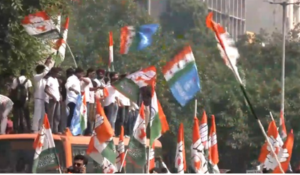
Amidst heavy security and barricades by the Delhi Police, INDIA Bloc leaders began a protest march towards the...
The Reserve Bank of India (RBI)'s new measures to curb speculation in the rupee and maintain stability in...

Gold exchange-traded funds (ETFs) witnessed a sharp rise in investor interest in September, with net inflows surging 71.4...

Aries: The day will be auspicious...