Last Updated: October 1, 2026
Last Updated: October 1, 2026





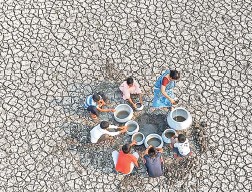
Philanthropic organisations across the world have come together to address the growing health emergency triggered by climate change, pledging an initial 300 million dollars to confront both its causes and its expanding impact on human health. Over 35 global philanthropies announced the commitment in Belem, Brazil, under the newly formed Climate and Health Funders Coalition.
The Coalition’s first major funding initiative was unveiled alongside the launch of the Belém Health Action Plan, a framework that places human health at the centre of global climate action. The move comes amid mounting evidence that climate change is driving severe public health risks, particularly in low and middle income countries.
Recent scientific findings, including those from the 2025 Lancet Countdown Report on Health and Climate Change, have underscored the scale of the crisis. The report noted a 23 per cent rise in heat related deaths since the 1990s, with 546,000 such fatalities recorded annually. It also highlighted a record 154,000 deaths linked to wildfire smoke in 2024 and a sharp rise in the global transmission potential of dengue since the 1950s.
The Coalition brings together major institutional and individual funders operating across continents. Among them are Bloomberg Philanthropies, Children’s Investment Fund Foundation, Gates Foundation, IKEA Foundation, Quadrature Climate Foundation, Rockefeller Foundation, Philanthropy Asia Alliance and Wellcome. Members said the first tranche of funding would focus on advancing solutions, policies and research on extreme heat, air pollution and infectious diseases that are closely linked to climate shifts. Strengthening climate and health data systems to support stronger, more resilient public health structures is also a key priority.
Experts associated with the initiative said the accelerating pace of global warming demands urgent action. The past decade has been the hottest on record, and climate scientists warn that surpassing 1.5 degrees Celsius of warming could unleash far more severe weather and health consequences. Rising temperatures are driving heatwaves, worsening air pollution, threatening nutrition levels, and enabling the spread of diseases such as malaria and dengue. These effects, the Coalition noted, are hitting the most marginalised communities the hardest, deepening existing inequities.
The Coalition’s efforts are also aligned with the Belém Health Action Plan, which aims to build climate resilient health systems, strengthen monitoring and surveillance, promote evidence based solutions, and invest in research and infrastructure for the most vulnerable populations.
Leaders associated with the initiative stressed that protecting the environment has become inseparable from protecting human health. They said coordinated international action is now essential, as no single country or organisation can respond to the crisis alone.
Pakistan is increasingly turning to direct military force in Afghanistan as Islamabad can neither command the government in...

When we examine these claims about higher education and schooling in India, we find that much remains to...
The cases of Christian girls Maria Shehbaz and Aneeqa Ishaq have been reported at a time when Pakistan...

Israel PM Benjamin Netanyahu has claimed that a flydubai pilot wanted to crash the aircraft and praised passengers...

Donald Trump jokingly called Google CEO Sundar Pichai a “monster” during a White House interaction, with Pichai responding...

A spelling error on a White House document linked to Donald Trump’s Super Intelligence initiative has gone viral...

Aries: The day will be auspicious...