Last Updated: October 21, 2026
Last Updated: October 21, 2026





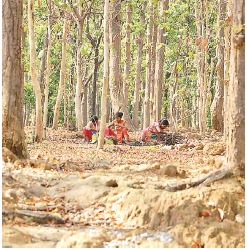
A new global assessment finds a sharp gap between law and practice in conservation: governments are expanding protected areas to meet biodiversity targets, while sidelining the communities best placed to steward them.
The report, produced by the Rights and Resources Initiative, Forest Peoples Programme and the Indigenous and Community Conserved Areas Consortium, reviewed legal frameworks, protected areas and biodiversity plans in 30 high-biodiversity countries across Africa, Asia and Latin America. It found that although almost every country has legal pathways for community-led conservation, these options remain largely unused in practice.
Of more than 12,000 protected areas surveyed, fewer than 1,000 are governed by communities. Indigenous and Traditional Territories, a key demand from Indigenous peoples, are not recognised as a separate legal category in any of the countries assessed. The researchers note a striking contradiction: legal tools for rights-based conservation exist widely, yet conservation remains largely top-down.
Progress since 2015 has been uneven and fragile. Seventeen countries introduced legal reforms, but gains have sometimes been reversed. The report cites Cambodia as an example where new legislation reduced protections for Indigenous communities. By contrast, Liberia’s 2018 Land Rights Act is presented as a rare model of advance. The act allows protected areas to be established on customary land while preserving community ownership, enabling local stewardship alongside development priorities.
The study highlights persistent shortfalls in Free, Prior and Informed Consent. Fewer than half of the countries recognise FPIC as an enforceable right, leaving communities vulnerable when states expand protected areas to meet the 30×30 target under the Global Biodiversity Framework. The authors warn that pursuing area-based targets without enforceable consent risks violating human rights.
Gender inequality is another serious concern. Only two legal systems fully protect women’s voting rights in community conservation, and only three recognise women’s leadership rights. The report stresses that excluding women erodes conservation outcomes, because women hold crucial knowledge on farming, food systems and local ecosystems.
National Biodiversity Strategies and Action Plans also show weak alignment with rights. While many governments report participatory planning, only 12 of the 30 countries explicitly adopt a human rights-based approach. Several missed the 2024 deadline to submit updated plans under the GBF, signalling a gap between commitments and implementation.
Case studies underline the stakes. In Guyana, the Wapichan people conserved headwaters for generations but lack full legal title, and past attempts at Indigenous-owned protected areas caused displacement. In India, the Forest Rights Act of 2006 offers a strong legal framework on paper, but formal recognition of community forest resource rights remains limited.
The authors offer six priorities for change: secure tenure rights for community lands; legally recognise Indigenous and Traditional Territories; guarantee enforceable FPIC; ensure women’s full voting and leadership rights in community governance; make NBSAPs explicitly rights-based with measurable community targets; and convert legal provisions into funded, enforceable protections. The central message is clear. Rights-based, community-led conservation is technically feasible, but absent political will it will remain unrealised.
Start your day with The Savera Morning Brief, bringing you the latest news from India and around the...

Union Home Minister Amit Shah will pay tribute to police martyrs at the National Police Memorial in New...

Four more people, including two women, have been arrested in the Tiger Shroff firing case. Delhi Police are...
We are very proud that at present India is the number one country in the world by surpassing...

Every investor wants the wealth-creating power of equity and the reassuring stability of debt. Balanced Advantage Funds attempt...

Tourism is a major source of government revenue in our country. There are different types of tourism. Scenic...

Aries: The day will be auspicious...