Last Updated: October 22, 2026
Last Updated: October 22, 2026





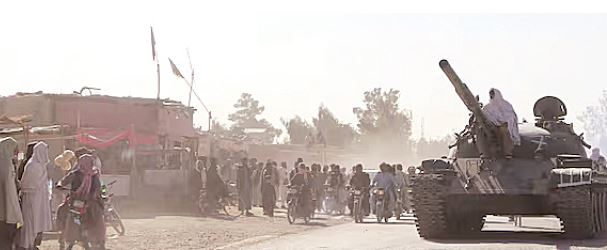
After days of fierce cross-border clashes, Pakistan and Afghanistan’s Taliban government announced a temporary ceasefire on Wednesday, signaling a pause in escalating hostilities that have left civilians dead and injured on both sides. The ceasefire, which took effect at 1:00 pm local time, will remain in force for 48 hours, offering a brief respite from the recent surge of violence along the volatile frontier.
Officials in both Islamabad and Kabul confirmed the truce, yet confusion continues over who initiated the ceasefire and whether any external mediation played a role. The agreement comes after days of artillery and gunfire exchanges that followed a series of explosions in Kabul last week, intensifying tensions between the two neighbors.
According to Taliban officials, at least 12 civilians were killed and over 100 injured in what they described as Pakistani shelling. Pakistan’s military, however, has not confirmed these figures, and the actual casualty count remains unverified due to limited access to the conflict zone.
Conflicting claims over who sought peace
Both countries offered sharply differing versions of how the ceasefire came about. Afghan officials in Spin Boldak, near the border, claimed that Pakistani forces had requested the truce after suffering significant losses. Ali Mohammad Haqmal, the district’s head of information and culture, told Afghanistan’s Tolo News that the Taliban’s “Mujahideen inflicted a heavy defeat on them,” forcing Pakistan to call for a halt to the fighting.
He added that Taliban fighters had “carried out effective attacks” against Pakistani forces, worsening their situation. To support these claims, Taliban troops later held what they called a “victory parade,” displaying weapons and uniforms said to have been taken from abandoned Pakistani military posts. Taliban spokesman Zabihullah Mujahid echoed this version, asserting that the ceasefire was declared “at the request and insistence of the Pakistani side.”
In contrast, Pakistan’s narrative painted a different picture. Citing the country’s Foreign Office, Pakistani daily Dawn reported that the ceasefire was mutually agreed upon but initiated by the Taliban, who sought a pause following a “powerful response” from Pakistani forces. A senior Pakistani military official, quoted anonymously, said that Taliban troops had faced heavy retaliation and were the ones to ask for a cessation of hostilities.
With both sides claiming to have compelled the other into seeking peace, the true initiator of the ceasefire remains uncertain.
Questions over mediation and third-party involvement
Neither government has officially confirmed the involvement of a mediator, but reports suggest diplomatic efforts may have influenced the ceasefire. According to Dawn, Qatar played a behind-the-scenes role in helping both nations reach an understanding. Following the ceasefire announcement, Pakistan’s Foreign Office said that Deputy Prime Minister and Foreign Minister Ishaq Dar received a message from Qatar’s Minister of State for Foreign Affairs, Abdulaziz Al-Khulaifi, commending Pakistan’s “constructive engagement in promoting regional peace.”
Afghan media also hinted at possible mediation efforts. Tolo News reported that Pakistan had reached out to Saudi Arabia and Qatar, urging them to help end the clashes. The report quoted Pakistani officials as saying, “For God’s sake, stop Afghans from fighting.” Analysts believe China, which maintains economic and security interests in both Afghanistan and Pakistan, may also have quietly encouraged de-escalation.
Such involvement would not be unprecedented. Regional powers have often stepped in to defuse tensions between the two nations, whose shared border — the British-drawn Durand Line — has been a source of friction for decades.
Blame game and India’s mention
Despite the ceasefire, tensions remain high. Pakistani Defence Minister Khawaja Asif suggested that India was using the Taliban as a “proxy” to destabilize Pakistan. Speaking to Geo News, Asif alleged that “the Taliban are being sponsored by Delhi” and accused Kabul of fighting a “proxy war for India.”
Observers noted that Pakistan’s airstrikes on Kabul coincided with Taliban Foreign Minister Amir Khan Muttaqi’s visit to New Delhi, signaling Islamabad’s discomfort over growing ties between India and the Taliban regime. However, Pakistan has not provided any evidence to support its accusations against India.
The Durand Line dispute resurfaces
core of the recurring clashes lies the Durand Line — a 2,640-kilometer boundary demarcated in 1893 between British India and Afghanistan. The line cuts through traditional Pashtun territory, dividing families and tribes across both sides of the border. While Pakistan considers it an international boundary, successive Afghan governments — including the Taliban — have refused to recognize it formally.
This long-standing disagreement has often turned violent, with border skirmishes erupting periodically. The recent clashes are the latest manifestation of this unresolved territorial issue.
Contradictory narratives and information war
Throughout the conflict, both countries have pushed conflicting narratives about the scale and outcome of the fighting. Pakistani media, citing official sources, reported that its forces had repelled Afghan attacks and suffered minimal casualties. Meanwhile, Taliban fighters circulated videos showing captured weapons, tanks, and items allegedly belonging to Pakistani soldiers.
Similar information battles have occurred in Pakistan’s past military confrontations. During the 2019 escalation with India, Defence Minister Khawaja Asif had claimed that Pakistan shot down five Indian jets — a statement he later failed to substantiate when pressed for evidence on CNN.
A comparable pattern is now visible in Pakistan’s engagement with the Taliban. The Pakistani military claimed Afghan forces initiated the violence by attacking border posts near the Torkham crossing in Khyber Pakhtunkhwa province. On the other hand, a spokesman for the governor’s office in Afghanistan’s Khost province accused Pakistani troops of firing first in the early hours of Wednesday.
Temporary peace, persistent uncertainty
As of now, the 48-hour ceasefire remains in effect, though there are no indications of formal peace talks or confidence-building measures between Islamabad and Kabul. Both sides appear entrenched in their narratives, using the brief truce to regroup militarily and manage domestic optics.
Whether the ceasefire leads to a broader de-escalation or merely postpones further clashes will depend on what unfolds once the 48 hours expire. For now, the guns have fallen silent, but mistrust, competing claims, and a deep-rooted border dispute continue to define the uneasy calm between Pakistan and
Pakistan's Defense Minister Khawaja Asif has questioned alleged plans by senior government officials to permanently settle abroad. He...
The Baloch Liberation Army (BLA) has claimed responsibility for carrying out 34 operations between October 9 and 20...
Russian President Vladimir Putin said on Wednesday that Russia's first tanker carrying 40,000 tons of diesel fuel will...

Ten people were killed and 44 others injured in a horrific road accident in Pakistan's Punjab province. The...
North Korean leader Kim Jong-un's influential sister, Kim Yo-jong, and a military marshal inspected fortification work along the...

New Delhi: US Secretary of State Marco Rubio has assured India that America’s relations with any country in...

Aries: The day will be auspicious...