Last Updated: October 15, 2026
Last Updated: October 15, 2026





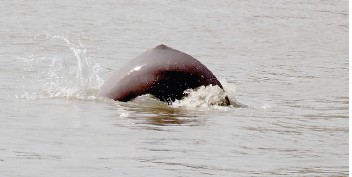
River dolphins have long been seen as living symbols of India’s great rivers, reflecting the health and vitality of flowing freshwater systems. In his book excerpt, Sanjoy Hazarika focuses on the conservation of dolphins in the Brahmaputra, locally known as xihu, and traces how human actions have steadily pushed these animals toward the margins of survival. As a child, Hazarika remembers watching dolphins surface and dive near riverbanks, an ordinary yet magical sight that connected people to the river. Over time, however, that familiarity faded as pollution, urban growth and ecological neglect transformed the river’s character.
The pressures on the Brahmaputra increased with the expansion of cities such as Guwahati. Untreated sewage, plastic waste and industrial discharge entered the river, while tributaries that once fed it clean water became clogged and degraded. As noise, traffic and pollution intensified, dolphins were forced to retreat to quieter and cleaner stretches. Their movement away from populated riverbanks became an early warning sign of a deeper ecological imbalance.
Beyond pollution, poaching emerged as a serious threat. Certain fishing communities traditionally hunted dolphins for their blubber, which was rendered into oil believed to attract fish. This practice was deeply embedded in local livelihoods and knowledge systems, passed down through generations. Simply banning it without alternatives risked pushing already vulnerable communities into greater hardship. Recognising this, conservation efforts sought solutions that balanced ecological protection with social realities.
A breakthrough came through scientific intervention.
Zoologist R.K. Sinha identified a substitute made from fish waste that closely mimicked the properties of dolphin oil. When introduced to fishing communities, this alternative proved effective and affordable. Demonstrations showed that fish catches did not suffer, slowly convincing fishers that dolphins could be spared without threatening their income. This shift marked an important step in aligning conservation goals with everyday survival.
Legal and political support strengthened these efforts. Draft legislation helped formalise protections for river dolphins, and official recognition followed when the dolphin was declared the state aquatic animal of Assam. This symbolic move played a crucial role in spreading awareness and reducing open poaching, while reinforcing the idea that dolphins were a shared natural heritage rather than a resource to be exploited.
Despite these gains, the dolphins remain endangered. Census data shows their numbers are still low, underscoring how fragile river ecosystems have become. Threats from habitat fragmentation, fishing nets, altered river flows and pollution persist.
Congress leaders and workers in Dehradun raised slogans outside Lok Bhavan on Thursday regarding the infamous Ankita Bhandari...

New Delhi: The Delhi High Court on Thursday recorded the assuarance by Delhi Polices promise that all legal...

New Delhi: The Ministry of Defence on Thursday said it has signed contracts worth Rs 4,106 crore for...

Patna: An Excise Department constable was killed after suspected liquor smugglers and an alleged accomplice opened fire on...

New Delhi: Amid the ongoing protests, investigators have found that certain elements backed by Pakistan launched a multi-layered...

Good Afternoon Viewers! Stay updated with The Savera Times Afternoon Bulletin, bringing you the latest news from Punjab,...

Aries: The day will be auspicious...