Last Updated: October 21, 2026
Last Updated: October 21, 2026





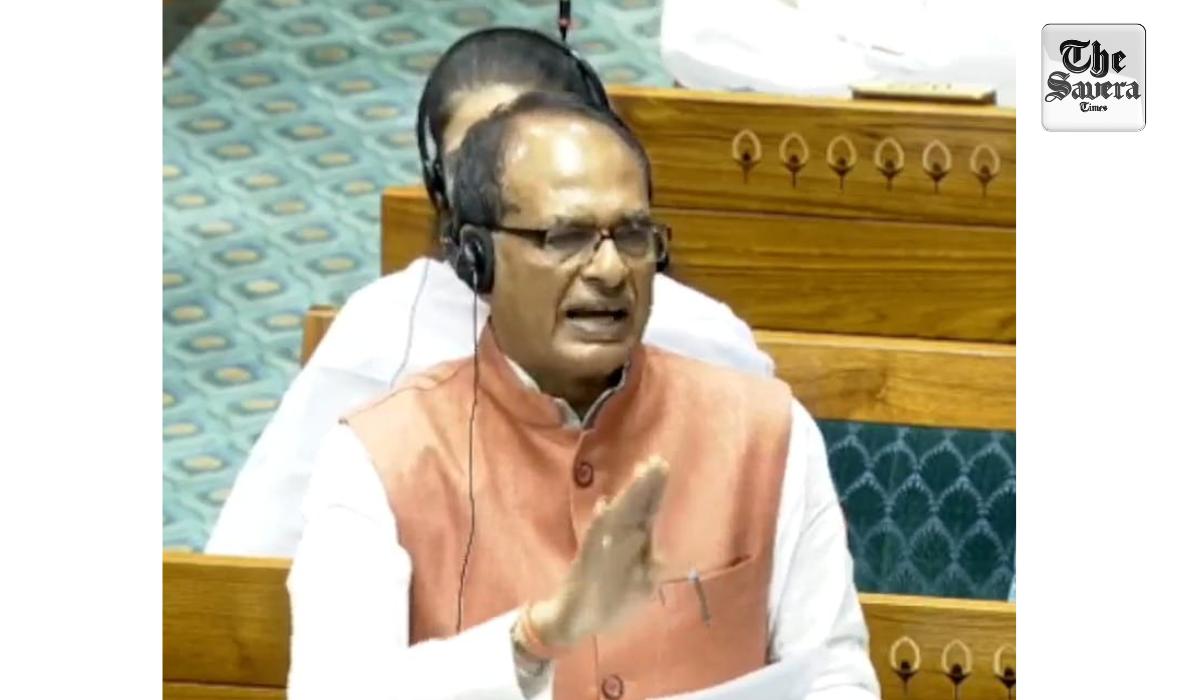
New Delhi: During Question Hour in the Lok Sabha today, Union Minister for Agriculture & Farmers Welfare and Rural Development Shri Shivraj Singh Chouhan launched a sharp attack on the Trinamool Congress (TMC) government in West Bengal and opposition parties, alleging that the state government has deprived poor farmers of key central schemes for the sake of ‘petty politics.’
He said that while the country is witnessing record foodgrain production, the government led by Mamata Banerjee has refused to implement several schemes merely because they carry the name of the Prime Minister, thereby doing ‘grave injustice’ to farmers. He added that the people of West Bengal will give a fitting reply to this injustice in elections.
Sharp Criticism of West Bengal Government: ‘A Grave Injustice to Farmers’
The Union Agriculture Minister stated that an important scheme linked to agricultural prosperity has been implemented in 96 out of 100 districts across the country, but the West Bengal government kept four districts—Darjeeling, Alipurduar, and Kalimpong/Kharagpur, including sensitive border areas—outside the ambit of the scheme, thereby harming poor farmers.
According to him, the objective of the scheme was to reduce the cost of cultivation, expand irrigation facilities, and improve access to credit in these districts.
However, due to political hostility, the state government allegedly prevented these benefits from reaching farmers. Calling the decision ‘shameful,’ Chouhan said the scheme was not being implemented simply because it carries the Prime Minister’s name, while the real sufferers are the farmers who toil in the fields.
‘Petty Politics’ by Blocking Schemes
Chouhan also questioned the non-implementation of several central schemes in West Bengal, including the Pradhan Mantri Fasal Bima Yojana and the National Mission on Natural Farming. He asked what fault the farmers had committed that they were denied the protection of crop insurance.
He pointed out that the central government launched the Natural Farming Mission to address the harmful effects of excessive chemical fertilizer usage on soil health and human well-being. However, the West Bengal government has allegedly refused to implement this mission as well, prioritizing vote-bank politics over the health of the land and people.
The minister further criticized opposition parties for creating disruptions and slogans in Parliament, stating that the country is watching how they stand against farmers’ interests and oppose schemes merely to attack the government.
Record Production and Global Recognition
Chouhan highlighted that under the leadership of Prime Minister Narendra Modi, India’s total foodgrain production has reached a record level of nearly 357 million tonnes, significantly strengthening both national food security and farmers’ income.
He noted that India has achieved the first position globally in rice production, surpassing China with output exceeding 150 million tonnes. Record production has also been registered in crops such as wheat, mustard, soybean, and groundnut.
Chouhan recalled that in the past India had to depend on imported wheat under the PL‑480 Food Aid Program. Today, however, the situation has reversed, government warehouses are filled with wheat and rice, and the concern is now about storage capacity. According to him, the global community is acknowledging the achievements of India’s farmers and agricultural policies.
Focus on Pulses, Fruits and Vegetables
The Union Minister stated that the central government has significantly boosted production of fruits, vegetables, and pulses to enhance farmers’ income and strengthen nutrition security. Pulses production has increased from around 19 million tonnes to approximately 25–26 million tonnes, while horticulture production has crossed 369 million tonnes, creating an additional source of income for farmers.
Natural Farming Initiative
Chouhan explained that under the Natural Farming Mission, large stretches of land along rivers such as the Ganga are being promoted for chemical-free cultivation. Millions of farmers have been sensitized and trained, and financial incentives per acre are being provided to encourage the shift toward natural farming.
He emphasized that when practiced correctly, natural farming does not necessarily reduce production and in many cases has increased yields. However, the reluctance of some states, including West Bengal, to adopt such initiatives remains a matter of concern.
All Schemes Will Be Implemented When the Government Changes
Chouhan said that due to the TMC government, poor farmers in West Bengal are deprived of several major central schemes. He asserted that once there is a change of government in the state, a BJP government will implement all schemes in full force and ensure that farmers receive their rightful benefits.
He reiterated that Prime Minister Modi’s vision is to transform India into the ‘Food Basket of the World’, contributing to global food security in the spirit of ‘Vasudhaiva Kutumbakam.’ According to him, opposition parties and the TMC are engaged only in slogan-shouting and obstructionist politics, which the public will not tolerate indefinitely.
Concern Over Excessive Chemical Fertilizers
Chouhan also stated that previous governments had failed to address the serious consequences of the indiscriminate and imbalanced use of chemical fertilizers and pesticides.
Such practices, he said, have led to declining soil fertility and increasing health problems among people. He accused earlier Congress-led governments of neglecting soil health and failing to ensure safe and nutritious food for both farmers and consumers. In contrast, he said Prime Minister Modi recognized this challenge in time and emphasized that the earth must remain fertile and safe not only for the present generation but also for future generations.
Natural Farming Mission: Increasing Organic Carbon and Reducing Costs
The minister explained that the Natural Farming Mission and organic farming initiatives focus on increasing organic carbon in soil, making farmland chemical-free, and reducing input costs while increasing farmers’ income.
Priority is being given to areas up to 5 kilometres on both sides of major rivers for promoting natural farming so that the health of water, land, and people can be protected simultaneously. Over one crore farmers across the country have already been sensitized and trained, and chemical-free farming clusters covering lakhs of hectares have been established.
Encouraging Farmers Through Local Resource-Based Farming
Chouhan said farmers adopting natural farming receive financial assistance per acre to shift from chemical fertilizers and expensive pesticides to traditional Indian practices based on locally available resources.
Techniques such as Ghan Jeevamrit, Beejamrit, and Neemastra, prepared from indigenous cow dung and urine, are being promoted. Intercropping is also encouraged to cultivate multiple crops in the same field. He asserted that concerns about reduced productivity are largely unfounded, noting that experiments in several parts of the country have shown higher yields and improved quality of produce.
India Moving Faster Than the Green Revolution Era
Chouhan said India’s foodgrain production today is several times higher than during the early years of the Green Revolution in India, and the pace of growth is now even faster. Compared to 2014–15, foodgrain production has increased by approximately 40–42 percent.
Pulses, oilseeds, horticulture, and dairy production are also consistently setting new records, benefiting both farmers’ income and the country’s food security. He also highlighted initiatives such as the Self-Reliance in Pulses Mission, which have significantly boosted pulses production and strengthened the foundation of national nutrition security.
Vision: India as the World’s Food Basket
Concluding his remarks, Chouhan said that Prime Minister Modi’s clear vision is that India should not only secure food for its own citizens but also emerge as a reliable supplier for the world. With record production, improved storage capacity, and growing export potential, India is steadily establishing itself as a trusted contributor to global food security and will continue to strengthen this role in the coming years.
Good Evening Viewers! Catch up on the day's biggest stories with The Savera Times Evening Bulletin. Get the...

Congress leaders continued their protest outside the Jaipur Police Commissionerate on Tuesday, demanding the registration of a zero...
On the auspicious occasion of Vijayadashami, Prime Minister Narendra Modi on Tuesday called on the countrymen to unite...
A historic milestone was achieved on Tuesday in the expansion of Chhattisgarh's rail networkA historic milestone was achieved...

Model Shraddha Dubey, one of the main accused in the death of Lucknow businessman Shiv Sharma, has been...

Rashtriya Swayamsevak Sangh (RSS) chief Mohan Bhagwat on Tuesday called for strengthening national unity, social harmony, indigenous practices...
Aries: The day will be auspicious...