Last Updated: October 24, 2026
Last Updated: October 24, 2026





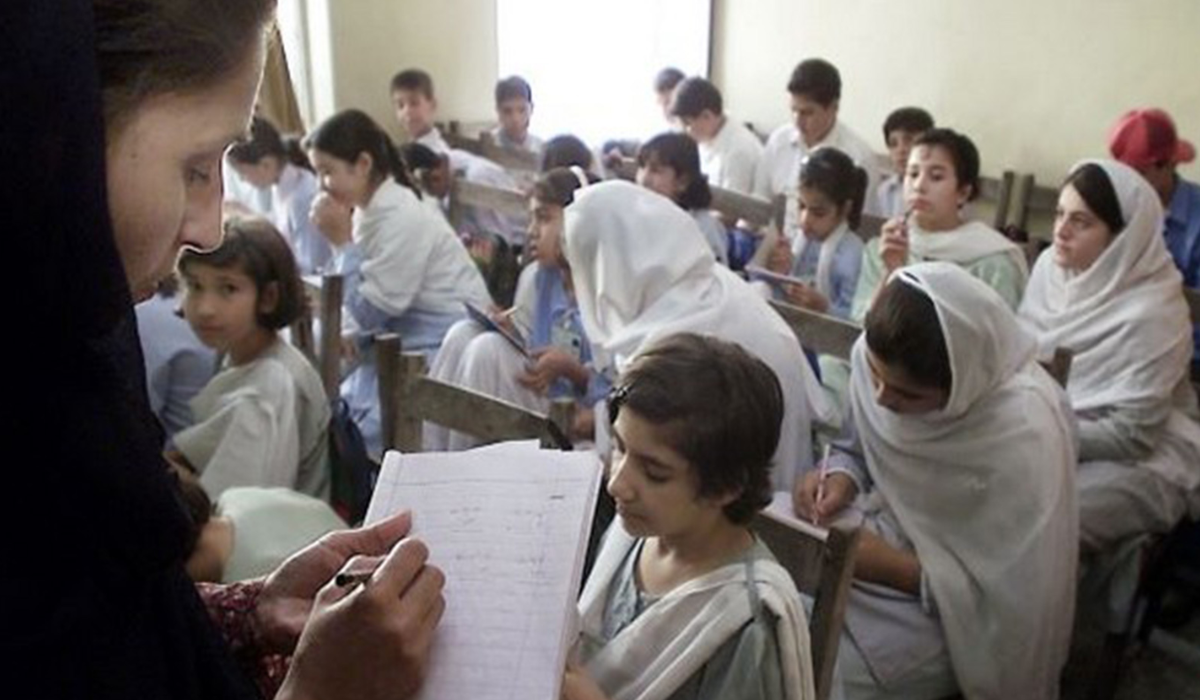
Two years after Pakistan declared a National Education Emergency, the country is still struggling with one of the world’s largest out-of-school crisis as more than 25 million children remain out of school. Pakistan’s education crisis is not only about making policy but about implementation, with weak governance structures, fragmented administrative systems, insufficient funding, poor data integration and provincial disparities continuing to hinder progress. All the provinces of Pakistan have made plans under the National Education Action Plan (NEAP) 2026. However, the gap between planning and implementation has increased to the point where policy ambition has not been able to translate into measurable educational access for millions of children. It stated that without introducing reforms in governance, accountability and financing, National Education Emergency risks remaining a symbolic declaration instead of a functional response to a national crisis. The education crisis is due to decades of systemic neglect. It stated that rapid population growth, poverty, weak institutional capacity and continuous low public investment in education have expanded over time, resulting in increase in the number of children not studying in schools. From the 1990s through the 2010s, the Academy of Educational Planning and Management (AEPAM) had the responsibility of tracking out-of-school children. However, millions of children remained excluded from the system as state infrastructure did not keep pace with demographic pressures, enabling low-cost private schooling to increase without addressing underlying access inequalities. The CSA review, compiled by five Policy Analysis Groups at the Pakistan Administrative Service Campus, analyses education system in Punjab, Sindh, KhyberPakhtunkhwa, Balochistan, Islamabad Capital Territory, Pakistan-occupied GilgitBaltistan and Pakistan-occupied Kashmir against indicators of effectiveness, equity, efficiency, ethical governance and feasibility. Punjab is bearing the largest educational burden in absolute numbers as between 9.6 million and 10.4 million children out of school. Punjab needs around 35,000 additional classrooms at middle and secondary levels, while poverty, child labour and household economic pressures continue to push children out of education.
Iran's parliamentary delegation will attend the BRICS Parliamentary Forum in New Delhi on October 26–27 after Speaker Mohammad...
Elon Musk has become the largest individual political donor ahead of the 2026 US midterms, with more than...

The arrest of a couple in Ferozepur over an alleged honey-trapping operation has brought renewed attention to suspected...

Four pilots died after two Philippines Air Force aircraft collided midair during a training exercise in Batangas. The...

Multiple earthquakes of preliminary magnitudes 7.2, 6.9 and 6.3 were reported near the Vanuatu Islands on Saturday. India's...

Washington: US President Donald Trump has acknowledged that the war with Iran has driven up oil prices and...

Aries: The day will be auspicious...