Last Updated: October 21, 2026
Last Updated: October 21, 2026





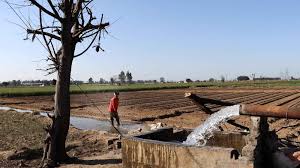
Data from 2025 indicates that the utilization of groundwater in Punjab—for irrigation, industrial purposes, and domestic use—is so excessive that it stands at a staggering 156.36 percent. This implies that, relative to the available water sources, usage levels are exceeding 150 percent. The additional 56.36 percent is being extracted directly from Punjab’s subterranean reserves to meet current demands. Consequently, the water table is sinking deeper beneath the ground surface with each passing day. Significant difficulties are now being encountered in everything from digging wells to installing tube wells. The available water must now be drawn from depths far below the ground surface.
An assessment report reveals that, through all available means, the annual groundwater recharge in Punjab amounts to 18.60 BCM (Billion Cubic Meters), while the annual extraction stands at 16.80 BCM—a figure that continues to rise steadily. This implies that if the entire volume of water available from every source were to be extracted, the water table would plummet even further. This is precisely why, in almost all of Punjab’s major cities, roads are being dug up to lay pipelines as part of water conservation efforts. It is, however, a separate matter that roads once dismantled are rarely restored to their original condition, largely due to the corrupt practices of contractors. The comprehensive report on groundwater reveals that Punjab comprises 153 administrative blocks; of these, 72.55 percent—or 111 blocks—have been categorized as falling under the “over-exploited” category.
This signifies that the total annual groundwater utilization in these areas exceeds the volume of groundwater that can be sustainably extracted. Furthermore, 10 blocks are classified as being in a “critical” state, 15 as “semi-critical,” while 17 fall into the “safe” category. The only redeeming factor is that a significant portion of this water remains potable. In certain regions, elevated levels of arsenic, fluoride, and uranium are being detected in the water. This serves as a cause for the spread of diseases. Since water conservation falls under the jurisdiction of the states, it is incumbent upon the state governments to remain vigilant regarding this issue.
There is a need to accelerate the pace of the measures currently being undertaken in this direction. The Central Government, too, cannot remain indifferent to this crisis; it is essential for the Centre to collaborate with the state governments in addressing this matter.
Good Evening Viewers! Catch up on the day's biggest stories with The Savera Times Evening Bulletin. Get the...

Congress leaders continued their protest outside the Jaipur Police Commissionerate on Tuesday, demanding the registration of a zero...

On the auspicious occasion of Vijayadashami, Prime Minister Narendra Modi on Tuesday called on the countrymen to unite...

A historic milestone was achieved on Tuesday in the expansion of Chhattisgarh's rail networkA historic milestone was achieved...

Model Shraddha Dubey, one of the main accused in the death of Lucknow businessman Shiv Sharma, has been...

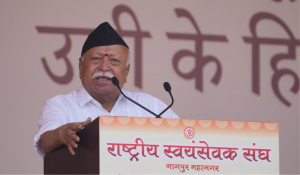
Rashtriya Swayamsevak Sangh (RSS) chief Mohan Bhagwat on Tuesday called for strengthening national unity, social harmony, indigenous practices...
Aries: The day will be auspicious...