Last Updated: October 13, 2026
Last Updated: October 13, 2026





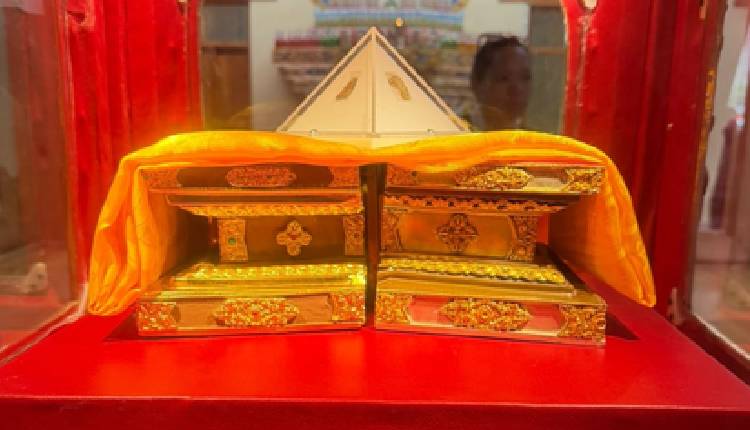
India is reinforcing its civilisational heritage and national identity through a wide-ranging push to preserve, promote and revitalise its cultural assets. Government initiatives spanning monument conservation, pilgrimage and tourism infrastructure, repatriation of antiquities, museum development, manuscript digitisation and technology-enabled preservation have simultaneously boosted visitor numbers, local economies and global recognition of India’s cultural legacy. Under the Adopt a Heritage 2.0 scheme, launched in September 2023, as many as 30 MoUs have been signed to develop visitorfriendly amenities at protected monuments of national importance. These sites recorded 13.59 million visitors in FY 2024–25. The PRASHAD scheme has sanctioned 54 projects across 28 States and Union Territories at a total cost of Rs 1,726.74 crore, with 32 projects completed by December 2025. Swadesh Darshan has supported 76 projects worth Rs 5,290.33 crore across 15 thematic circuits, of which 75 are complete. Its successor, Swadesh Darshan 2.0, has sanctioned 53 destinationcentric projects worth Rs 2,208.31 crore, while the Challenge Based Destination Development component has approved 38 projects with an investment of Rs 697.94 crore. The Archaeological Survey of India safeguards 3,686 centrallyprotected monuments through 38 circles and received Rs 374 crore for conservation in FY 2024–25. The National Mission on Monuments and Antiquities has documented 1.84 lakh monuments and 17.20 lakh antiquities. The concluded HRIDAY scheme transformed 12 heritage cities by integrating urban development with conservation, improving cleanliness, tourism infrastructure, safety and local livelihoods. Repatriation efforts have recovered major cultural treasures, including the Piprahwa relics of Lord Buddha after 127 years, the Goddess Annapurna idol from Canada after 108 years, and bronze idols of Rama, Sita and Lakshmana from the UK. Over the past five years, 615 antiquities have been retrieved. Sacred Buddha relics were exhibited in Vietnam (attracting over 15 million devotees), Kalmykia, Bhutan and Sri Lanka, with domestic shows in New Delhi and Ladakh. Museum infrastructure has expanded under the Museum Grant Scheme (Rs 184.39 crore sanctioned in five years). India’s first Archaeological Experiential Museum at Vadnagar, Gujarat — built at a cost of RS 298 crore — displays over 5,000 artefacts alongside an open excavation site. India now has 45 UNESCO World Heritage sites and hosted the 46th World Heritage Committee session in New Delhi in 2024. Digitisation is advancing rapidly. The Gyan Bharatam Mission and National Manuscript Survey have reported more than 1.19 crore manuscripts, with over 4.40 lakh available on the Gyan Bharatam portal. Museum collections digitised via JATAN software number 3,75,707 artefacts. AI platforms such as BHASHINI, BharatGen and AdiVaani support language preservation and translation across scheduled and tribal languages.
Good Evening Viewers! Stay updated with The Savera Times Evening Bulletin for the latest news from Punjab, India...

eader of the Opposition in the Lok Sabha, Rahul Gandhi and 10 other INDIA bloc leaders have moved...
Amidst protests in central Delhi, the Delhi Metro Rail Corporation (DMRC) announced the reopening of entry and exit...
The Delhi Police has registered an FIR regarding the alleged disturbance at the Bangla Sahib Gurdwara in...

The Delhi Police on Monday removed Jantar Mantar from the list of officially designated protest sites. The police...

The Supreme Court on Monday clarified that it has not passed any judgment on the Election Commission's (ECI)...

Aries: The day will be auspicious...