Last Updated: October 21, 2026
Last Updated: October 21, 2026






The World Economic Forum has released its Global Risks Report ahead of its annual meeting in Davos. Among global risks, geo-economic confrontation has climbed 8 places to become the biggest risk. This is followed by misinformation, disinformation, social polarization, and interstate conflict, which are also considered major threats. According to the report, the biggest threat to the world is undoubtedly environmental pollution. But for India, the biggest threat is cyber insecurity.
The top five risks identified for India are: cyber insecurity, income inequality, inadequate public services and public safety, economic slowdown, and state-based armed conflict, such as the long-running conflicts in Manipur and Nagaland. In addition, water scarcity is also emerging as a major problem for the world. This threat is most pronounced in India because, firstly, the water supply is decreasing, and secondly, toxic elements in the water are increasing. The tragic incident in Indore due to contaminated water is one example. There are also concerns about other states where the water is becoming increasingly polluted. According to new research, the mixture of toxic elements in water is increasing. According to the World Economic Forum, above all this is the cyber insecurity crisis.
As India becomes a digital power, aiming to reach the pinnacle of internet power with 5G and 6G, along with the useful expansion of digital power across the country, hackers and unscrupulous individuals have also started misusing this power. In no time, cybercrime has taken root in India. Today, the situation is such that these cybercrimes have an international dimension. External forces orchestrate cybercrimes, and money is siphoned off from the accounts of even well-educated people. It is said that in a digitally powerful India like this, online trading should have increased significantly. UPI payments should have increased, but they haven’t because there’s no effective way to counter the fraudsters’ attacks.
Even more importantly, while there are laws to stop cyber fraudsters, and reports are filed, no action is taken. The law enforcement agencies are unable to recover even a fraction of the money lost to cyber fraud in India each year. As far as cybercriminals are concerned, they operate openly, and the police are unable to apprehend them. The way environmental pollution has shown its deadly effects in India, last year saw unprecedented rainfall, and now there is unprecedented cold. Before that, the summer was also unusually hot. This is called extreme weather. People affected by it are unable to work or be enthusiastic about new ventures. Transportation comes to a standstill, and roads are blocked. In such a situation, how can new schemes be implemented? This is a matter of concern, but if cybercrime has become an even bigger crisis, then imagine the extent to which cybercrimes have troubled ordinary people.
Not only ordinary people, but high-ranking officials and educated individuals are also falling victim to it and losing their money. Recently, a senior police officer in Punjab lost crores of rupees to these fraudsters. Such examples are not uncommon, but the need is to control this crisis. Why is it considered the biggest threat? Because if cybercrimes, due to their constantly changing nature, continue to deceive everyone from ordinary people to prominent individuals, it will create economic insecurity throughout the entire environment. In such an economically insecure environment, neither will new investments be generated, nor will traders be able to expand their businesses and reach the top position in the world. Therefore, cyber insecurity has been identified as the biggest threat, as it is the reason for the increasing feeling of economic insecurity.
Good Evening Viewers! Get the latest updates from India and around the world with The Savera Times Evening...

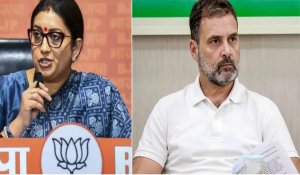
Bharatiya Janata Party (BJP) National General Secretary Smriti Zubin Irani launched a scathing attack on Congress MP and...
New Delhi: Cockroach Janata Party (CJP) leaders Saurav Das and Ashutosh Ranka will be released from judicial custody...

According to police, three suspicious young men are seen in CCTV footage. Efforts are underway to identify them....

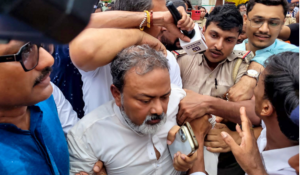
A video has surfaced of an alleged attempted assault on Jan Suraj Party's Bihar president Manoj Bharti. The...
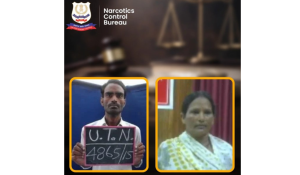
Two accused have been convicted and sentenced to 10 years of rigorous imprisonment in a 2017 drug trafficking...
Aries: The day will be auspicious...