Last Updated: October 29, 2026
Last Updated: October 29, 2026





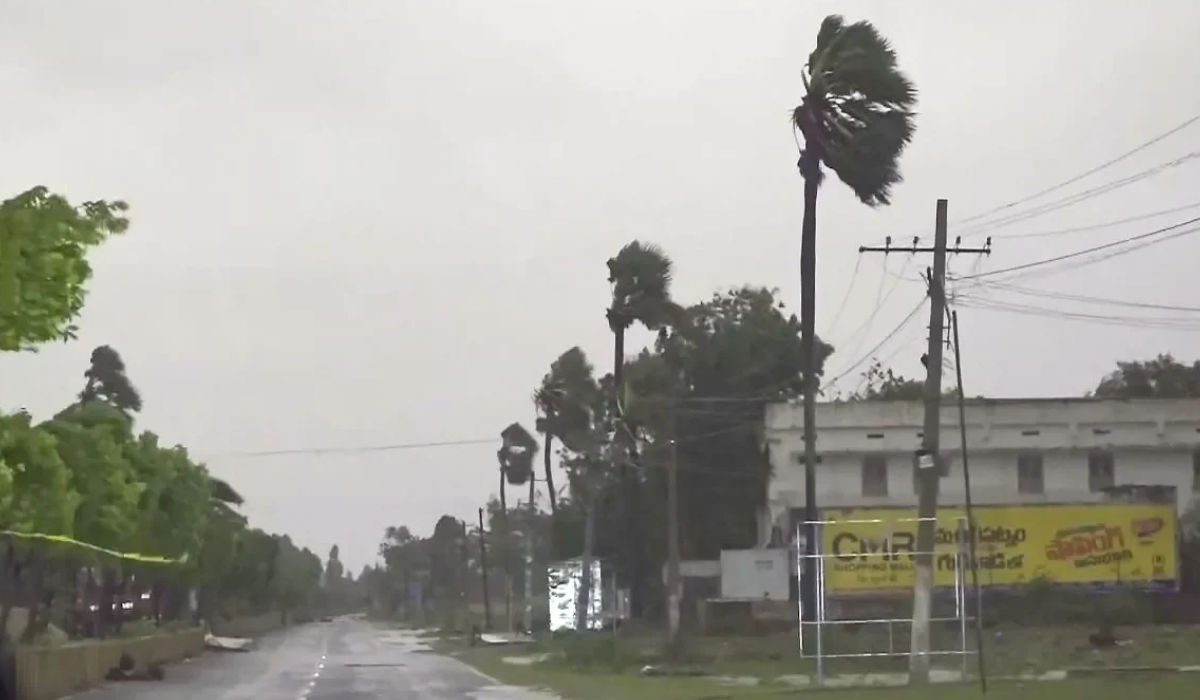
Unfortunately, India seems to be reeling from natural disasters. This year, we haven’t yet been able to escape the negative impact of El Niño. Uneven rainfall has caused drought in some areas, and torrential downpours elsewhere have plagued farmers, and the common man is also grappling with the resulting inflation. Now, the extremely severe cyclonic storm “Arnab” is lashing four states. Telangana, Odisha, Chhattisgarh, Andhra Pradesh, and the town of Yanam in the Union Territory of Puducherry have been affected. According to the Indian Meteorological Department, “Arnab” is expected to make landfall near Yanam, on the Andhra Pradesh and Yanam coasts between Bapatla and Visakhapatnam, on the morning of October 28th. Originating in the Bay of Bengal, the storm has been in full swing since Tuesday. The affected states will experience winds of up to 150 kilometers per hour and heavy rainfall. Fearing the impact, 600,000 people in coastal Andhra Pradesh have been evacuated from their homes to safer locations. The impact of this powerful storm, originating in the Bay of Bengal, is expected to last for 48 hours. It will hit Madhya Pradesh and Uttar Pradesh, as well as Tamil Nadu, Kerala, Telangana, Jharkhand, Bihar, Chhattisgarh, and West Bengal. War-level preparations have been made in Andhra Pradesh to face the storm. The central government has directed that while no one can stop the storm, no one should lose their lives. NDRF teams have been deployed to deal with the situation, while additional teams have been asked to be on standby. Andhra Pradesh has released ₹27 crore for relief work in 20 districts. Schools have also been closed for two days in the Andaman and Nicobar Islands. People have been asked to stay indoors. 225 teams have been deployed in six districts of Odisha. In October, storms frequently form along India’s coastal areas, but some are extremely powerful, known as super cyclones. Previously, cyclones wreaked havoc in 1999, 2013, and 2014. ISRO studies indicate that three storms will form between October and December. Their pressure gradient (PDI) could be approximately 83 percent higher than the average of the past 44 years. Skymet Weather reports that storms occur in two seasons a year: April to May and October to December. Sometimes they retrace their course after hitting the coasts, but sometimes they become severe. The Meteorological Department states that the storm will affect railway and national highway networks in four states until the evening of October 28th. Every year, this part of India faces natural disasters. Life is disrupted, the railway network becomes erratic, and air travel is affected. Where is the solution to all these problems? Solutions are being sought at two levels: one with the help of artificial intelligence and the other with satellites launched into space by ISRO. Both approaches aim to provide advance warning (if possible, several days in advance) to the governments of the respective states about the impending cyclones. Relief can be achieved by evacuating affected people in advance and deploying emergency service officers with rescue equipment. Undoubtedly, humans are helpless in the face of nature, but if bureaucratic systems act promptly instead of delaying, corrupting, and lining their own pockets in the name of protection and assistance, disasters cannot become so severe.
BJP National President Nitin Nabin will chair a meeting of party general secretaries in New Delhi on Thursday...

Congress candidate Abhijit Govindrao Wanjarri has won the Nagpur Division Graduates’ constituency in the Maharashtra Legislative Council elections...

At least 68 people have been reported killed in a collision between two high-speed trains in Spain’s Toledo...

At 46, Meera Thakur (name changed) could transform her life from one marked by homelessness, illness and uncertainty...
Music therapy aids healing of military personnel. There has been an increase in music therapy to treat combat-related...

India is strengthening the security of its financial infrastructure through a combination of physical decentralisation, indigenous cybersecurity capabilities...

Aries: The day will be auspicious...