Last Updated: October 22, 2026
Last Updated: October 22, 2026





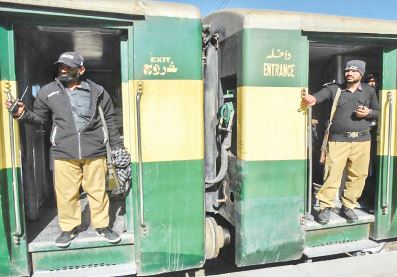
The Jaffer Express, which connects Quetta in Balochistan with Peshawar in Khyber Pakhtunkhwa, remains one of Pakistan’s most vital passenger trains. But over the years, it has gained the grim reputation of being a frequent target of militant attacks. In 2025 alone, it has been attacked seven times, the latest incident occurring on Tuesday near the Sindh–Balochistan border, when a powerful explosion derailed several of its coaches.
Officials said the explosion, caused by an improvised explosive device planted on the tracks near Sultankot, injured at least seven passengers and overturned one of the derailed coaches. The Baloch Republican Guards (BRG), a separatist group, claimed responsibility for the attack. The group said the train was targeted because personnel from the Pakistani Army were on board. In a statement, BRG declared that such operations would continue until Balochistan attained independence.
Rescue teams reached the site shortly after the blast to assist the injured and restore movement on the line. Sindh Chief Minister Murad Ali Shah condemned the incident and sought a detailed report from the state police chief.
The Baloch Republican Guards, which took responsibility for the attack, is among several armed groups active in Balochistan. It operates under the umbrella of the Baloch Raaji Aajohi Sangar alliance, which also includes the Balochistan Liberation Front and Balochistan Liberation Army-J. The BRG was formed in 2012 following the killing of Baloch leader Bakhtiar Domki’s wife, daughter, and driver. Its activities are concentrated in Nasirabad, Bolan, and Kech districts.
Over the past few years, the group has claimed several acts of sabotage. In February 2022, it carried out a grenade attack in Dera Murad Jamali that killed one person and injured several others. In December 2023, it blew up a natural gas pipeline in Rahim Yar Khan district, disrupting supplies from Balochistan’s Sui gas fields to Punjab.
Tuesday’s explosion adds to a growing list of violent attacks targeting the Jaffer Express this year. On September 24, a bombing in Mastung district injured several passengers and derailed six bogies of the train. Just weeks earlier, on August 10, an IED attack injured four people and derailed six coaches near Mastung. That attack followed a firing incident on August 4 when gunmen, allegedly from the Baloch Liberation Army, shot at the train’s pilot engine near Kolpur.
In June, another explosion derailed four coaches of the train in Sindh’s Jacobabad district, though no casualties were reported. However, the deadliest episode occurred on March 11 in Bolan when the Jaffer Express was hijacked by militants, leading to the deaths of 21 passengers and four security personnel. The army’s retaliatory operation killed 33 insurgents after a siege that lasted more than 30 hours. Survivors described the experience as terrifying, with continuous gunfire echoing around them.
The train’s vulnerability lies in its route and passenger profile. It runs through Balochistan’s insurgency-hit areas and is frequently used by security personnel from Punjab and Khyber Pakhtunkhwa. This makes it a symbolic and strategic target for groups such as the Baloch Liberation Army, Baloch Republican Guards, and the Tehreek-e-Taliban Pakistan.
The recurring attacks reflect the broader unrest in Balochistan, Pakistan’s largest but least populated province. For decades, Baloch rebel groups have accused Islamabad of exploiting the region’s resources while neglecting its development. Human rights activists have also accused Pakistan’s security forces of enforced disappearances of Baloch youths, a charge repeatedly denied by the authorities.
The repeated targeting of the Jaffer Express underscores both the security challenges facing Pakistan’s railway network and the deepening insurgency in Balochistan. Despite stepped-up patrols and security measures, the train continues to operate under constant threat, turning a vital public transport service into one of the most dangerous journeys in the country.
Pakistan's Defense Minister Khawaja Asif has questioned alleged plans by senior government officials to permanently settle abroad. He...
The Baloch Liberation Army (BLA) has claimed responsibility for carrying out 34 operations between October 9 and 20...
Russian President Vladimir Putin said on Wednesday that Russia's first tanker carrying 40,000 tons of diesel fuel will...

Ten people were killed and 44 others injured in a horrific road accident in Pakistan's Punjab province. The...
North Korean leader Kim Jong-un's influential sister, Kim Yo-jong, and a military marshal inspected fortification work along the...

New Delhi: US Secretary of State Marco Rubio has assured India that America’s relations with any country in...

Aries: The day will be auspicious...