Last Updated: October 21, 2026
Last Updated: October 21, 2026





Abhishek Vij
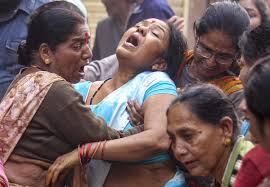
As the new year began, contaminated water in Indore, Madhya Pradesh, considered one of India’s cleanest cities, has claimed 19 lives so far. Approximately 300 people are receiving treatment in hospitals. This cannot be dismissed simply as an outbreak of diarrhea, as the Madhya Pradesh government is claiming. This is a tragedy caused by contaminated drinking water, resulting from a disregard for sanitation and negligence towards the sewage system.
The Madhya Pradesh government says it has recognized the seriousness of the situation and has taken public health emergency measures, and that the situation is now under control.
But what kind of control is this that has left the families of those who died from drinking contaminated water in deep shock? The fact that 294 people are still receiving treatment in hospitals and 32 are in the ICU indicates that the tragedy is significant. Leader of the Opposition in the Lok Sabha, Rahul Gandhi, has called Madhya Pradesh a center of misgovernance. Beyond Indore, let’s look at the rest of the country.
Has cleanliness been adopted as a new habit and sewage system maintenance given priority? The answer is no. Look at any state, and you’ll see that sanitation campaigns become politicized. The devastating effects of inadequate sewage cleaning were witnessed this year during the unprecedented rains in Punjab, Himachal Pradesh, and Uttarakhand. Even a little rain in metropolitan areas causes flooding, with water repeatedly entering homes, disrupting people’s lives and damaging their belongings.
The root cause is that those whose duty it is to keep cities functioning smoothly, maintain the sewage systems, and manage waste disposal are not doing their job. Therefore, when water mixes with pollutants, it becomes poison and reaches people’s homes.
In Madhya Pradesh, two officers have been removed from their posts in the name of action. When even a clean city like Indore couldn’t escape pollution, what will happen to other cities in the country that are losing their rankings year after year due to garbage? This problem of pollution affects most of the country’s metropolitan cities. Reports indicate that people don’t even refrain from leaving garbage on Mount Everest. Despite government fines, another mountain of garbage is accumulating on Mount Everest. Pollution is a problem that is spreading poison and disease among people. The time has come for the government to understand the seriousness of this problem. This is a lesson for other states and metropolitan cities of the country as well. From garbage accumulation to widespread pollution, the air in these cities has become suffocating, and the water is distributing doses of poison. Every state needs people like Sant Balbir Singh Seechewal, who transformed the polluted Kali Bein river into a clean one and is now thinking about the rejuvenation of the Budha Nullah. Such public service is welcome, but let’s not forget that the responsibility lies with the government. All state governments should learn from this tragedy in Indore and create an effective plan to prevent environmental pollution, air pollution, and water pollution, so that it has a positive impact on people’s health. They should not face untimely deaths, but rather live healthy lives as long as they live. The judiciary has also taken cognizance of the contaminated drinking water tragedy in Indore. A public interest litigation was filed by Ritesh Inani, the president of the Bar Association. The court has sought information regarding the 19 deaths and 294 infected patients and has asked the government to fulfill its responsibility. The compensation given to the families after death is not a substitute for a healthy life.
Good Evening Viewers! Get the latest updates from India and around the world with The Savera Times Evening...

Bharatiya Janata Party (BJP) National General Secretary Smriti Zubin Irani launched a scathing attack on Congress MP and...
New Delhi: Cockroach Janata Party (CJP) leaders Saurav Das and Ashutosh Ranka will be released from judicial custody...
According to police, three suspicious young men are seen in CCTV footage. Efforts are underway to identify them....
A video has surfaced of an alleged attempted assault on Jan Suraj Party's Bihar president Manoj Bharti. The...
Two accused have been convicted and sentenced to 10 years of rigorous imprisonment in a 2017 drug trafficking...
Aries: The day will be auspicious...