Last Updated: October 8, 2026
Last Updated: October 8, 2026





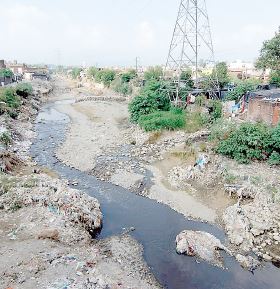
Dehradun, once a serene town known as ‘Dehra’, witnessed severe floods on September 16, 2025, when heavy rainfall caused the rivers Rispana and Bindal to overflow, leaving large parts of the Doon Valley submerged. For long-time residents, this is the first instance of riverine floods causing such extensive damage.
The Dehradun of today bears little resemblance to the quaint settlement of the past. In the early 20th century, the town was celebrated for its fertile soil, heavy rainfall, and lush greenery. Author Ruskin Bond described it as a place where trees flourished and gardens and orchards were common around every bungalow. Birdsong and the sounds of flowing water were an everyday presence, and traffic was minimal. Water flowed freely through a network of canals constructed by the British, including the Raipur canal, which continues to supply drinking water and irrigate farmland.
The transformation of Dehradun began in earnest after it became the capital of Uttarakhand in 2000. Industrial and residential expansion in areas like Selaqui and Mohabbewala, along with the construction of high-rise buildings and commercial complexes, altered the landscape. Land-use studies between 2003 and 2017 show a significant rise in built-up areas, particularly along the watershed of the Rispana, with forest patches and agricultural land gradually replaced by urban settlements.
These changes have intensified the city’s vulnerability to floods. The recent inundation affected industrial zones, residential areas, and academic campuses. Rivers that once sustained the valley now struggle under altered courses, reduced width, and encroachment by cemented structures. The Bindal, once clear and flowing, carries sewage, toxic waste, and garbage today, a stark contrast to the past when it supported irrigation and local livelihoods.
Dehradun’s rainfall pattern has also shifted over the decades. Earlier, rain was continuous and moderate, often lasting several days, contributing to the region’s rich biodiversity. Today, rainfall is intense but brief, adding to the risk of sudden floods. Seasonal torrents and riverbeds that once absorbed water naturally now overflow into residential and commercial areas. The city’s transformation has also affected its cultural and environmental character. Birds, frogs, and cicadas that once filled the valley with sound are largely absent.
Rice fields and orchards have given way to concrete, while traditional water management systems lie buried or neglected.
The Dehradun of Ruskin Bond’s writings and the memories of long-time residents—verdant, tranquil, and in harmony with nature—has largely vanished. What remains is a bustling urban city struggling with the consequences of rapid development and a fragile relationship with its water bodies, a modern landscape defined as much by loss as by growth.
Mumbai: The Bombay High Court on Thursday expressed surprise over the lifestyle, including the use of high-end cars,...

New Delhi: India on Thursday welcomed the ASEAN Plan of Action for Energy Cooperation 2026–2030 and assured the...

Kolkata: The authorities of the Netaji Subhas Chandra Bose International Airport in Kolkata received a hoax bomb threat...

Haridwar: Uttarakhand Chief Minister Pushkar Singh Dhami said on Thursday that in a democracy, everyone has the right...

New Delhi: Canadian classicist, author and academician Anne Carson, whose oeuvre defies traditional genres by merging poetry, prose,...

The National Human Rights Commission (NHRC) has taken suo motu cognisance of a media report regarding the alleged...