Last Updated: November 21, 2026
Last Updated: November 21, 2026





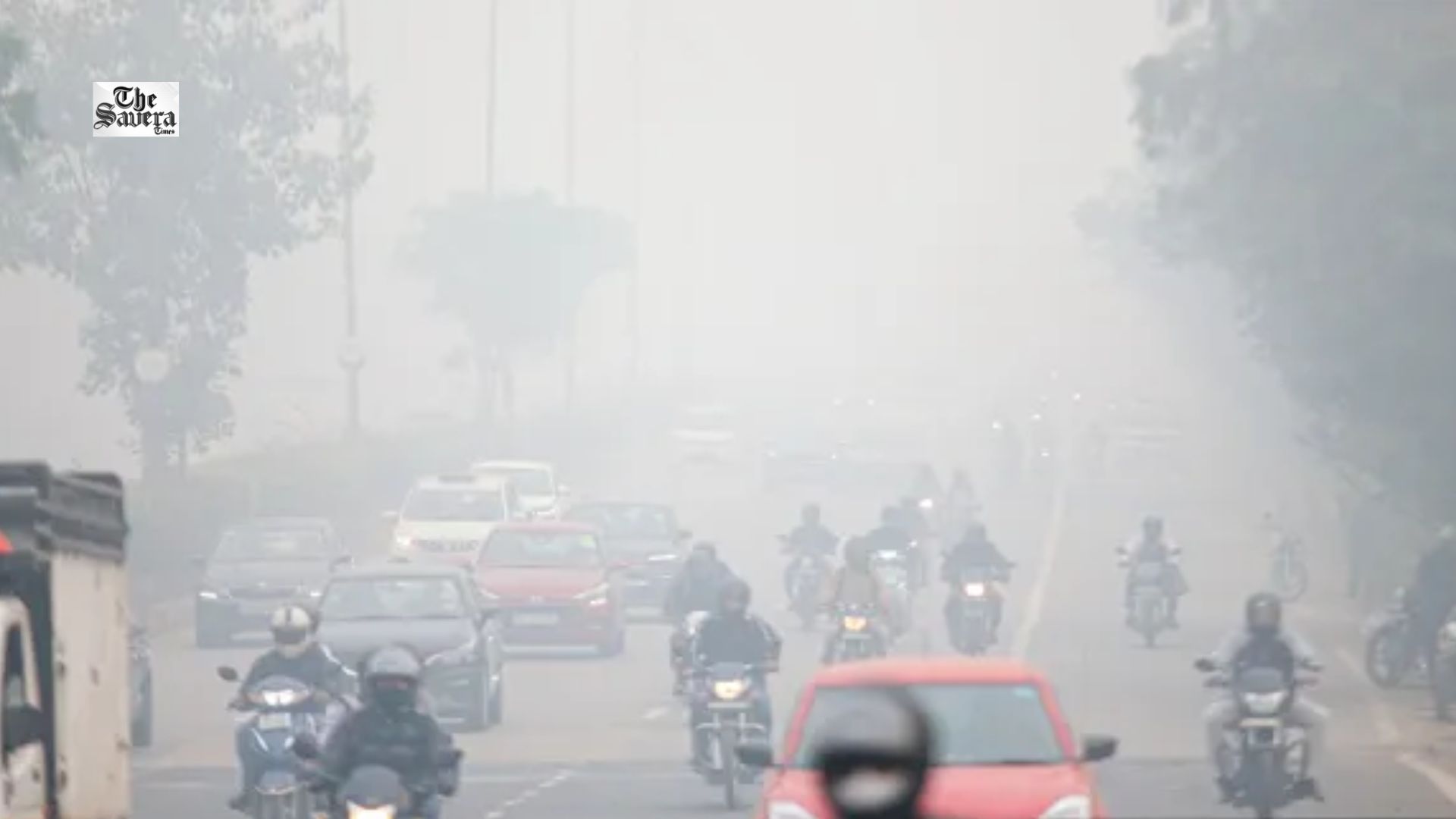
New Delhi: Winter chill is becoming increasingly noticeable across Delhi-NCR, while air pollution continues to remain a major concern. Delhi recorded an Air Quality Index (AQI) of 327 at 8:20 am on Saturday, placing the national Capital in the very poor category.
Several monitoring stations across the city reported very poor air quality, with Sirifort recording the highest AQI of 368. Chandni Chowk followed at 366, Commonwealth Sports Complex at 362, Punjabi Bagh at 360, CRRI Mathura Road at 355 and Pusa at 353.
Other areas also recorded elevated pollution levels, including Nangloi (330), Shadipur (326), Vasundhara Enclave (315), Talkatora Garden (316), NSUT Jaffarpur (316), Karala (296), NIH Narela (285), Chhawla (278), Tikri Kalan (264), Mandir Marg (253), Burari (246) and Ghoga (240).
Delhi Records Lowest Temperature of the Season
The winter chill has also intensified in the national Capital. Delhi recorded a minimum temperature of 10.5 degrees Celsius on Friday, the lowest of the season so far, compared with 10.6 degrees Celsius a day earlier.
According to the India Meteorological Department (IMD), temperatures may rise slightly on Saturday before declining by around 2-3 degrees Celsius over the next few days.
The weather is expected to remain predominantly clear on Saturday. However, fog and haze reduced visibility in several parts of the city during the morning hours.
The IMD has also indicated that a western disturbance prevailing in the middle tropospheric levels, approximately 5.8 km above sea level, may influence weather conditions and lead to fluctuations in temperatures.
Delhi’s AQI Remains Poor for Sixth Consecutive Day
Delhi’s air quality remained in the poor category for the sixth consecutive day on Friday. The AQI stood at 268 around noon before settling at 270 by 4 pm, showing a marginal improvement from 280 recorded at the same time a day earlier.
Favourable ventilation conditions helped prevent any monitoring station from entering the severe category on Friday. However, several areas continued to experience very poor air quality.
Sirifort recorded an AQI of 357, followed by Pusa at 349, Chandni Chowk and ITO at 346 each, and CRRI Mathura Road at 336.
The Indian Institute of Tropical Meteorology (IITM) had forecast that Delhi’s AQI would remain in the poor category on Saturday before slipping into the very poor category on Sunday. Unfavourable meteorological conditions were expected to hinder the dispersal of pollutants.
Construction Ban Lifted, GRAP Stages I and II Remain in Force
The construction ban imposed by the Commission for Air Quality Management (CAQM) across the National Capital Region from November 5 to 20 was lifted on Friday.
However, restrictions under the Delhi government’s separate winter pollution-control framework will remain in effect until January 31, with stricter measures scheduled to come into force from December 10.
Stage I and Stage II measures under the Graded Response Action Plan (GRAP) continue to remain in force across Delhi-NCR.
The CAQM has also issued separate directions concerning dust-generating demolition and outdoor construction activities, along with physical office attendance requirements, under its October 30 order.
Delhi Government Steps Up Pollution-Control Measures
As part of its pollution-control initiatives, the Delhi government has deployed 108 Mechanical Road Sweeping (MRS) machines across the National Capital Territory.
It has also undertaken nearly 80 lakh plantation activities and completed the redevelopment of 1,440.713 km of roads.
The government had earlier highlighted that Delhi’s average AQI on October 31 stood at 166, considerably better than the 223 recorded during the corresponding period last year.
Despite these measures, pollution levels remain a concern as winter conditions intensify and weather patterns are expected to affect the dispersal of pollutants.
Delhi Police have busted an alleged illegal parking racket near the Red Fort and arrested a 40-year-old man....

Gangster Naseem Durrani, wanted in connection with the November 16 shooting murder near Delhi Minister Kapil Mishra's camp...

Prime Minister Narendra Modi will inaugurate the first SCO Civilisational Dialogue Forum at Delhi's Purana Qila, bringing together...

After Diwali, the level of air pollution, i.e. AQI, in Delhi-NCR has decreased but is still at a...
Two people were killed and six others injured in a tragic road accident in the Kashmere Gate area...

CISF personnel apprehended a man from Haryana after he allegedly tried to force his way into Terminal 3...

Aries: The day will be auspicious...