Last Updated: November 15, 2026
Last Updated: November 15, 2026





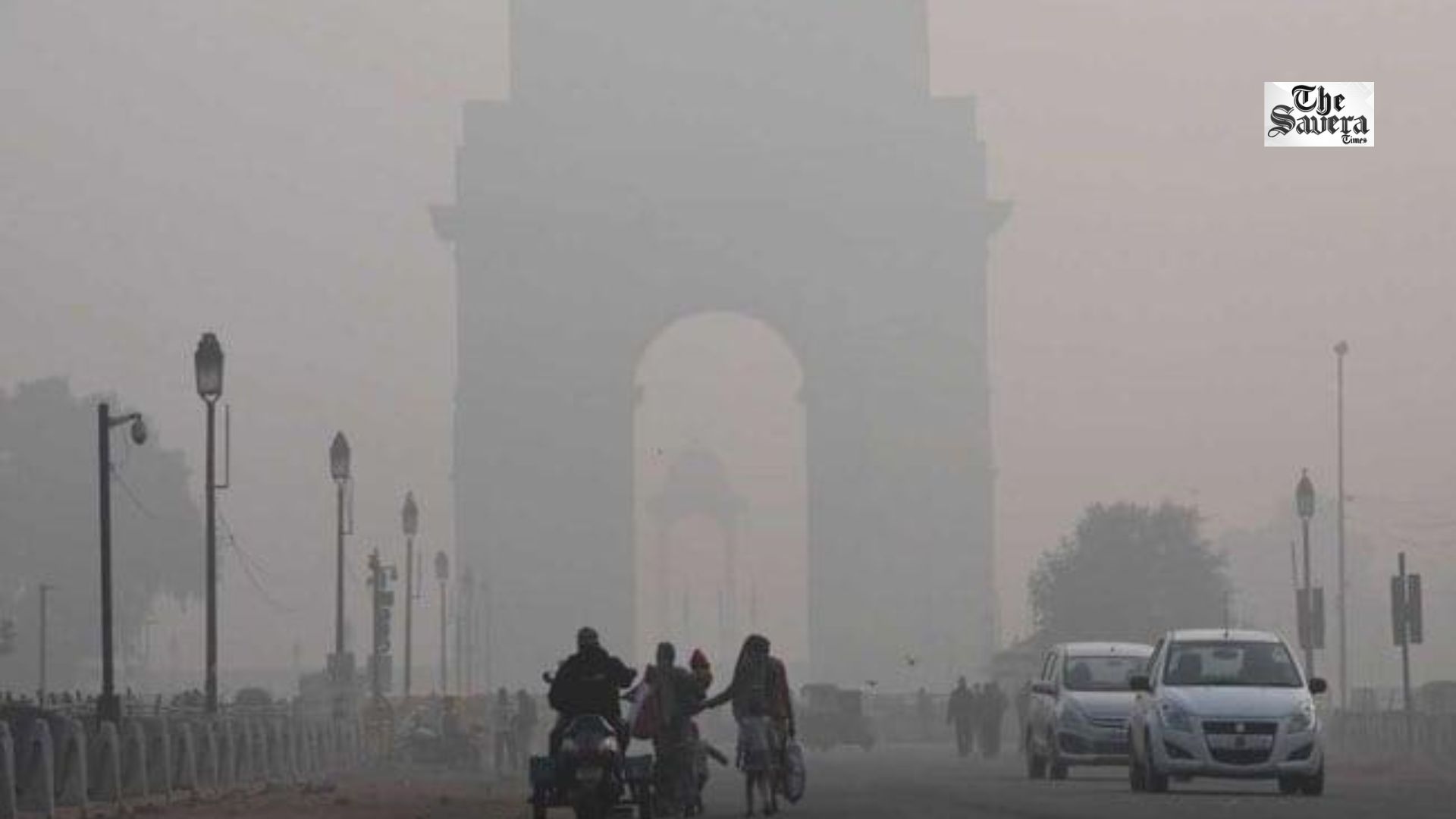
New Delhi: Delhi continued to face very poor air quality on Sunday, November 15, with several places in the national capital experiencing heavy smog. In the morning, Delhi’s AQI was 352, according to data from the Central Pollution Control Board (CPCB).
However, several stations in the city reported AQI values exceeding 400 and falling into severe category. Prominent pollutants were PM10, PM2.5.
IIT Delhif recorded the highest AQI of 425, followed by ITO at 415. Commonwealth Sports Complex had an AQI of 403. Delhi University’s North Campus and Pusa both had a reading of 402. Burari Crossing reported an AQI of 400.
Punjabi Bagh had an AQI of 386, Jawaharlal Nehru University (JNU) had an AQI of 383, Akshardham Temple had an AQI of 365, RK Puram had an AQI of 339, Okhla Phase-2 had an AQI of 330 and Maidan Garhi had an AQI of 325.
Some areas had much lower readings. Najafgarh had an AQI of 298. IGNOU-Maidan Garhi and IMD Lodhi Road (IITM) both had AQI readings of 278 and 280 respectively. All fell into the poor category. Cantonment Area had an AQI of 165, falling into the moderate category.
GRAP Stage 3 Restrictions Still Apply in NCR
The Commission for Air Quality Management (CAQM) imposed Stage 3 restrictions under the Graded Response Action Plan (GRAP) in Delhi-NCR on November 6 due to worsening air quality and predicted further degradation. Immediate restrictions were put into place alongside Stage 1 and 2.
Long-Term Exposure to Air Pollution May Increase Risk of Developing Diabetes
A public health analysis published in the Journal of Vascular Diseases found that long-term exposure to fine particulate matter can increase the risk of developing type 2 diabetes. Long-term exposure to fine particulate matter was consistently associated with increased risk of developing type 2 diabetes by 10-16%.
The analysis combined data from over 200 million cumulative participant observations globally. It shows that air pollution can cause negative health effects outside of respiratory and cardiovascular systems. This has implications for metabolic health in highly exposed areas such as South Asia.
This study was a collaboration between Anoop Misra, Padma Shri winner and Executive Chairman and Director of Diabetes and Endocrinology at Fortis C-Doc Hospital for Diabetes and Allied Sciences in New Delhi, Yashendra Sethi, Nirja Kaka, Saurabh Singhal, Manvi Vasudev and Giuseppe Biondi-Zoccai.
A 46-year-old man and a 45-year-old woman died after allegedly consuming a poisonous substance inside a car in...

New Delhi: The Rouse Avenue Court on Saturday heard arguments on the charges on behalf of accused Muzammil...

New Delhi: Delhi Police has drawn up a fresh set of proposed guidelines to regulate protests and public...

New Delhi: Delhi Police has filed a 450-page chargesheet against three accused in the Astha Kunj Park gang...

New Delhi: Delhi Lieutenant Governor Taranjit Singh Sandhu on Saturday visited Basant Lok market and interacted with shopkeepers,...

New Delhi: Delhi’s air quality remained in the ‘very poor’ category on Saturday morning, with the overall Air...

Aries: The day will be auspicious...