Last Updated: November 27, 2026
Last Updated: November 27, 2026




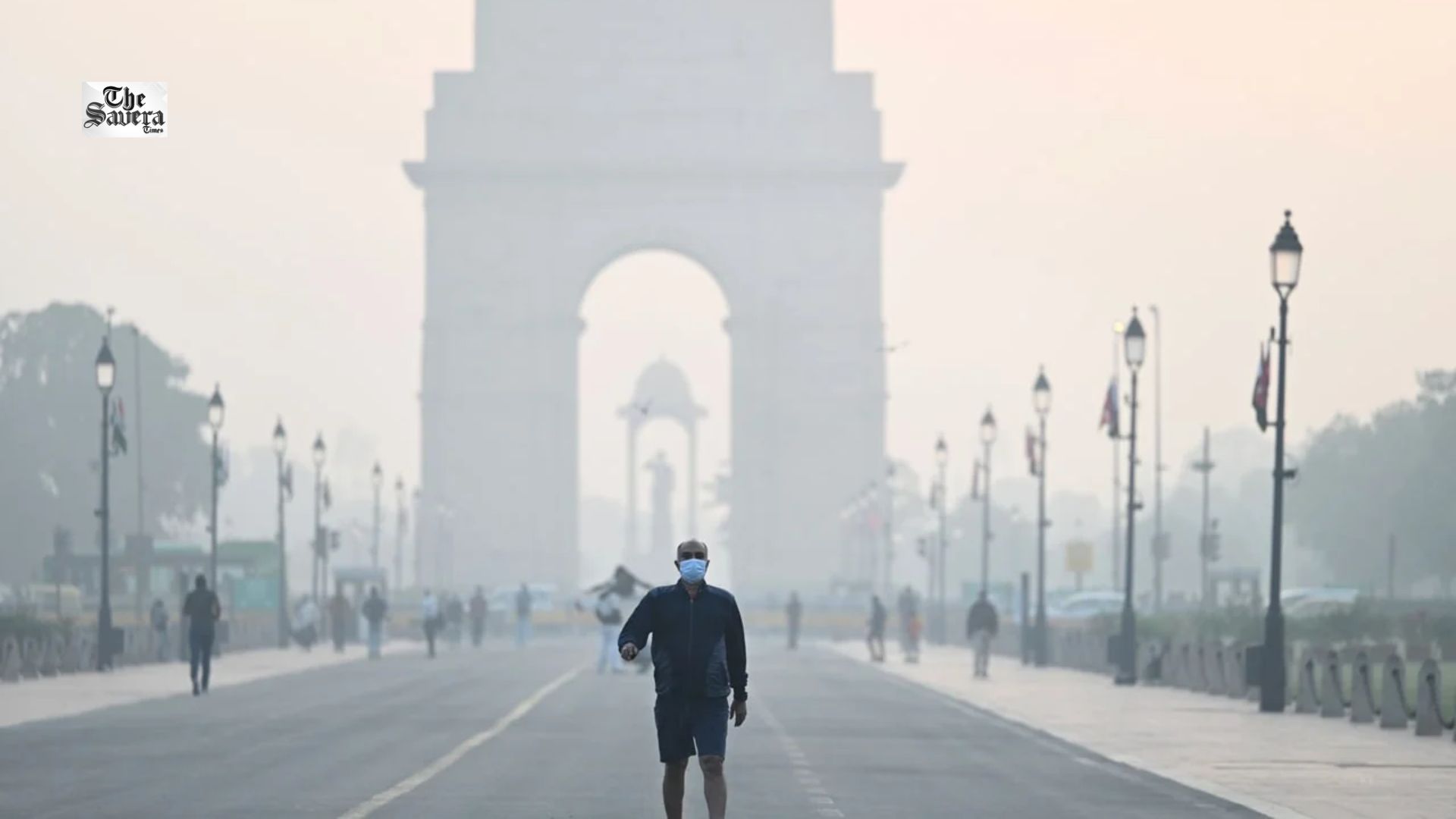
New Delhi: Delhi’s air quality showed a sharp improvement on Friday morning after pollution levels surged close to the severe category overnight. However, a layer of haze continued to cover the national capital, with several monitoring stations still recording poor air quality.
Delhi recorded an Air Quality Index (AQI) of 239 at 8:40 a.m. on Friday, significantly lower than the overnight peak of 393 recorded around 2 a.m.
The AQI had stood at 273 at 6:11 a.m., nearly 120 points below the overnight high, before declining further in the morning.
Several Delhi Areas Continue to Record High Pollution Levels
Despite the overall improvement, pollution remained elevated across several parts of the city.
DTU recorded an AQI of 304, while CRRI Mathura Road and North Campus registered 292 each. Ghoga recorded 289, followed by ITO at 285, Sirifort at 280 and Wazirpur at 273.
Other locations also reported high readings, including Bawana (266), Punjabi Bagh (260), Burari (259), Chandni Chowk (259), Karala (244), Chhawla (243), Narela (239), Anand Vihar (239), Alipur (239), Rohini (233) and Badarpur (218).
IGI Airport (T3) recorded an AQI of 289, while Burari Crossing registered 287. Tikri Kalan reported a comparatively lower reading of 164.
AQI Swings From 121 to 393 Within Hours
Delhi saw a substantial improvement in air quality on Thursday, with the AQI reaching its best level in the previous 24 hours so far at 5.01pm at 121.
Pollution levels then started to increase again in the evening. The AQI rose above 300 around 8pm and shortly after 2am on Friday it hit 393. AQI levels continued to be above 300 even after 5am, AQI.in states.
Over the last seven days up to and including November 26, Delhi’s worst air quality occurred on November 20 at 6am when the AQI was 465. The best level was 170 and was recorded at 12noon on November 26.
Poor air quality was also prevalent in the early mornings on many occasions, often between 350 and 450.
PM10 Levels Remain Far Above WHO Guideline
Whilst the general AQI had improved, this did not equate to pollution levels being within a safe range.
On Friday at 6.11am, PM10 levels were 274 micrograms per cubic metre – over six times greater than the World Health Organisation’s suggested maximum limit of 45.
Furthermore, an analysis of pollution data for 10 key cities in the National Capital Region (NCR), has indicated that Delhi was the most polluted city for both PM2.5 and PM10 between October 1 and November 25.
Last year, Delhi was placed third for PM2.5 and fourth for PM10 – suggesting that Delhi’s position has slipped back in relation to other key NCR cities.
India will host the 25th IORA Council of Ministers Meeting in New Delhi on November 27. The meeting...

New Delhi: The Centre on Thursday informed the Delhi High Court that a Look Out Circular (LOC) had...

Delhi recorded an overall AQI of 319 on Thursday, keeping air quality in the very poor category. The...
The Samyukt Kisan Morcha has planned nationwide protests to mark six years of the farmers' movement. In Delhi,...
New Delhi: The Supreme Court on Wednesday set aside the Allahabad High Court’s directions to the Central Bureau...

New Delhi: The Delhi High Court on Wednesday refused to grant an urgent hearing to Cockroach Janata Party...

Aries: The day will be auspicious...