Last Updated: October 21, 2026
Last Updated: October 21, 2026





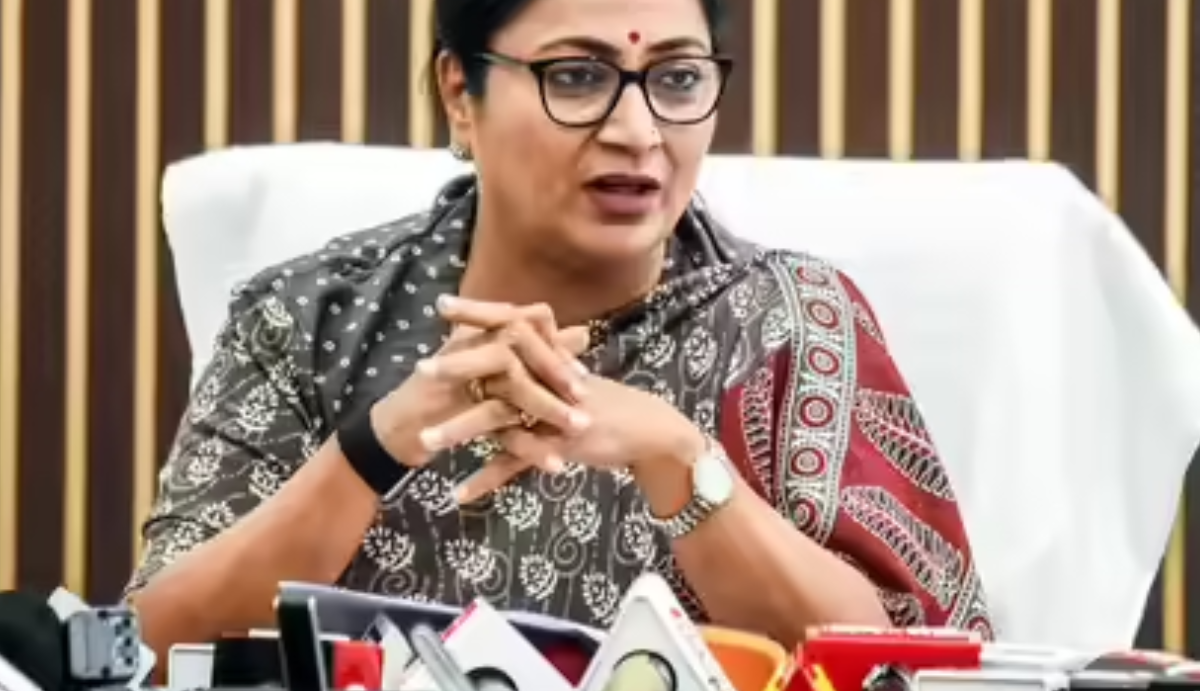
Delhi Chief Minister Rekha Gupta has said that the new Electric Vehicle (EV) Policy rolled out by her government is aimed at providing an end-to-end solution to clean mobility and addressing pollution levels. She also elaborated on plans to achieve the stipulated target of EVs adoption and informed that the capital will have more than 30,000 EV charging stations soon. In an exclusive interview, Gupta spoke about the rationale behind the policy, government’s target of achieving over 30 per cent EV adoption by 2030, expansion of charging infrastructure, the future of petrol and diesel vehicles, a separate policy for e-rickshaws, Delhi’s power preparedness, and concerns over the impact on the automobile market. Here is the excerpt of the interview Question: What is the vision behind Delhi’s new EV Policy? What were the key objectives behind bringing this policy, and what is your roadmap for the future? Answer: I feel that the EV policy was a very big need for this city. It was important to bring it in a framework that provides endto-end solutions. Now that we have implemented the EV policy and placed it before the public, I believe it will play a significant role in Delhi’s future. We have brought an end-to-end solution. We have not only provided subsidies but also enhanced our focus on ramping up charging infrastructure. We have prepared a complete plan for an e-waste plant. When we talk about pollution in Delhi and e-mobility, it is important that our mode of transportation changes. Pollution is one of Delhi’s biggest challenges. It was important to work on a 360-degree solution. During the past year, we have worked on every aspect contributing to pollution. We focused on dust mitigation, including road carpeting and measures to control dust. To make Delhi greener, we have begun work towards planting 70 lakh trees. Vehicular emissions are among the biggest contributors to pollution in Delhi, and we have worked extensively to address them. We have prepared a plan to convert both the public and private transport fleets to EVs. For the public fleet, we are converting all Delhi government buses to electric buses. Today, Delhi has around 4,500 electric buses, more than any other state in the country. We have also floated tenders for additional EV buses under the PM E-Drive initiative. In the private sector, we are encouraging people to adopt EVs, whether twowheelers, three-wheelers, cars, N1 trucks or N2 trucks. Through subsidies, scrapping incentives, registration fee waivers and road tax exemptions, we have made EV ownership highly beneficial. People will get better vehicles with lower running costs, reducing their daily expenses. At the same time, the environment will benefit. It is our collective responsibility to make this EV policy successful. Question: The Delhi government has set a target of achieving over 30 per cent EV adoption by 2030. How do you plan to build the infrastructure needed to achieve this ambitious target? Answer: The EV policy is based on infrastructure. Every person wants to buy an EV only if they are confident that the government will provide the necessary infrastructure. We are fully prepared. At present, Delhi has around 9,000 EV charging points, and our target is to increase this to 32,000. We have assigned responsibilities to OEMs, Resident Welfare Associations (RWAs), housing societies and business institutions. Everyone will be brought onto one platform. There should be EV charging stations everywhere, and the government will support this. We will introduce a single-window platform through which all approvals can be obtained at one place. People will not have to face unnecessary delays. We will ensure that the maximum number of EV charging stations are installed. This will make life more convenient for people while also reducing pollution.” Question: Many people are worried about what the new EV policy means for existing petrol and diesel vehicles. What would you like to tell current vehicle owners, and what are the guidelines for future buyers? Answer: Nothing changes overnight. Such transitions take years and happen in phases. People who already own petrol or diesel vehicles can continue to use them as long as they are legally permitted. There is no reason for the public to worry or be confused. We have only introduced phased guidelines. For example, from January 1, 2027, only electric autos will be newly registered in Delhi. Existing autos will continue to operate. Similarly, from April 2028, only electric two-wheelers will be registered, while existing petrol-powered twowheelers will continue until the end of their permitted lifespan. Without such phased mandates, a policy involving government investment of Rs 15,000 crore would be meaningless.” Question: As EV adoption increases, electricity demand will also rise significantly. Is Delhi’s power infrastructure prepared for this transition? Can you assure people that they will continue to receive uninterrupted electricity? Answer: Delhi is already receiving 24-hour electricity supply. The capital has recorded its highestever electricity consumption, yet we have strengthened our substations and systematically planned power supply as well as power procurement. At the same time, we are moving towards solar energy, which will become the lifeline of the city. We have set ambitious solar targets.
Rescue teams recovered the bodies of four youths from the Kotri canal in Kota on Wednesday morning, after...

A balloon containing a suspected flammable chemical burst during a stage play in Siwan, injuring around 10 spectators....
State Bank of India has confirmed that 3,897 customer records containing personal information were found on the dark...

A fire in a hut in Nonapar village of Deoria district claimed three lives, including those of a...
Amit Shah paid tribute to police personnel who died in the line of duty at the National Police...
Reduced water levels at Har Ki Pauri and other Haridwar ghats have inconvenienced pilgrims during the Upper Ganga...

Aries: The day will be auspicious...