Last Updated: October 21, 2026
Last Updated: October 21, 2026





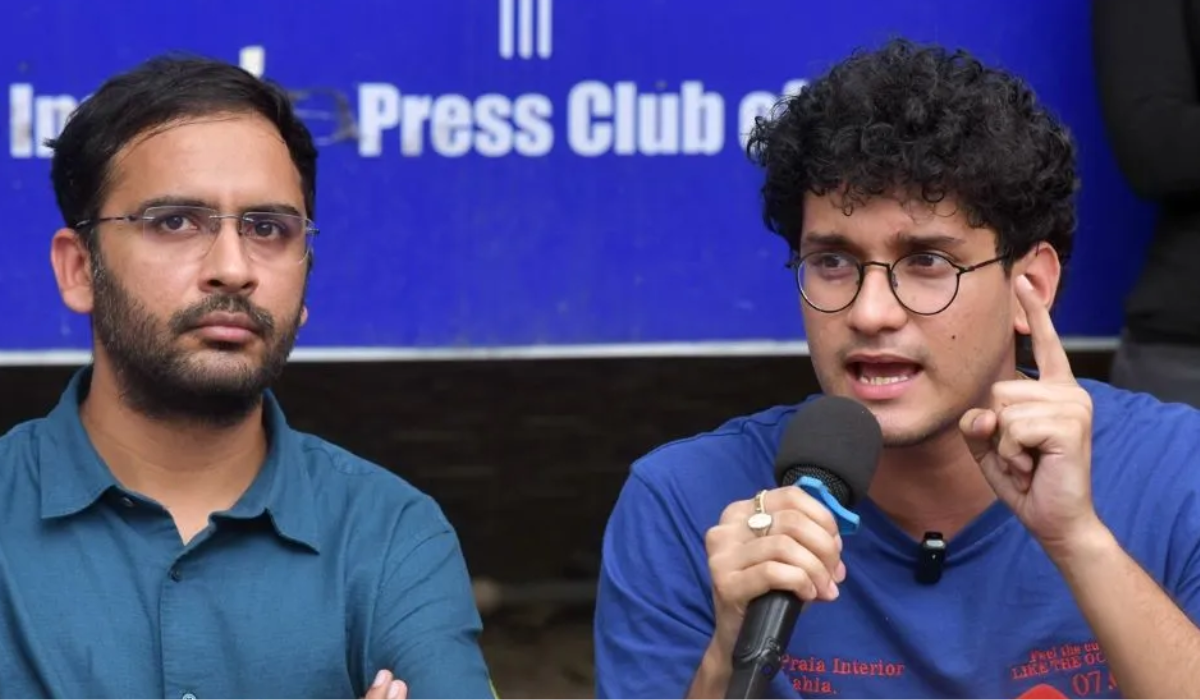
New Delhi: The Delhi High Court on Wednesday posed several questions to Cockroach Janata Party (CJP) leaders Sourav Das and Ashutosh Ranka during an urgent hearing on a petition challenging the extension of their judicial custody. Citing their age, the court stated that they do not belong to the Gen Z generation. Both leaders had challenged the Special Executive Magistrate’s (SEM) order extending their judicial custody.
Delhi High Court Justice Subramonium Prasad, hearing the case, questioned the two leaders about violating the terms of their bond.
During the hearing, the court noted that the Indian Civil Security Code (BNSS) provides a prescribed procedure for action in case of violation of bond conditions. Under this, the surety deposit can be confiscated and the person concerned can be given an opportunity to explain why action should not be taken against them.
The High Court also noted that the authorities had been lenient toward Saurav Das and Ashutosh Ranka. The court inquired about their ages, stating that they were not Gen Z. Saurav Das was identified as 27 years old, and Ashutosh Ranka as 31 years old.
The court stated that questions regarding the age of protesters may be relevant when there is a potential for a breach of peace.
However, the High Court acknowledged that people have the right to protest. It also stated that it is important to examine who the protesters are, their intentions, and their activities.
The court stated that if the purpose of a protest is to change the government, this is accomplished through elections in a democratic system. In such cases, it becomes relevant to consider the identity, intentions, and occupations of the protesters.
CJP demands immediate release of Sourav Das and Ashutosh Ranka
Sourav Das and Ashutosh Ranka were detained by the Delhi Police while they were on their way to Jantar Mantar. Jantar Mantar has been removed from the list of protest sites. They were subsequently produced before the Special Executive Magistrate (SEM) at the Mandir Marg police station, where they were remanded to judicial custody. Their detention was scheduled to expire on Wednesday.
On Tuesday, both leaders had approached the Delhi High Court against the extension of judicial custody and sought an urgent hearing at night.
Sourav Das and Ashutosh Ranka, along with CJP founder Abhijit Dipke, were detained earlier this month ahead of a planned protest at Jantar Mantar against Chief Election Commissioner (CEC) Gyanesh Kumar.
Following the Delhi Police action, the three were released after signing a bond. Under this, they were directed not to engage in any activity that could disturb peace and law and order for a year.
Subsequently, on October 14, Sourav Das and Ashutosh Ranka were again detained. They were accused of attempting to hoist the national flag at Jantar Mantar. Both were remanded to five-day judicial custody, which was later extended to October 21.
The CJP has demanded the immediate release of both leaders. The party has been continuously questioning Chief Election Commissioner Gyanesh Kumar and the central government regarding the Special Intensive Revision (SIR) process. The party has also demanded an immediate halt to the SIR.
Petition raises questions about action under sections of the BNSS
In a petition filed in the Delhi High Court, Sourav Das and Ashutosh Ranka alleged that legal provisions were not followed in the process related to their sureties.
According to the petition, “The mandatory procedure under Section 140 of the BNSS was not followed to reject the surety. This constitutes a misuse of the law in the impugned order. The delay and obstruction in accepting and verifying the sureties defeats the very purpose of release.”
The petition further stated that the Special Executive Magistrate arbitrarily exercised the power to extend the petitioners’ judicial custody under Section 135(3) of the BNSS.
The petitioners argued that the grounds for extending the judicial custody were failure to execute the bond, even though the documents related to their sureties submitted on October 19, 2026, were in accordance with the law. Therefore, according to them, the grounds for extending the custody were not justified.
New Delhi: Cockroach Janata Party (CJP) leaders Saurav Das and Ashutosh Ranka will be released from judicial custody...
According to police, three suspicious young men are seen in CCTV footage. Efforts are underway to identify them....
A video has surfaced of an alleged attempted assault on Jan Suraj Party's Bihar president Manoj Bharti. The...
Two accused have been convicted and sentenced to 10 years of rigorous imprisonment in a 2017 drug trafficking...
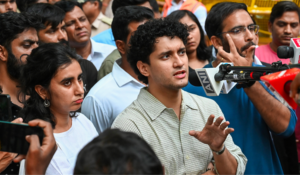
The Delhi Police on Wednesday sought a three-day extension in the judicial custody of Cockroach Janata Party (CJP)...
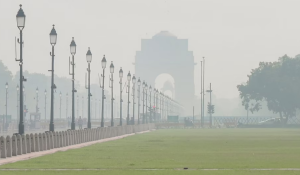
Following the deterioration of air quality in Delhi-NCR, the Commission for Air Quality Management (CAQM) on Wednesday implemented...
Aries: The day will be auspicious...