Last Updated: October 16, 2026
Last Updated: October 16, 2026





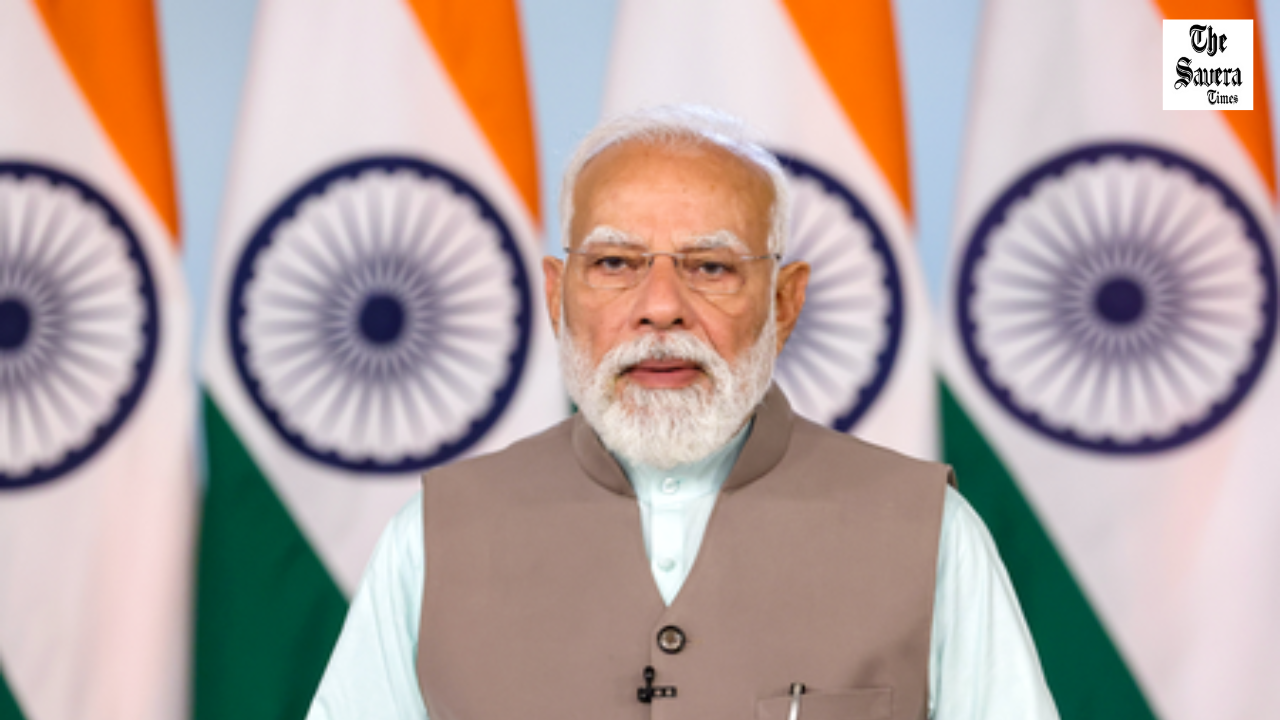
Prime Minister Narendra Modi on Sunday inaugurated India’s first fully operational ‘Ring Metro’ network in the national capital, marking a significant expansion of the Delhi Metro Rail Corporation (DMRC) system. The project aims to strengthen urban mobility and provide seamless connectivity across various parts of Delhi.
The inauguration includes the launch of two key metro corridors and the foundation stone laying for additional upcoming lines under the Delhi Metro’s Phase-V expansion. Officials said the new infrastructure will help reduce traffic congestion, improve connectivity between neighbourhoods and encourage greater use of clean public transport.
A major highlight of the project is the completion of the Pink Line loop, which now forms India’s first operational Ring Metro. The Pink Line will stretch around 71.5 km, creating a circular route that allows passengers to travel across the city without needing to pass through central interchange stations.
The newly inaugurated Majlis Park–Maujpur-Babarpur corridor, about 12.3 km long, fills the last missing gap in the loop. With this addition, commuters can travel across several parts of north, east and south Delhi in a continuous circular route.
The new corridor includes several stations such as Burari, Jagatpur Village, Khajuri Khas, Bhajanpura and Yamuna Vihar, improving connectivity for densely populated residential areas that previously had limited metro access.
Apart from completing the Ring Metro, the Prime Minister also inaugurated an extension of the Magenta Line from Deepali Chowk to Majlis Park, which is nearly 9.9 km long. This section includes multiple stations connecting western and northern parts of the city.
The new line will help reduce travel time for commuters travelling between west Delhi and northern areas, while providing additional interchange options with other metro corridors across the network.
Experts say the combined expansion will significantly strengthen Delhi’s public transport infrastructure and support the city’s growing population and travel demand.
The metro projects inaugurated by the Prime Minister are part of a broader ₹18,300-crore infrastructure push aimed at improving mobility in the national capital region (NCR).
During the event, Modi also laid the foundation stone for three additional metro corridors under Phase-V (A). These proposed projects include new underground and elevated routes that will further expand the network and improve links with key areas including airports, business districts and neighbouring NCR cities.
Officials say the upcoming lines will provide better integration with existing metro routes and regional transit systems, making daily commuting faster and more convenient.
The Delhi Metro is already one of the largest and most advanced rapid transit networks in the world. Since its launch in 2002, it has played a crucial role in reducing road congestion and promoting environmentally sustainable travel.
With the launch of the Ring Metro and new corridors, authorities expect smoother cross-city travel and improved connectivity between residential, commercial and industrial zones.
Urban planners believe the circular metro network will also reduce the need for long route changes, helping commuters travel between distant parts of the city more efficiently.
The government said the new infrastructure represents another milestone in India’s efforts to modernise urban transport systems and support sustainable development in major cities.
New Delhi: The Union Ministry of Home Affairs (MHA) has sought detailed reports from the Punjab government on...
New Delhi: All India Students’ Association (AISA) National President Neha Bora was detained by the Delhi Police on...
New Delhi: The Directorate of Enforcement (ED) has provisionally attached assets and proceeds of crime worth Rs 136.44...
Mumbai: Jindal Saw on Friday reported a steep decline in its earnings for the second quarter of FY27,...
Abu Dhabi: External Affairs Minister (EAM) S Jaishankar held a meeting with Ras Al Khaimah Ruler Sheikh Saud...
New Delhi: In a fresh development in the former model and actress Twisha Sharma death case, the Supreme...
Aries: The day will be auspicious...