Last Updated: November 18, 2026
Last Updated: November 18, 2026





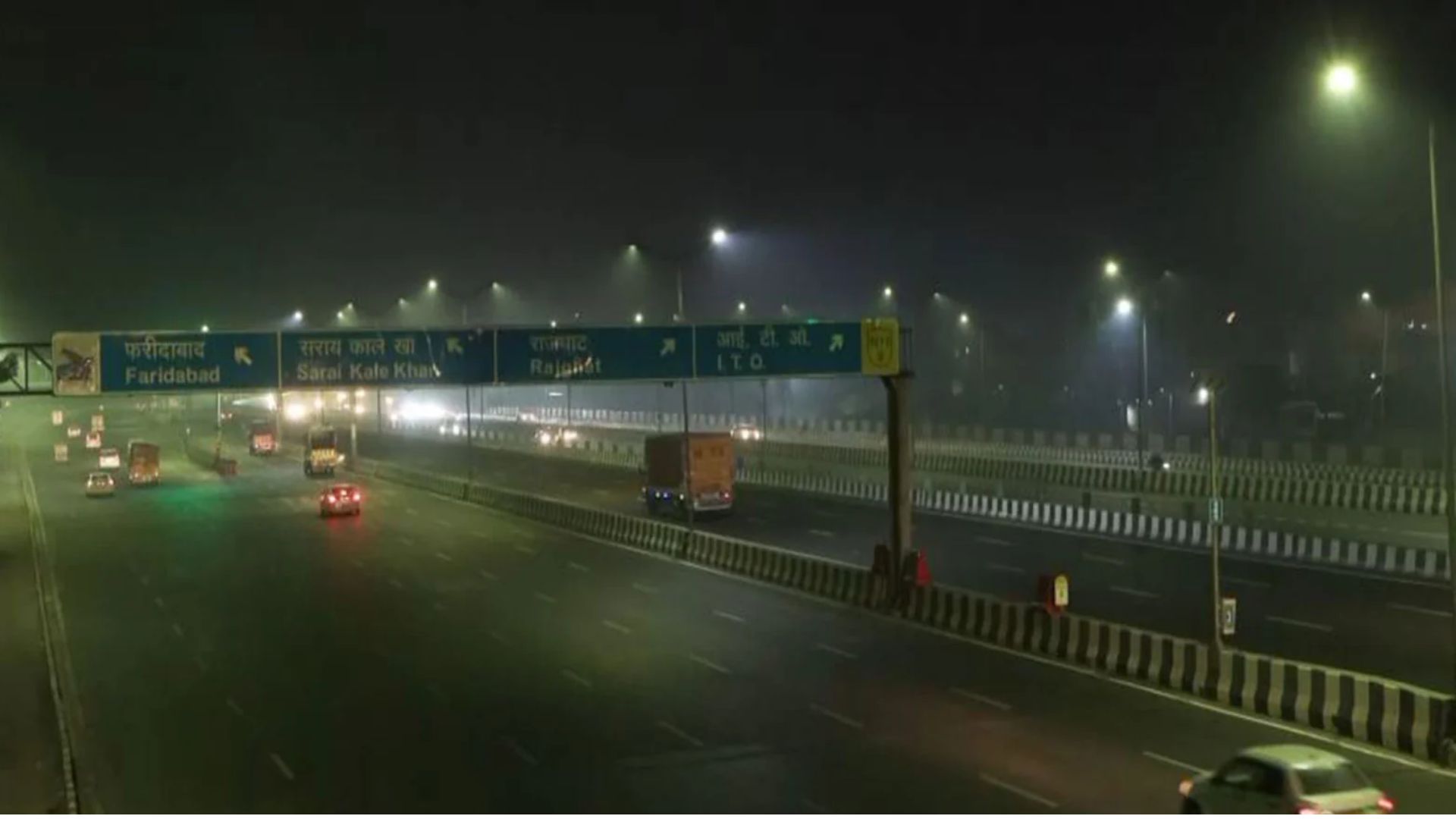
New Delhi: A slight drop in air quality was recorded in the national capital Delhi on Wednesday morning. According to the Central Pollution Control Board (CPCB), Delhi’s Air Quality Index (AQI) was recorded at 214 at 7 am, which falls in the ‘poor’ category.
A day earlier, the CPCB report released at 4 pm on Tuesday showed Delhi’s AQI at 204. This figure was based on a 24-hour average from 58 out of 59 monitoring stations.
Uttam Nagar records highest pollution, AQI reaches 399
According to CPCB data, the worst air quality was recorded in Uttam Nagar, where the AQI reached 399. This falls in the ‘very poor’ category.
Meanwhile, the AQI was recorded at Burari Crossing at 286, Chandni Chowk at 292, Wazirpur at 242, Alipur at 235, Sonia Vihar at 232, Rohini at 231, Narela at 218, Anand Vihar at 208 and Nangloi at 207. All these areas remained in the ‘poor’ category.
However, the air quality was relatively better in some areas of the capital. The AQI was recorded at 143 in Vasundhara Enclave, 139 in Lodhi Road, 167 in Sri Aurobindo Marg, 182 in RK Puram and 197 in IGI Airport Terminal-3. All these areas remained in the ‘moderate’ category.
What are the AQI categories?
As per CPCB standards:
– 0-50: Good
– 51-100: Satisfactory
– 101-200: Moderate
– 201-300: Poor
– 301-400: Very Poor
– 401-500: Severe
GRAP-3 restrictions lifted in Delhi-NCR
This development comes at a time when, in view of the improvement in air quality, the Commission for Air Quality Management (CAQM) lifted the third phase of the Graded Response Action Plan (GRAP) restrictions in Delhi-NCR on November 17.
According to an official statement issued by the CAQM, the GRAP sub-committee decided to withdraw the restrictions imposed under Stage 3 with immediate effect.
Following this, government, government-aided, and recognized private schools under the Directorate of Education, NDMC, MCD, and Delhi Cantonment Board were instructed to conduct all classes offline as usual.
School heads were also asked to inform students, staff, and parents of this decision.
However, the restrictions imposed under Stages 1 and 2 of GRAP will remain in place.
What restrictions are imposed in the four stages of GRAP?
GRAP, or Graded Response Action Plan, is a four-stage emergency framework designed to control pollution. It is implemented in collaboration with the CAQM, CPCB, and the respective state governments. As air quality deteriorates, the restrictions become more stringent.
Stage-1: This applies when the AQI is between 201 and 300. Measures are taken to control road dust, enforce pollution standards, and prohibit open burning of garbage.
Stage-2: This applies when the AQI is between 301 and 400. This includes enhanced dust control measures, increased parking fees, and changes to office timings.
Stage-3: This applies when the AQI is between 401 and 450. This includes stricter vehicle restrictions, a halt to construction work, and hybrid learning for primary classes.
Stage-4: This applies when the AQI exceeds 450. This is known as the “Severe Plus” category. This involves a ban on heavy goods vehicles and emergency restrictions on traffic and industrial activities.
It’s worth noting that GRAP-3 was implemented before Diwali to control pollution. It took stringent measures to reduce emissions and dust, while GRAP-1 and GRAP-2 regulations remained in effect.
An encounter broke out between terrorists and a joint team of Jammu and Kashmir Police and security forces...
A green environment is the foundation of a healthy society and a sustainable future. Clean air, safe drinking...
Although the autumn session of Parliament is held in December, it considers important issues facing the country. However,...
Read The Savera Times Evening Wrap for November 12, 2026, featuring the top news from India and around...

The 2027 Uttar Pradesh Assembly election battle is beginning long before polling day. With 13.58 crore voters on...

New Delhi: Cockroach Janta Party (CJP) leaders Saurav Das and Ashutosh Ranka appeared before a Special Executive Magistrate...

Aries: The day will be auspicious...