Last Updated: October 12, 2026
Last Updated: October 12, 2026





Adil Azami
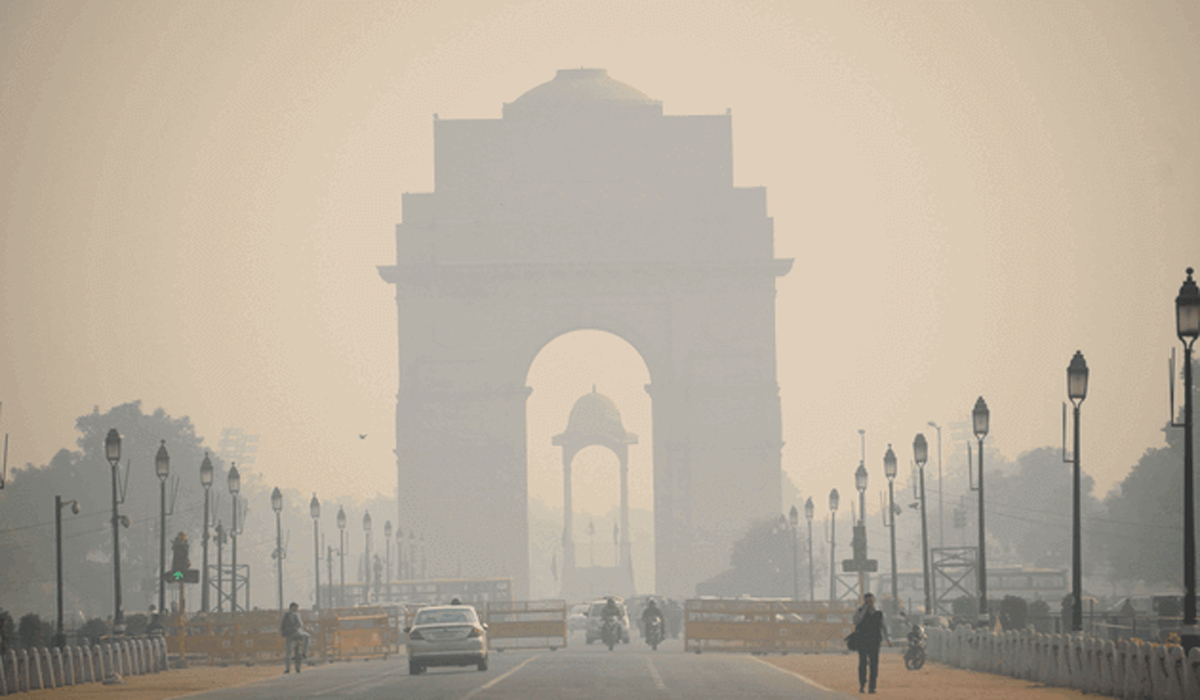
Every winter, the National Capital Region turns into a gas chamber — and every year, Punjab’s burning fields are held solely responsible. That narrative is convenient, but unscientific. Delhi’s toxic air has multiple sources, and solving it requires national-level leadership, not seasonal blame. Each October, as a grey blanket settles over Delhi, the discourse inevitably lands on one target: parali (crop-residue) burning in Punjab and Haryana.
The imagery of burning stubble becomes the centrepiece of public anger. Yet data from scientific studies shows that while stubble burning plays a role — sometimes a significant one during peak days — it is not the sole or even yearround dominant cause of Delhi’s winter smog. Delhi’s air crisis is rooted in local emissions, regional transport of pollutants, and winter atmospheric conditions that trap particulate matter close to the ground. Any narrative that isolates only one source risks undermining the urgency and breadth of solutions required.
What the data actually shows
Scientific and institutional studies present a more nuanced picture:
Why smog peaks every winter
Delhi’s annual “pollution season” coincides with a shift in weather systems:
The true pollution mix Across studies, key contributors remain consistent:
A national crisis demands national leadership India’s pollution challenge is not confined to the NCR. Cities from Mumbai to Lucknow, Kolkata to Kanpur, and Bengaluru to Hyderabad increasingly report hazardous winter air. Air pollution contributes to over 1.6 million premature deaths annually in India, according to Global Burden of Disease estimates. This is not a seasonal inconvenience. It is a public-health emergency. Air does not recognise state boundaries. Therefore, solutions cannot be left to fragmented, seasonal state-level action.
India now needs: • A national clean-air emergency framework • Central-led coordination with state governments • Real-time, science-based action protocols • Farmer-support mechanisms for residue management • A national emissions dashboard and accountable targets • Cooperation over confrontation especially between the Centre and states Just as India eradicated polio with collective resolve, it must confront air pollution with unified national action.
The way forward
Three realities must shape policy: 1. Stubble burning significantly worsens peaks — but is not the sole cause. 2. Local emissions are the constant fuel feeding Delhi’s pollution. 3. Winter meteorology turns chronic pollution into acute crisis. India cannot afford a blame game. Nor can it wait for winter to react. Pollution control must move from annual outrage to allyear governance, from episodic court orders to institutional coordination, and from political posturing to public-health protection. Delhi does not choke every winter because Punjab burns alone — it chokes because India has normalised pollution. To breathe clean air, India must stop looking for scapegoats and start building solutions.
The Reserve Bank of India (RBI)'s new measures to curb speculation in the rupee and maintain stability in...

Gold exchange-traded funds (ETFs) witnessed a sharp rise in investor interest in September, with net inflows surging 71.4...

Rahul Gandhi accused the Modi government of protecting Chief Election Commissioner Gyanesh Kumar, criticised security restrictions in Delhi...

Chief Justice Surya Kant said every citizen can approach the Supreme Court through a petition after declining a...

A major fire broke out at a scrap warehouse opposite the Maruti Temple in Sangameshwar, Maharashtra, around midnight....
A 48-year-old man, Pawan Sharma, died after an alleged altercation over a senior citizen seat at Delhi’s Supreme...

Aries: The day will be auspicious...