Last Updated: November 5, 2026
Last Updated: November 5, 2026





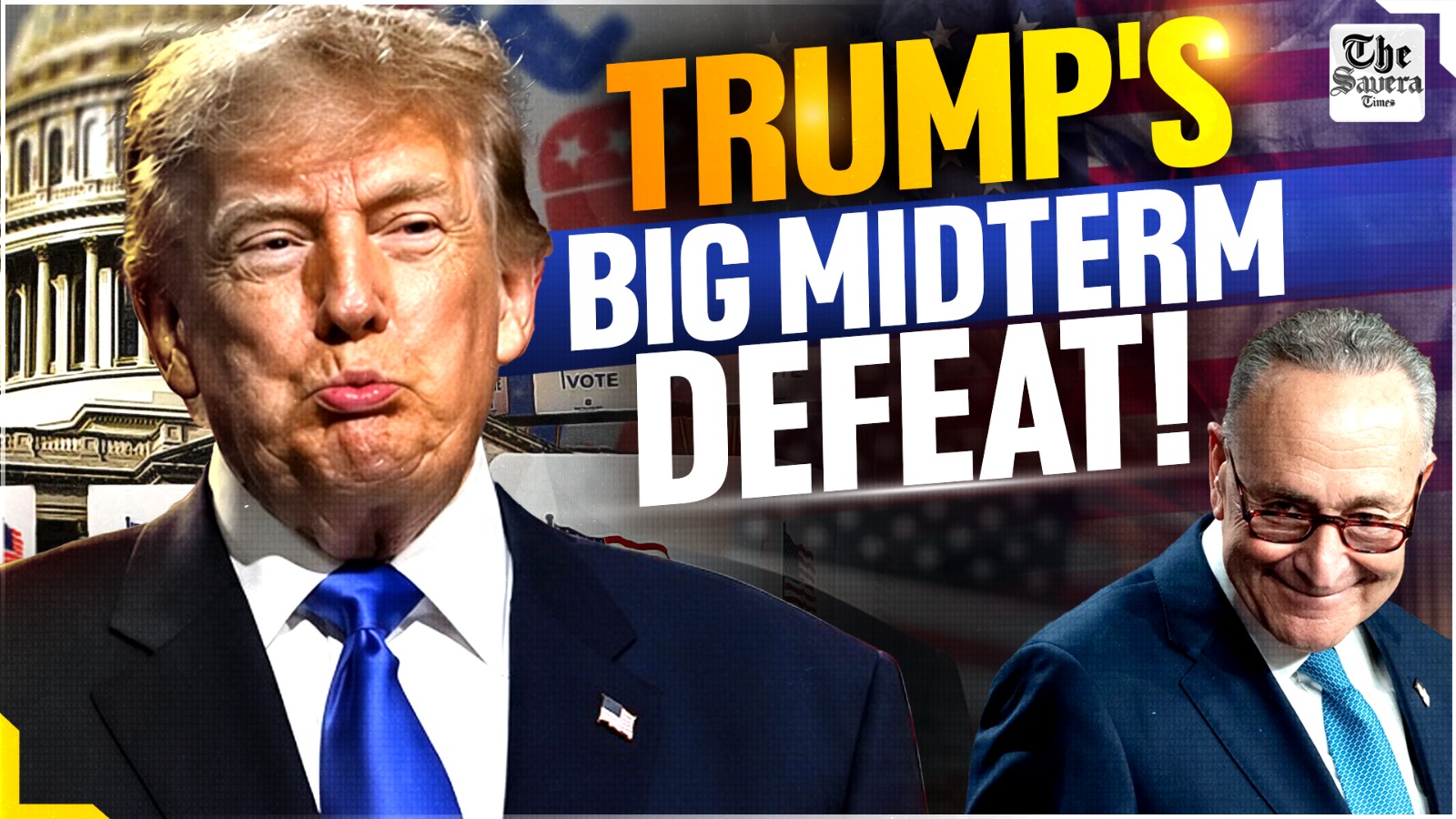
The 2026 US midterm elections have delivered a major political setback to President Donald Trump. Democrats have won control of both the House of Representatives and the Senate, ending two years of Republican control of Congress.
The results are significant not just for American politics but also for Europe and the global economy.
Voters have raised concerns over rising living costs, Trump’s trade tariffs, the Iran war and his administration’s policies. The Democratic victory means Trump will now face a Congress that can challenge his decisions, investigate his administration and block several of his legislative priorities.
But what does this defeat mean for Europe? Will Trump’s trade policies change? And how will global markets respond?
Let’s understand.
1. Europe Gets Some Political Relief, But Uncertainty Remains
For European countries, Trump’s defeat could bring some relief, particularly on trade.
Over the past year, Trump’s tariff policies have created uncertainty for European businesses and exporters. Higher US import duties can make European products more expensive in the American market, affecting industries such as automobiles, steel and machinery.
With Democrats controlling Congress, Trump will face greater political opposition. However, this does not mean that existing tariffs will automatically disappear.
The US President still has significant powers to impose tariffs through certain trade laws without seeking Congress’s approval.
This means Europe may get more political support in Washington, but it cannot assume that its trade problems are over.
2. What Happens to US Support for Ukraine?
Ukraine is another major concern for Europe.
European governments have been worried about the future of American military and financial support to Ukraine under Trump’s presidency.
The Democratic victory could give supporters of Ukraine more influence in Congress. Democrats may push for additional funding and stronger support for Kyiv.
However, there is a catch.
Even if Congress approves financial assistance, the President and his administration have considerable influence over how and when that money is released.
Therefore, Europe cannot depend entirely on a change in Congress. European countries may still have to increase their own defence spending and take greater responsibility for Ukraine’s security.
3. How Are Global Markets Reacting to Trump’s Defeat?
The election results have already triggered movements across global financial markets.
According to Reuters, global stocks fell and the US dollar slipped to a one-month low on Wednesday as investors reacted to the Democratic victory.
Technology and artificial intelligence stocks faced selling pressure because investors fear that Democrats could introduce stricter regulations for AI companies and data centres.
Here are some key market movements:
However, investors are also watching what happens next. A divided government could mean fewer sudden policy changes, which may eventually bring some stability to markets.
4. Why Are Investors Worried About Political Gridlock?
With Democrats controlling both chambers, passing new laws could become difficult for Trump.
Democrats can investigate his administration, question government officials, delay appointments and block several policy proposals.
Trump, meanwhile, has indicated that he could become ‘Mr Veto’ and use his presidential veto powers against legislation he disagrees with.
This could create a political deadlock between the White House and Congress.
For investors, the concern is that disagreements over government spending, taxes and the national debt could create fresh uncertainty.
At the same time, political deadlock may prevent major policy changes, something markets sometimes view positively.
5. What Happens Next? Europe and Markets Must Wait and Watch
One important thing to remember is that the newly elected Congress will take office in January 2027. Until then, Republicans retain control of both chambers.
Even after January, Trump will remain President and retain considerable powers over foreign policy, trade and executive decisions.
For Europe, the biggest questions will remain US tariffs, Ukraine’s security and America’s future role in NATO.
For global markets, the direction of the dollar, interest rates, technology regulations and US government spending will be important.
Conclusion
Trump’s midterm defeat has changed the balance of power in Washington, but it has not ended his ability to shape American policy.
For Europe, it offers an opportunity for greater political engagement with Democrats, but not a guarantee of relief from Trump’s policies.
And for global markets, the immediate reaction reflects uncertainty. The bigger test will be whether the new political deadlock brings stability or creates another period of economic uncertainty.
The Election Commission has ordered a Special Summary Revision of electoral rolls in Arunachal Pradesh, Mizoram, Odisha, Sikkim,...

New Delhi: Unique Identification Authority of India (UIDAI) has onboarded 300 Offline Verification Seeking Entities (OVSEs), since its...

New Delhi: The Supreme Court on Thursday directed the five-member High-Powered Enquiry Committee (HPEC), constituted to investigate allegations...

New Delhi: Parents of the deceased IIT Bombay student Sahil Wakode met the Leader of the Opposition in...

The Central government released ₹1,09,019 crore to states ahead of Diwali, advancing the regular tax devolution by five...

Patna: The Central Bureau of Investigation (CBI) on Thursday arrested an absconding proclaimed offender from Punpun in Bihar...

Aries: The day will be auspicious...