Last Updated: October 12, 2026
Last Updated: October 12, 2026





-Abhishek Vij
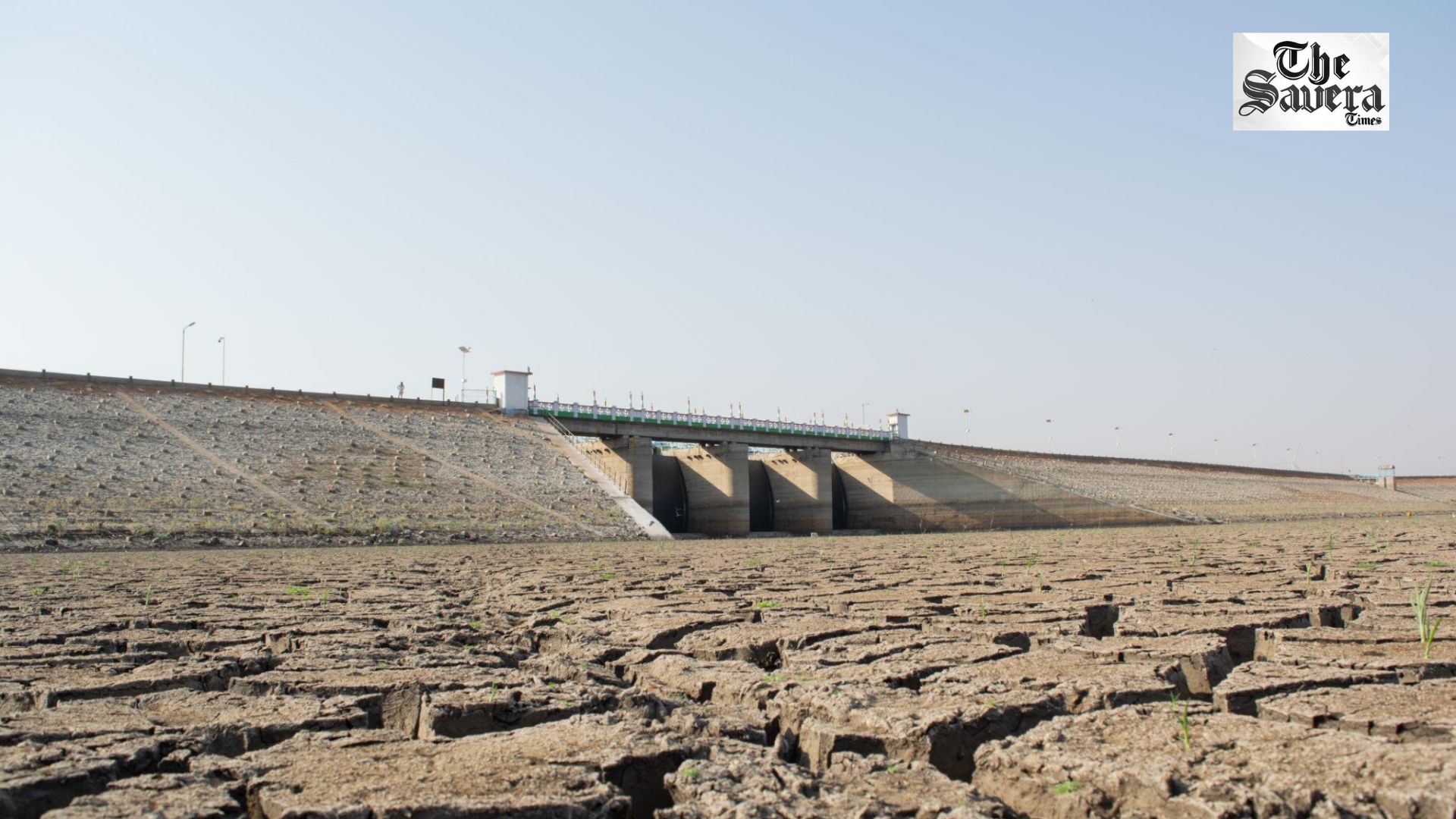
A report by the National Groundwater Survey was released recently. It indicates that Punjab, Rajasthan, and Haryana have emerged as major hotspots for the groundwater crisis. A similarly alarming situation is developing in Uttar Pradesh, Madhya Pradesh, Delhi, Tamil Nadu, Karnataka, and Puducherry. While the situation in South India is not as dire, there are variations among the states there; the situation is critical in Tamil Nadu but safe in Karnataka, and better in Telangana. Andhra Pradesh appears to be in a safe position, whereas the situation in Puducherry is serious.
Experts emphasize the need to address the issue of depleting water reserves in states like Uttar Pradesh, Punjab, Rajasthan, Madhya Pradesh, Delhi, Tamil Nadu, and Haryana. They warn that if current trends persist, these regions will face severe challenges regarding both drinking water and irrigation in the near future. The National Groundwater Recharge Bureau and the Groundwater Survey (2025) suggest that the groundwater crisis requires a region-specific approach. Strategies to tackle the problem must be particularly robust in areas where groundwater units are subject to over-exploitation. Urbanization and a growing population are placing increasing pressure on groundwater resources. Rapidly, many groundwater units in Delhi, Punjab, and Rajasthan have shifted into the ‘overexploited’ category—a major warning for the future. The necessary course of action is to track units transitioning from ‘safe’ to ‘unsafe’ status and to immediately implement a proactive policy to address the issue. Such a policy should involve altering agricultural patterns and farming techniques to enable crops to be cultivated with less water; the cultivation of paddy in Punjab serves as a prime example.
There have been long-standing calls to change the paddy cultivation pattern. Incentives have even been announced for shifting to dry-land farming, yet farmers in Punjab have not adopted this practice. Consequently, excessive amounts of water continue to be used for crop irrigation. This falls under the category of over-exploitation. A second solution is to alter the crop rotation pattern. This entails moving away from the traditional Rabi and Kharif cycle and adopting commercial crops that require less water. However, farmers often fail to adopt this advice because wheat and paddy can be sold at the government-mandated price—the Minimum Support Price (MSP)—as soon as they are harvested, whereas other crops lack such immediate procurement mechanisms. Farmers cannot afford to wait to sell their produce, so they stick to the familiar wheat-paddy cycle, and the depletion of water resources continues unabated.
A third approach is water recycling—purifying and reusing the water that has already been utilized. While Western nations have adopted this practice, we have not. The reason lies in the fact that farmers in countries like ours are generally reluctant to take the risk of adopting entirely new methods. Consequently, despite extensive awareness campaigns, the old practices persist. For a long time, farmers have been urged to abandon the harmful practice of burning crop residue in their fields; yet, finding it convenient, they continue to do so regardless of the consequences. It would be far better to embrace change with a fresh perspective.
A Sudanese rights group says at least 72 gold miners were killed in an air strike near the...

An eyewitness has recounted the fatal Mini Cooper crash in Nedumbassery, Kochi, claiming the driver said his father...

Start your day with The Savera Morning Brief, bringing you the top India and world news, breaking developments,...

New Delhi: Chief Justice of India (CJI) Surya Kant has declined a request from the Congress-led INDIA bloc...

Chennai: Prime Minister Narendra Modi on Sunday said India is moving forward with the dream of hosting the...

A massive flash flood in Nepal’s Budhi Gandaki River swept away dozens of houses, bridges and infrastructure in...
Aries: The day will be auspicious...