Last Updated: October 21, 2026
Last Updated: October 21, 2026





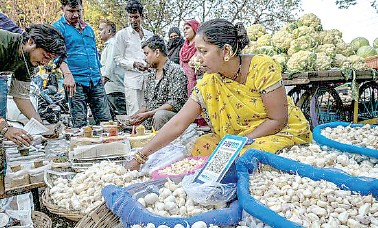
India’s digital economy is expanding at remarkable speed. Online shopping, app-based deliveries and instant payments have reshaped how urban Indians consume goods. Yet, across towns and cities, India’s local markets continue to thrive—not as leftovers from a slower past, but as systems that adapt, endure and quietly anchor everyday life.
From weekly haats in rural districts to dense vegetable markets in metropolitan neighbourhoods, these spaces remain central to how most Indians buy food, negotiate prices and build social connections. Despite the rise of e-commerce, local markets have not disappeared. Instead, they have revealed something essential about the Indian economy: convenience alone does not replace trust, proximity and human interaction.
For millions of small traders, vendors and farmers, local markets are not just points of sale but lifelines. They provide low-entry opportunities for employment, especially for those excluded from formal sectors—women, migrants and older workers. A vegetable seller does not need venture capital or algorithms. She needs a cart, a supplier and a regular customer base. In a country where job creation struggles to keep pace with population growth, this informality offers resilience.
Local markets also absorb economic shocks better than expected. During disruptions—from demonetisation to the pandemic—many digital systems faltered temporarily, while neighbourhood vendors adapted quickly. Credit was extended informally, prices adjusted daily and supply chains rerouted through personal networks. These markets operate on relationships built over years, not contracts enforced by platforms.
Food security is another overlooked role. Local markets distribute perishable produce efficiently, reducing dependence on long storage chains. Fruits, vegetables, grains and spices move quickly from farms to consumers, often within the same district. This short supply chain benefits farmers through better price realisation and consumers through freshness. In contrast, centralised distribution systems often squeeze producers while inflating costs.
Culturally, markets function as shared public spaces. They are among the few places where social classes intersect without design. A salaried professional, a domestic worker and a shopkeeper bargain at the same stall. Conversations happen across age, caste and income—not out of idealism, but routine. In an increasingly fragmented society, such interactions matter.
Yet, India’s urban planning often treats markets as problems rather than assets. Redevelopment projects prioritise malls and commercial complexes, pushing traditional markets into narrower lanes or relocating them without understanding their ecology. Vendors are seen as obstructions to traffic rather than contributors to local economies. When markets are displaced, livelihoods are disrupted and neighbourhoods lose their character.
There is also pressure from digital platforms that promise efficiency but extract heavy commissions. Many small sellers join these platforms hoping for growth, only to find margins shrinking. The technology itself is not the problem; the imbalance of power is. Without safeguards, digital integration risks turning independent traders into dependent contractors.
Some cities are experimenting with better models. Designated vending zones, improved sanitation, waste management and weather-proof infrastructure have helped markets function more effectively. Where vendors are included in planning decisions, outcomes improve. Markets become cleaner, safer and more organised without losing their informal strength.
The future does not lie in choosing between digital convenience and traditional markets. It lies in integration without erasure. Digital payments, inventory tools and logistics support can strengthen local markets if ownership remains with vendors. Policies should focus on enabling rather than replacing these systems.
India’s local markets remind us that economic progress is not always linear. Sometimes it is layered—new systems growing alongside old ones, each serving different needs. In chasing scale and speed, India must not undervalue spaces that prioritise access, dignity and community.As the economy modernises, the survival of local markets will depend not on nostalgia, but on recognition. Recognising that growth is strongest when it includes those who sell tomatoes at dawn, weigh rice by hand and remember their customers by name.
The Delhi Police on Wednesday sought a three-day extension in the judicial custody of Cockroach Janata Party (CJP)...

Following the deterioration of air quality in Delhi-NCR, the Commission for Air Quality Management (CAQM) on Wednesday implemented...
Prime Minister Narendra Modi will visit Varanasi and Kedarnath on a two-day visit on October 24 and 25....

Stay updated with the latest national, international, Punjab, political, business, crime, weather, sports and entertainment news with The...

The family of 5-year-old Fabiana Cabello in New York City, USA, is in deep shock after her death....

The Delhi High Court on Wednesday posed several questions to Cockroach Janata Party (CJP) leaders Sourav Das and...

Aries: The day will be auspicious...