Last Updated: October 20, 2026
Last Updated: October 20, 2026





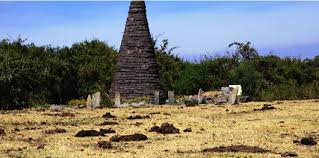
The hills, which are renowned for tea and coffee plantations, are considered sacred by the Toda tribe, who have lived there for thousands of years. The pastoral community believes that their gods and goddesses lived among them once and became a part of the sacred landscape over time.
Vasamalli knows her oral traditions through her native language Toda. Toda is an endangered proto-South-Dravidian language which evolved in isolation after splitting from South Dravidian (like Kannada, Telugu and Malayalam). The Toda people number a few thousand now. Vasamalli is one of the elders of the community striving to preserve her traditional oral heritage.
Vasamalli most recently worked with the Scheme for Protection and Preservation of Endangered Languages (SPPEL) team being implemented by the Mysuru-based Central Institute of Indian Languages (CIIL) under the Ministry of Education. SPPEL works to document and archive the country’s endangered languages—languages spoken by fewer than 10,000 speakers or languages not previously studied linguistically.
SPPEL aims to preserve and revitalize endangered languages for future generations by conducting field work and documenting the grammar and words of languages, creating documentaries, bi-lingula/tri-lingual dictionaries, pictorial glossaries and ethno-linguistic profiles, and uploading the documentation work, including audio files, to online repositories for worldwide access.
Currently, SPPEL has identified 117 endangered languages, and is working toward documenting about 500 lesser-known languages in the future.
Various other schemes by the Government of India work toward the preservation and promotion of tribal and vanishing cultures. India’s National Education Policy 2020 promotes multilingual studies to preserve local languages.
This local effort reflects a global concern. Endangered languages and cultures are a global phenomenon. Close to half of 7,000 languages globally are endangered globally, according to the United Nations Educational, Scientific and Cultural Organization. UNESCO has declared the period between 2022 and 2032 as the International Decade of Indigenous Languages to draw attention to the critical situation of many indigenous languages and to mobilize stakeholders and resources for their preservation, revitalization and promotion.
The International Day of the World’s Indigenous Peoples on August 9 was established by the United Nations to draw attention to the rights of indigenous peoples living in 90 countries.
The effort for the survey and documentation of India’s linguistic diversity has deep historical roots. The first linguistic survey of Indian languages was launched in 1894 by George Abraham Grierson, who also prepared the language survey report for the 1901 Census. The Linguistic Survey of India was published over a 25-year period between 1903 and 1928 and consists of 11 volumes (in 19 parts) comprising over 8,000 pages describing the languages and dialects of large parts of British India. It listed a total of 179 languages and 544 dialects.
Subsequent Indian censuses have continued to map the country’s linguistic landscape.
Good Evening Viewers! Catch up on the day's biggest stories with The Savera Times Evening Bulletin. Get the...

Congress leaders continued their protest outside the Jaipur Police Commissionerate on Tuesday, demanding the registration of a zero...

On the auspicious occasion of Vijayadashami, Prime Minister Narendra Modi on Tuesday called on the countrymen to unite...
A historic milestone was achieved on Tuesday in the expansion of Chhattisgarh's rail networkA historic milestone was achieved...

Model Shraddha Dubey, one of the main accused in the death of Lucknow businessman Shiv Sharma, has been...
Rashtriya Swayamsevak Sangh (RSS) chief Mohan Bhagwat on Tuesday called for strengthening national unity, social harmony, indigenous practices...
Aries: The day will be auspicious...