Last Updated: October 21, 2026
Last Updated: October 21, 2026





Tarun Chugh
National General Secretary, Bharatiya Janata Party
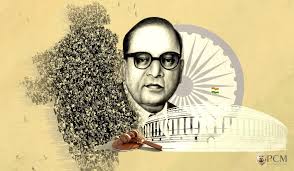
Every year on April 14, India commemorates the birth anniversary of Dr. Bhimrao Ramji Ambedkar. But to treat this occasion as a mere ritual of remembrance is to diminish its true significance. This day is not only about honouring a great leader; it is an opportunity to reflect on the idea of India that Ambedkar envisioned—an India where democracy is not confined to institutions, but is experienced in the everyday lives of its people through dignity, equality, and justice.
Ambedkar’s life was not just a story of personal struggle; it was the manifestation of a larger civilisational resolve. He did not seek accommodation within an unjust system—he sought to transform it. Born into a deeply stratified society, he experienced discrimination firsthand. Yet, instead of accepting it as fate, he chose to challenge it with intellect, discipline, and unwavering determination. Education became his most powerful tool, not just for personal empowerment but for social transformation.
His academic journey to institutions such as Columbia University and the London School of Economics was not merely a matter of personal achievement; it represented a profound statement—that knowledge has the power to dismantle entrenched hierarchies. Ambedkar’s intellectual life was defined by rigour and depth. He was a relentless reader, a prolific thinker, and a scholar whose curiosity transcended disciplinary boundaries. While Ambedkar is widely remembered as the chief architect of the Constitution, this is only one dimension of his legacy.
He was also one of India’s foremost economists, whose work engaged with fundamental questions of economic justice and institutional design. His analysis of colonial finance exposed how British policies systematically drained India’s wealth. His seminal work, The Problem of the Rupee, demonstrated a nuanced understanding of monetary stability and its impact on the poorest sections of society. For Ambedkar, economic policy was never detached from the question of justice; it was, in fact, central to it. At the core of Ambedkar’s philosophy was the conviction that political democracy must rest on the foundations of social and economic democracy.
The right to vote, in his view, would remain hollow if vast sections of society continued to live in conditions of inequality and indignity. This belief shaped his interventions in labour reforms, where he championed the eight-hour workday, maternity benefits, and social security for workers. These were not merely policy measures—they were assertions of human dignity. Ambedkar’s commitment to justice extended to gender equality as well. At a time when women’s rights were far from being part of mainstream discourse, he argued that the progress of a society must be measured by the status of its women. His efforts through the Hindu Code Bill sought to grant women legal rights in matters of property and marriage, laying the groundwork for a more equitable social order.
Equally significant was Ambedkar’s understanding of India’s economic and social geography. He recognized that the future of India could not be built solely on urban industrial growth. The true strength of the nation lay in its villages. Unless rural India was empowered, development would remain uneven and exclusionary. He advocated for a balanced model of growth— one that combined industrialisation with agricultural reform and ensured that opportunities reached the last person. It is in this context that the governance model under Prime Minister Narendra Modi assumes critical significance.
The vision of “Sabka Saath, Sabka Vikas, Sabka Vishwas, Sabka Prayas” is not merely a political slogan; it is a contemporary articulation of Ambedkar’s idea of an inclusive India. It reflects a commitment to ensuring that development is not selective, but universal—reaching every section of society, particularly those who have historically been left behind. The emphasis on financial inclusion through the Pradhan Mantri Jan Dhan Yojana is a case in point. By bringing millions of previously unbanked citizens into the formal financial system, the initiative has not only expanded economic participation but also restored a sense of dignity and agency to the poor. This aligns directly with Ambedkar’s belief that economic empowerment is essential for meaningful democracy. Similarly, the Ujjwala Yojana, which provides clean cooking fuel to millions of households, has transformed the lives of women who for decades were exposed to the harmful effects of traditional cooking methods.
This is not just a welfare measure; it is a step towards realising Ambedkar’s vision of gender dignity and social justice. The Swachh Bharat Mission represents another critical dimension of this transformation. By addressing sanitation and eliminating open defecation, it has sought to restore basic human dignity, particularly for the most vulnerable sections of society. Ambedkar had consistently emphasized that social reform must address the lived realities of people, and sanitation is central to that reality. Infrastructure and last-mile delivery have also been central to this governance approach. Electrification of villages, expansion of digital connectivity, and strengthening of rural infrastructure are not merely developmental milestones; they are instruments of social transformation.
When a village that remained in darkness for decades receives electricity, it is not just an economic intervention—it is a restoration of equality and opportunity. Equally important has been the effort to institutionalise Ambedkar’s legacy in the national consciousness. The development of the Panchteerth—sites associated with Ambedkar’s life—is not merely about memorialisation. It is about embedding his ideas within the cultural and intellectual fabric of the nation, ensuring that future generations engage with his vision not as history, but as a living guide for nation-building. At a deeper level, the alignment between Ambedkar’s thought and contemporary governance lies in the emphasis on dignity. Whether it is access to banking, sanitation, energy, or digital services, the underlying principle remains the same: empowering the individual at the last mile. This is precisely what Ambedkar envisioned when he spoke of an India rooted in equality, liberty, and fraternity. Ambedkar’s idea of “constitutional morality” also remains central to this discourse.
He believed that the success of a democracy depends not only on its institutions, but on the conduct of its citizens and leaders. Respect for the rule of law, accountability in governance, and a commitment to collective progress are essential to sustaining democratic values. One of the most remarkable aspects of Ambedkar’s legacy is the absence of bitterness in his institutional vision. Despite enduring profound discrimination, when he had the opportunity to shape the Constitution, he did not allow personal grievances to influence his judgment. Instead, he created a framework that was inclusive, balanced, and forwardlooking. This moral clarity is what sets him apart as a statesman of exceptional stature. In contemporary India, invoking Ambedkar must go beyond symbolism. It must translate into policies and actions that reflect his commitment to justice, inclusion, and dignity. The idea of development must be measured not only by economic growth, but by the extent to which it transforms the lives of the most vulnerable.
Ambedkar’s message to the youth—educate, organise, and agitate— remains profoundly relevant. It is a call to engage with society not as passive observers, but as active participants in its transformation. Education must lead to awareness, organisation must build collective strength, and agitation must be guided by the pursuit of justice through democratic means. Ultimately, Dr. B.R. Ambedkar was not just the architect of the Constitution; he was the architect of India’s moral imagination. He expanded the scope of what India could become. Today, as the nation moves forward, the real tribute to his legacy lies in ensuring that his vision is not confined to speeches, but is reflected in governance, policy, and everyday life. In that journey, the principle of “Sabka Saath, Sabka Vikas” stands as a living embodiment of Ambedkar’s idea of India—an India that is not only strong and prosperous, but also just, inclusive, and deeply humane.
Good Evening Viewers! Catch up on the day's biggest stories with The Savera Times Evening Bulletin. Get the...

Congress leaders continued their protest outside the Jaipur Police Commissionerate on Tuesday, demanding the registration of a zero...
On the auspicious occasion of Vijayadashami, Prime Minister Narendra Modi on Tuesday called on the countrymen to unite...
A historic milestone was achieved on Tuesday in the expansion of Chhattisgarh's rail networkA historic milestone was achieved...

Model Shraddha Dubey, one of the main accused in the death of Lucknow businessman Shiv Sharma, has been...

Rashtriya Swayamsevak Sangh (RSS) chief Mohan Bhagwat on Tuesday called for strengthening national unity, social harmony, indigenous practices...
Aries: The day will be auspicious...