Last Updated: October 26, 2026
Last Updated: October 26, 2026





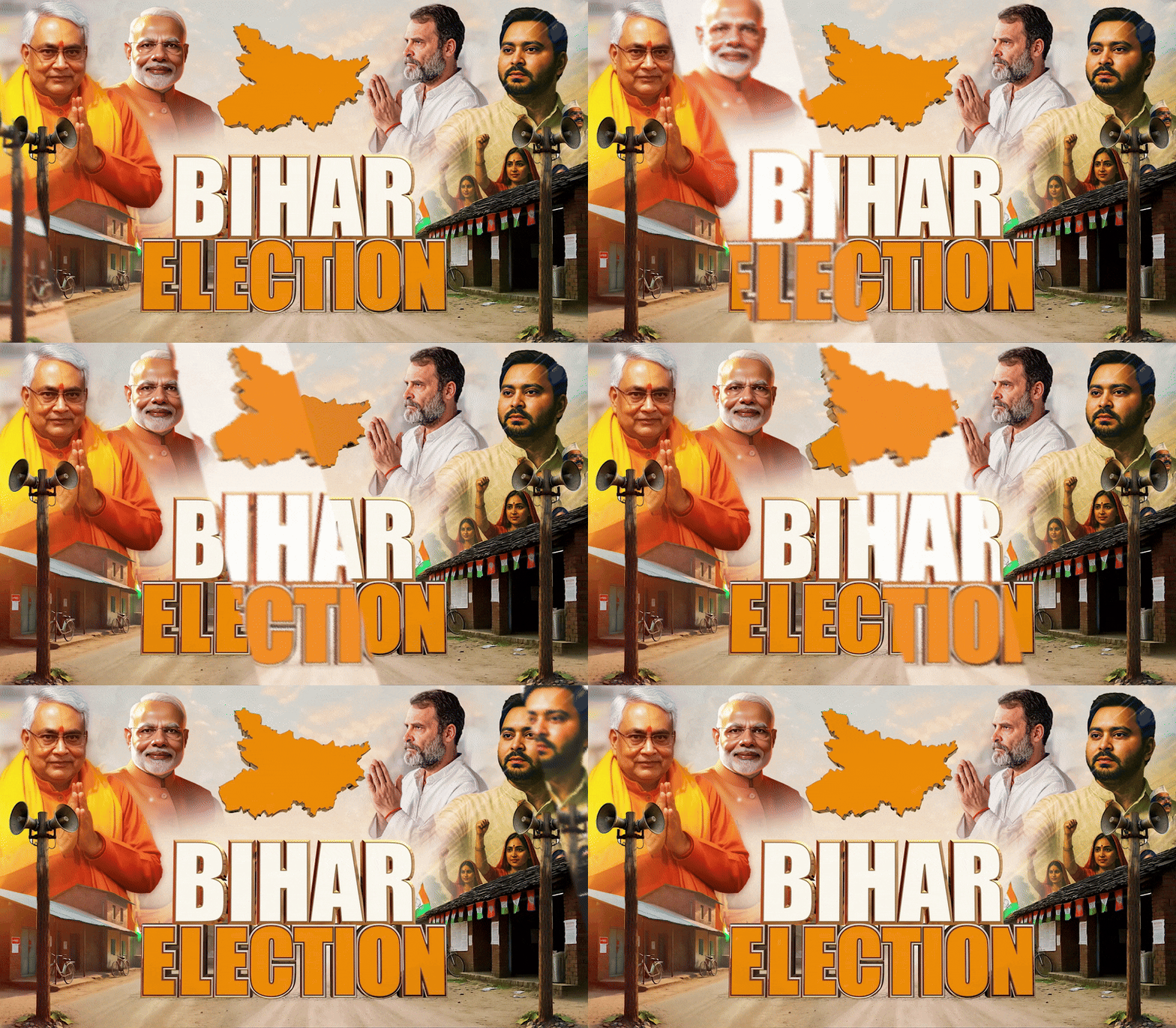
Patna: As Bihar heads for the first phase of voting on November 6, the state’s assembly elections are shaping up to be a family affair.
Across political parties, leaders are fielding their relatives as candidates — showing that dynasty politics remains a winning formula in Bihar.
The battle for the state’s 243 assembly seats is mainly between the ruling National Democratic Alliance (NDA) and the opposition Mahagathbandhan, while Prashant Kishor’s Jan Suraaj Party is emerging as a new force promising clean politics.
The Big Alliances and Their Plans
NDA: Nitish and BJP Together Again
The NDA, led by Chief Minister Nitish Kumar’s Janata Dal (United) or JD(U) and the Bharatiya Janata Party (BJP), has divided most seats equally — each contesting 101 constituencies, while smaller allies like the Hindusthan Awam Morcha fill the rest.
In the 2020 elections, the NDA won 125 seats (BJP 74, JD(U) 43), managing to form the government after a close contest with the RJD-led alliance.
Mahagathbandhan: RJD Leads the Charge
The Mahagathbandhan (Grand Alliance) consists of Lalu Prasad Yadav’s Rashtriya Janata Dal (RJD), Congress, and the Left parties (CPI and CPI-ML).
However, seat-sharing talks didn’t go smoothly this time. The RJD went ahead and announced 143 candidates on its own, while Congress fielded over 50.
In 2020, the RJD became the single largest party with 75 seats, relying on its strong Yadav and Muslim voter base.
Jan Suraaj: Prashant Kishor’s New Experiment
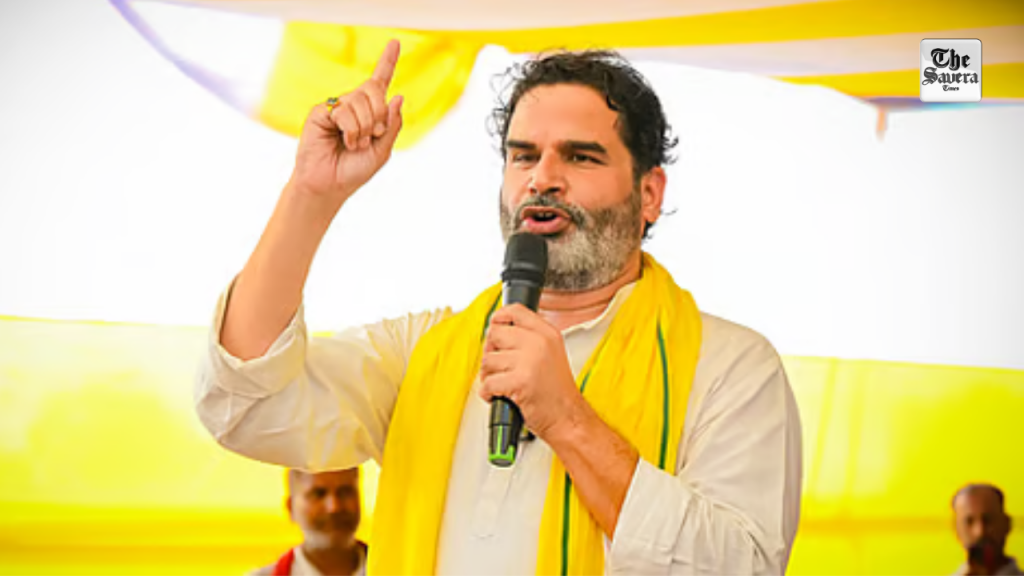
Political strategist Prashant Kishor, who once helped both Nitish Kumar and Narendra Modi win elections, is now contesting independently under his Jan Suraaj Party.
His party is fighting over 100 seats, choosing professionals like doctors, police officers, and social workers as candidates — avoiding family-based selections.
Kishor’s message is clear: “No to dynasty politics.”
Why Family Connections Still Matter
In Bihar, caste and family names play a major role in deciding votes.
According to reports, about 25% of tickets in the first phase (121 seats) have gone to sons, daughters, wives, or other relatives of politicians. Nearly one-third of current MLAs also come from political families.
Family links give candidates an edge — a known surname means instant recognition, loyal party workers, and strong local support. In tight contests, that can make the difference between victory and defeat.
RJD: The Yadav Family’s Strong Grip
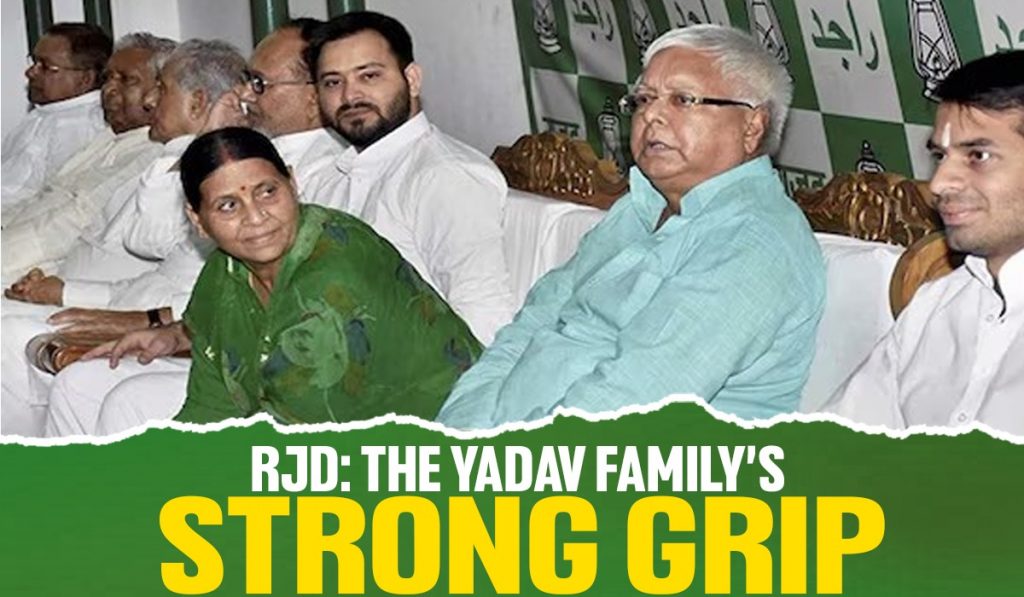
The RJD remains the biggest example of dynasty politics.
Party leader Tejashwi Yadav, 36, is contesting from Raghopur, a seat once represented by both his parents — Lalu Prasad Yadav and Rabri Devi, who each served as Chief Minister.
His brother Tej Pratap Yadav is running from Mahua, which he had earlier won in 2015, while their sister Rohini Acharya recently won a bypoll.
This family network keeps RJD’s Yadav vote bank (around 14% of Bihar’s population) united. Even in 2020, when Lalu was in jail, Yadav voters stayed loyal, helping the RJD win 75 seats.
Tejashwi’s promise of jobs for youth and his image as a young leader nearly toppled the NDA last time.
Now, as the chief ministerial face of the Mahagathbandhan, he hopes that his family’s political legacy will again bring him close to power.
NDA: Dynasts in the Ruling Camp Too
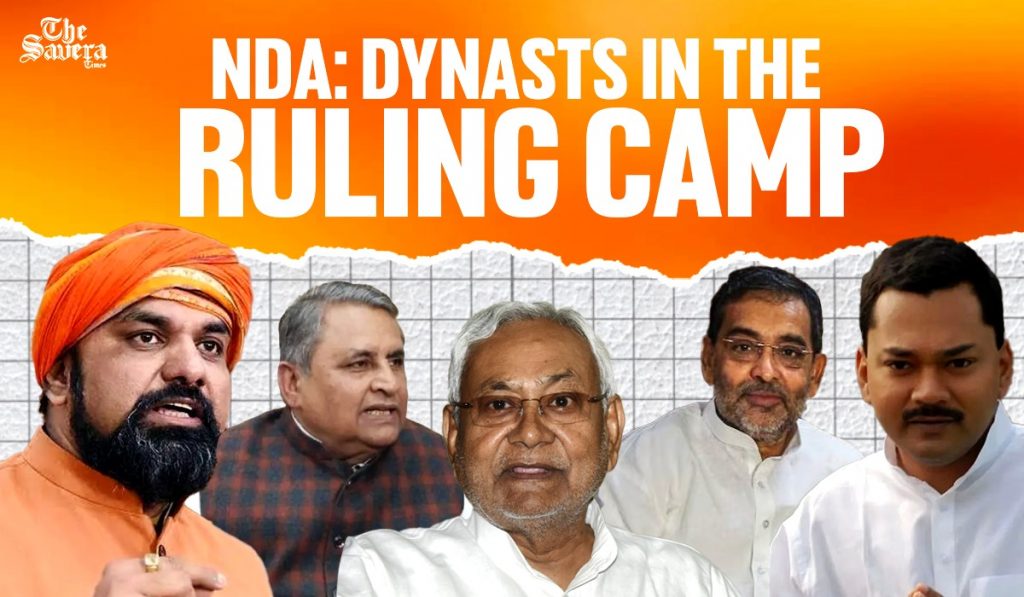
Though the NDA often criticizes the RJD for promoting families, it isn’t free from dynasty politics either.
In the BJP, Deputy Chief Minister Samrat Choudhary’s son is contesting a seat.
Within the JD(U), leaders like Vijay Kumar Choudhary have fielded relatives.
Interestingly, even Nitish Kumar, known for his anti-dynasty stance, is facing questions about his son Nishant Kumar, 48, who has started campaigning and might soon enter politics.
Supporters believe Nishant could appeal to the Kurmi community (around 4% of the population), Nitish’s traditional base.
Allies like Upendra Kushwaha have also encouraged this move, suggesting that even Nitish’s camp sees value in a family successor.
Congress: Smaller Role, Same Trend
The Congress, a junior partner in the opposition, has fewer seats but still features some family-based candidates. In Wazirganj, for example, a father replaced his son as the candidate.
In 2020, Congress had won just 19 seats, showing its declining influence — but it continues old habits of keeping politics within families.
A Look Back: The Power of Political Families
Bihar’s politics has long been driven by family legacies.
The New Challenge: Change vs Tradition
Critics like Prashant Kishor accuse old parties of promoting “family first over merit.”
His Jan Suraaj party offers a break from this pattern, focusing on ordinary citizens and professionals.
But many analysts believe dynastic candidates still win because Bihar’s voters trust familiar faces in a state where stability and community identity matter more than ideology.
What Lies Ahead
As Bihar votes in two phases – November 6 and November 11, the big question is:
Will family loyalty once again decide the result, or will voters choose change?
With 52 seats that were close contests in 2020 being fought again, even small swings could matter.
The NDA aims to keep power, the RJD dreams of a comeback, and Jan Suraaj wants to shake up the old order.
Soon, Bihar’s voters will decide whether blood is thicker than votes.
Good Afternoon Viewers! Welcome to The Savera Times Afternoon Bulletin, bringing you the latest updates from Punjab, India...

Amid the massive rally being organized by the INDIA Bloc on November 1, the Bharatiya Janata Party (BJP)...
Protesting students at Jamia Millia Islamia have made it clear that they will continue their hunger strike and...
Prime Minister Narendra Modi, External Affairs Minister S. Jaishankar, and Congress MP Shashi Tharoor met with Iranian parliamentary...
Hereditary Prince Alois of Liechtenstein and his wife Princess Sofia arrived in Gujarat on Monday as part of...
Australia has introduced expanded biometric requirements for visa applications lodged in India from October 26. Applicants may be...

Aries: The day will be auspicious...