Last Updated: October 15, 2026
Last Updated: October 15, 2026





India has gone digital under Modi’s rule. The country has achieved so many achievements in the new age boons of AI and robotics that it is considered no less than any prosperous nation in the world, blessed with internet power. The government wants to make the country paperless. It was announced that from next year, NEET exams will be conducted exclusively through computerized methods, eliminating the need for pen and paper. As for such exams, most of the country’s youth aspire to succeed in them through their hard work. Educators have supposedly transformed the education system and made radical changes to the educational syllabus, but whether this awareness has reached every corner of the country is not only a matter of concern, but the dream of Digital India has not yet been realized in reality.
Not only our youth, but educational institutions are also unfamiliar with the new education system. 60 percent of India’s population lives in villages. Only when rural children gain access to internet and become proficient in digital science will things really matter. However, it’s shocking that in this 60 percent rural India, Digital India is merely hyped; even teachers don’t have a true understanding of it, so how will the children ever have one? The government has announced that it will provide internet access to every village, but the current situation is that even after half a century of independence, only 6 to 7 households in each village have access to internet. Governments installed broadband devices in homes and government schools to provide the new generation with access to the internet, but the teachers and mentors responsible for operating these devices haven’t reached these places. Panchayats either don’t have internet access, or if they do, they don’t have the people to use it.
The same thing happened four years ago during the Covid pandemic, when ventilators were lying scattered across Punjab’s government hospitals, but due to a lack of technical experts to operate them, they remained there, and millions of people died. But now we must prepare for the future, an army of internet-savvy individuals who can contribute to making India the world’s number one economic power by 2047. But if thousands of panchayats in the country still lack internet access, and our curriculum hasn’t been updated to accommodate internet education, and teachers haven’t fully mastered this discipline, how can we transform our youth into the leaders of Digital India?
The reality is that while internet power has flourished in cities, cyber criminals are more knowledgeable about it than the average person. Therefore, statistics indicate that India has the highest number of cyber crimes in the world. Unfortunately, catching cyber criminals and recovering stolen funds remains beyond our reach. In villages, the electricity grid to provide digital access to every household has not been established, and a generation capable of acquiring the knowledge and training to use the internet has not yet emerged. Therefore, India is the only country in the world where every citizen has a mobile phone, yet they still lack the proper knowledge and skills to use it.
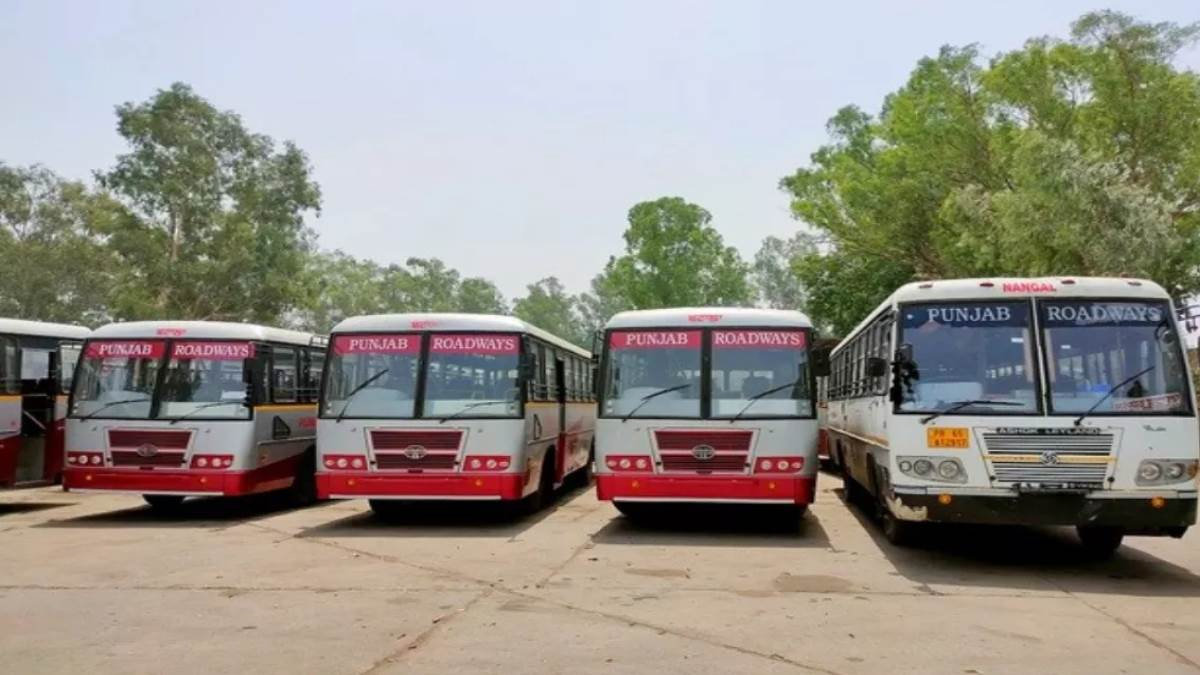
Of course, in the 21st century, we talk about the communication revolution in the country, but why is it that we don’t see its use in the practical world as much as it should be? Today, there are online payment facilities in the markets and shops, but there are some areas where neither the employees are ready to accept these facilities nor the common man is able to use them properly. Recently, news came that if passengers traveling in government and private buses try to make online payments to conductors or ticket checkers, the conductors do not accept it and start fighting.
There was also a news report that a passenger’s insistence on paying online caused the conductor to stop the bus. A heated argument ensued, and the passenger was removed from the bus. Now, it’s reported that the Punjab Transport Department has adopted a digital payment system for passenger payments. Passengers traveling on government buses will receive tickets even if they don’t have cash. Punjab Roadways and PUNBUS are implementing electronic ticketing in their buses. Online payment was originally introduced to eliminate the need for passengers to carry cash while traveling and to pay digitally and receive tickets instantly. However, to implement this decision, the Transport Department will have to purchase E-ticket machines.
These machines will also need to be connected to a central server so that each ticket is instantly recorded online. This will eliminate the problem of ticket sales and fare manipulation or lack of cash. Once implemented, passengers will be able to pay by scanning a QR code on their mobile phones or using UPI apps. While this will provide convenience to passengers, digital ticketing will also solve the problem of maintaining and counting passenger fares. In any case, this is a concrete step towards change.
But the consequences of the steps taken before this have been that the e-currency that was issued has morphed into crypto currency. Neither has e-currency been accepted in the country, nor has crypto currency been controlled. Cyber criminals have exploited the public extensively through online payments. Until this is decisively eradicated, how can we take these swift steps towards change?
Shiromani Rangreta Dal Punjab President Sardar Dharmendra Singh has accused the Congress of having an anti-Dalit mindset, alleging...

Ludhiana, Punjab: Tensions erupted in Ludhiana city’s Old Sabzi Mandi, Karabara Road area on Thursday afternoon when angry...
The Punjab Police's Anti-Gangster Task Force (AGTF) has arrested Gurlal Singh in a joint operation with the Haryana...
Punjab Police has busted an illegal arms supply network in SAS Nagar and arrested three accused. Among the...

Mansa City-2 SHO Beant Kaur has been suspended with immediate effect following anti-drug activist Parminder Singh Jhota’s murder....
Punjab Chief Minister Bhagwant Mann is scheduled to meet Union Power Minister Manohar Lal Khattar in Delhi at...
Aries: The day will be auspicious...