Last Updated: October 22, 2026
Last Updated: October 22, 2026





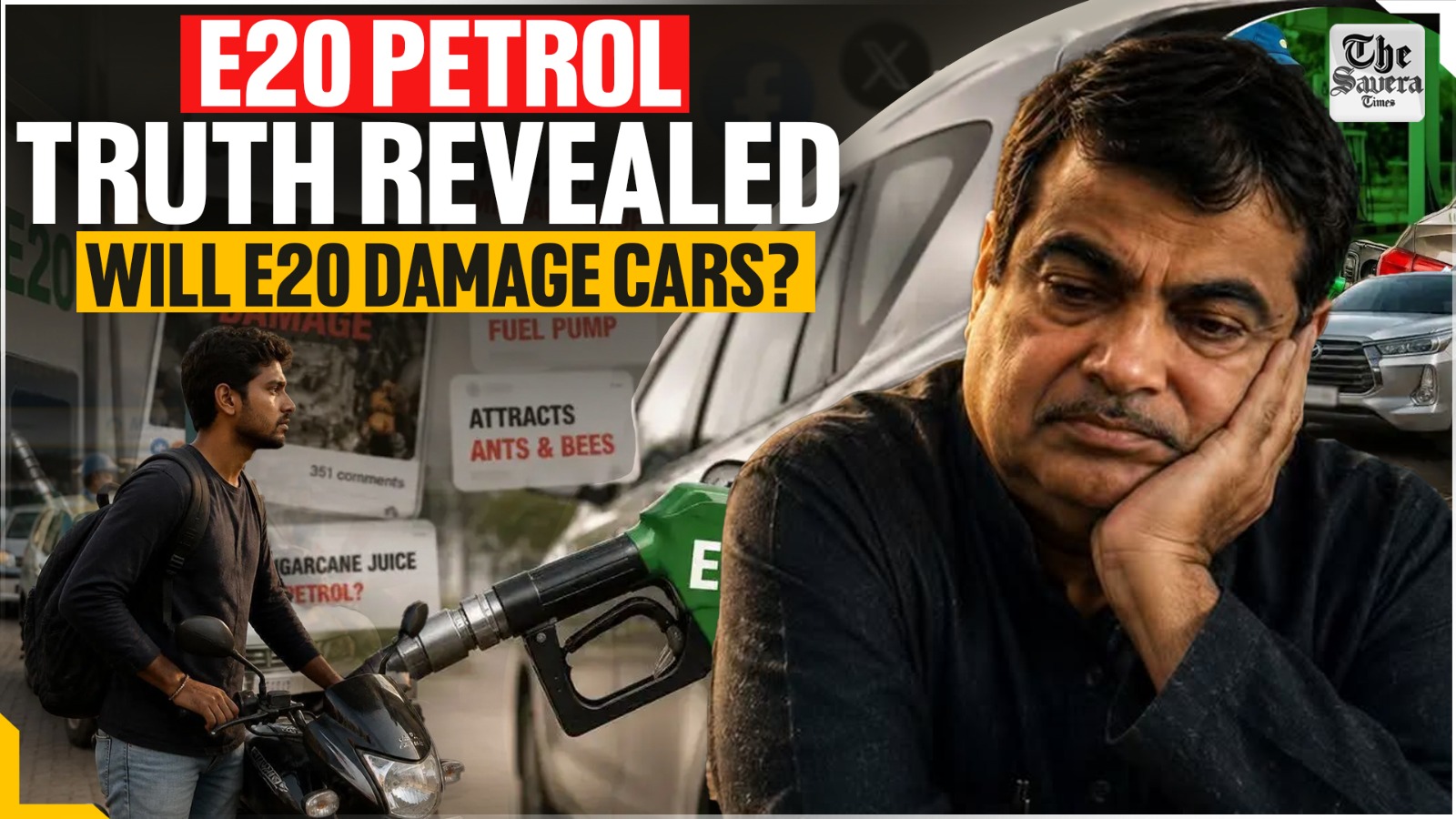
Imagine filling up your car and then hearing that the new petrol could reduce mileage or increase maintenance costs. Over the past few days, that is exactly what many vehicle owners across India have been discussing.
Social media has been flooded with claims, protests have been held in Delhi, and even Public Interest Litigations have reached the Supreme Court. At the centre of this debate is E20 fuel. But what is it, why has India adopted it, and should motorists be worried?
What is E20 fuel?
E20 is petrol blended with 20% ethanol and 80% petrol. Ethanol is a biofuel made from crops such as sugarcane, maize, surplus food grains, and even agricultural residues.
India has gradually increased ethanol blending over the years, moving from lower blends to E10 and now E20. The government recently completed the nationwide rollout of E20, much earlier than its original 2030 target.
Why has India switched to E20?
The main aim is to reduce dependence on imported crude oil. Since India imports a large portion of its fuel, blending ethanol with petrol helps cut oil imports and save foreign exchange.
The government also says E20 supports farmers by increasing demand for crops used to make ethanol and helps reduce carbon emissions. Because ethanol contains oxygen, it allows cleaner combustion, lowering emissions of carbon monoxide, hydrocarbons and particulate matter.
Why has it become controversial?
The controversy began after social media posts claimed E20 could damage engines, reduce mileage and create problems for older vehicles that were not originally designed for higher ethanol blends.
These concerns led to protests, with some motorists demanding that regular petrol or E10 should remain available as an option. PILs have also sought clearer fuel labelling and consumer choice.
Speculation has also grown that India could eventually move towards E25 fuel after the government notified standards for higher ethanol blends. However, no official rollout date has been announced.
What is the government’s response?
The Centre has strongly rejected claims of widespread engine damage.
Union Minister Nitin Gadkari has challenged critics to identify a single confirmed case where a vehicle suffered engine failure due to E20 fuel. Petroleum Minister Hardeep Singh Puri has also dismissed reports of major consumer problems.
According to the government, E20 was introduced only after extensive testing by oil companies, automobile manufacturers and technical agencies. It also says viral claims that E20 attracts ants, causes widespread engine failure or automatically voids vehicle insurance are not backed by evidence.
What do automobile companies say?
Leading automobile manufacturers have largely supported the government’s stand.
Maruti Suzuki says it serviced around 2.84 crore vehicles in FY26, including more than 1.5 crore older vehicles that were not originally certified for E20. According to the company, its service records showed no engine damage linked to E20 fuel.
Hero MotoCorp has also said it has not found any damage that could be directly attributed to E20 petrol.
What about mileage and maintenance?
This is where there is some agreement.
Both the government and automobile companies acknowledge that E20 can reduce fuel economy by around 3% to 5% compared to E10 because ethanol contains less energy than petrol.
Some independent automobile experts have reported higher mileage losses in real-world conditions depending on the vehicle. Experts also say ethanol is more corrosive than petrol, which could gradually increase wear and tear of some rubber and metal components in older vehicles, leading to slightly higher maintenance costs. However, they stress that this should not be confused with widespread engine failure.
The road ahead
The E20 debate highlights the challenge of balancing environmental goals with consumer concerns. The government believes ethanol blending will reduce oil imports, cut emissions and strengthen India’s energy security. Meanwhile, many vehicle owners want more clarity on mileage, long-term maintenance costs and compatibility, especially for older vehicles.
For now, E20 has become India’s standard petrol. While concerns over fuel economy and maintenance continue to be debated, the government and automobile industry maintain that the fuel is safe for use, and its long-term impact will become clearer as more motorists use it in everyday driving.
Two workers died and five others fell unconscious after a fire broke out at a gold jewelry factory...

Congress Parliamentary Party (CPP) Chairperson Sonia Gandhi launched her account on the social media platform Instagram on Thursday.

Congress MP Priyanka Gandhi Vadra's son, artist and photographer Rehan Vadra, has alleged that the Bikaner House administration...

Good Afternoon Viewers! Get the latest news from Punjab, the country, and the world with The Savera Times...

Amit Shah has said the Congress will not return to power for the next 30 years. He also...
New Delhi: Cockroach Janta Party (CJP) leaders Saurav Das, Ashutosh Ranka and Ajinkya Shinde have sought more time...

Aries: The day will be auspicious...