Last Updated: October 21, 2026
Last Updated: October 21, 2026





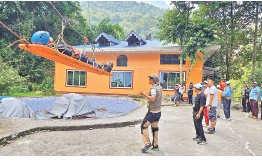
Sikkim has strengthened its disaster preparedness as the Eastern Himalayan region faces growing climate-related threats. The state has intensified planning, training and early warning measures, especially after the Glacial Lake Outburst Flood at South Lhonak Lake in October 2023, which exposed the scale of risk in high-altitude zones. The incident served as a turning point, prompting authorities to reassess vulnerabilities linked to extreme rainfall, unstable slopes and swelling waterbodies.
Mountainous areas across the region remain prone to landslides triggered by heavy rain, similar to the recent flooding in the Darjeeling district of West Bengal. Although the western Himalayas receive more rainfall, the eastern ranges face their own challenges due to fragile terrain and rapidly changing weather patterns.
To improve response capacity, Sikkim has expanded high-altitude rescue mechanisms in coordination with the National Disaster Response Force and the State Disaster Response Force. These include ropeway rescues and specialised operations that continue beyond the monsoon season. Gangtok collector Tushar Nikhare said regular drills on rapid evacuation and rescues are held every quarter. Evacuations are carried out when water levels rise, particularly during the monsoon. Schools routinely conduct familiarisation exercises to ensure preparedness among students and staff.
The local administration uses alerts and continuous monitoring to minimise risk. Dedicated WhatsApp groups connect officials, disaster teams and the police to relay information quickly during emergencies. Drills are often conducted at locations with specific vulnerabilities. One such exercise at the upcoming NIT campus in Khamdong focused on managing natural streams that may swell during intense rainfall, posing a threat to residents.
Following the 2023 flash flood, the state introduced a GLOF risk reduction strategy centred on assessment and early warning systems. Sikkim has mobilised ground-level cadres, including assistants, supervisors and coordinators, to strengthen disaster response. These teams undergo regular training and are deployed for rescue work. Recently, around 250 cadres from Gangtok received specialised training for high-altitude operations.
Prabhakar Rai, director of the Sikkim State Disaster Management Authority, said automated weather stations have been installed near vulnerable lakes to supply real-time data. The Central Water Commission shares water discharge updates to aid monitoring. Rai noted that Sikkim, located in seismic zone IV, has been experiencing the effects of climate change for nearly two decades. As a result, the state continues to prioritise awareness and community mobilisation to enhance preparedness for GLOFs, landslides and related hazards.
The Ayushman Bharat Pradhan Mantri Jan Arogya Yojana (PMJAY) is proving to be a significant relief for poor...

Rescue teams recovered the bodies of four youths from the Kotri canal in Kota on Wednesday morning, after...

A balloon containing a suspected flammable chemical burst during a stage play in Siwan, injuring around 10 spectators....

State Bank of India has confirmed that 3,897 customer records containing personal information were found on the dark...

A fire in a hut in Nonapar village of Deoria district claimed three lives, including those of a...

Amit Shah paid tribute to police personnel who died in the line of duty at the National Police...

Aries: The day will be auspicious...