Last Updated: October 12, 2026
Last Updated: October 12, 2026






New Delhi: This week, a major controversy erupted on social media over Eggoz Nutrition eggs. YouTube channel claimed in a video that Eggoz eggs contain a chemical called AOZ.
AOZ is a residue of an antibiotic called nitrofuran. This antibiotic is completely banned in poultry because it is linked to cancer.
According to the report, a very small amount of 0.73 parts per billion was found in Eggoz eggs. However, Eggoz claims to be 100% antibiotic-free and chemical-free.
This has caused public concern and sparked controversy.
Expert opinion – no need to panic
Experts said the report is shocking, but not alarming.
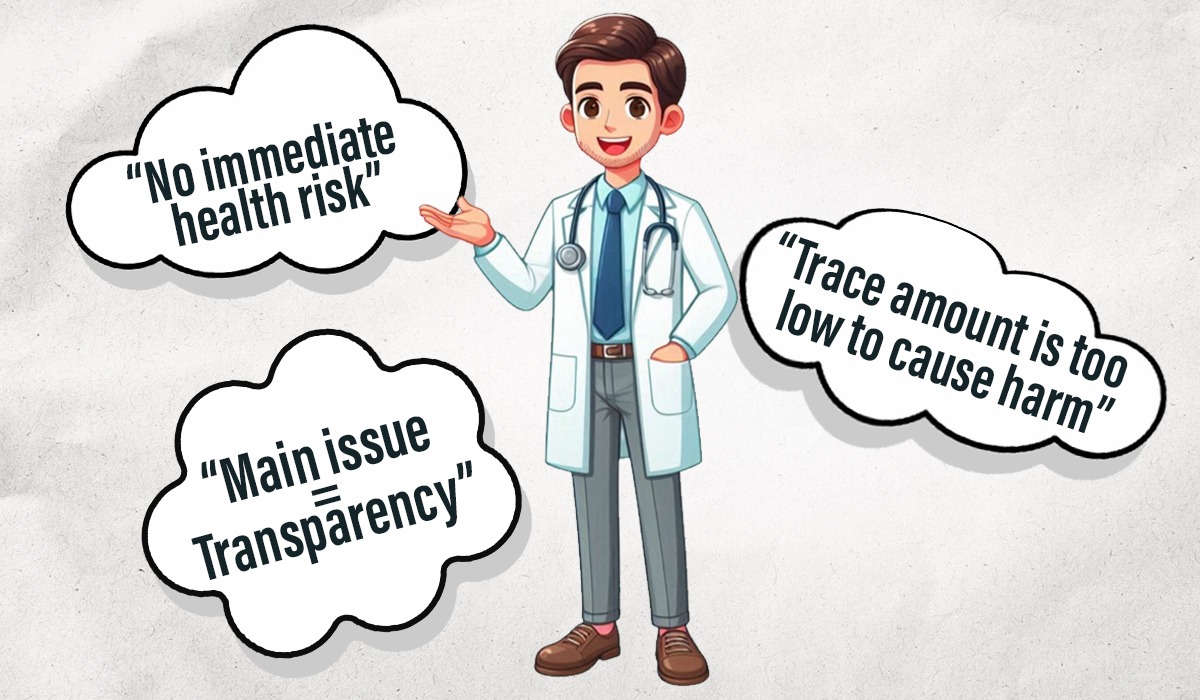
According to experts:
• The amount is very small.
• It does not pose any immediate health risk.
• But main issue is transparency
How AOZ enters in the eggs?
AOZ (3-amino-2-oxazolidinone) is a metabolite of the banned antibiotic furazolidone, and it enters the eggs when chickens are exposed to the original antibiotic, usually through contaminated feed or medication.
Antibiotic Uses: Furazolidone is an antibiotic that was historically used in poultry farming to prevent bacterial infections and keep chickens healthy, thereby increasing egg production. However, it is now banned in several countries, including India, due to concerns about its genotoxic properties and potential cancer risks in humans.
Metabolism and Residues: Once a chicken consumes furazolidone, its body metabolizes the drug into residues, including AOZ. These residues can remain in the hen’s tissues for a long time.
Transfer to eggs: The remaining AOZ is then transferred from the hen’s body to the eggs she lays.
Detection: Food safety regulations have a zero-tolerance policy for these substances, so even small traces (parts per billion) can be detected by sensitive lab testing methods such as mass spectrometry or enzyme-linked immunosorbent assay (ELISA).
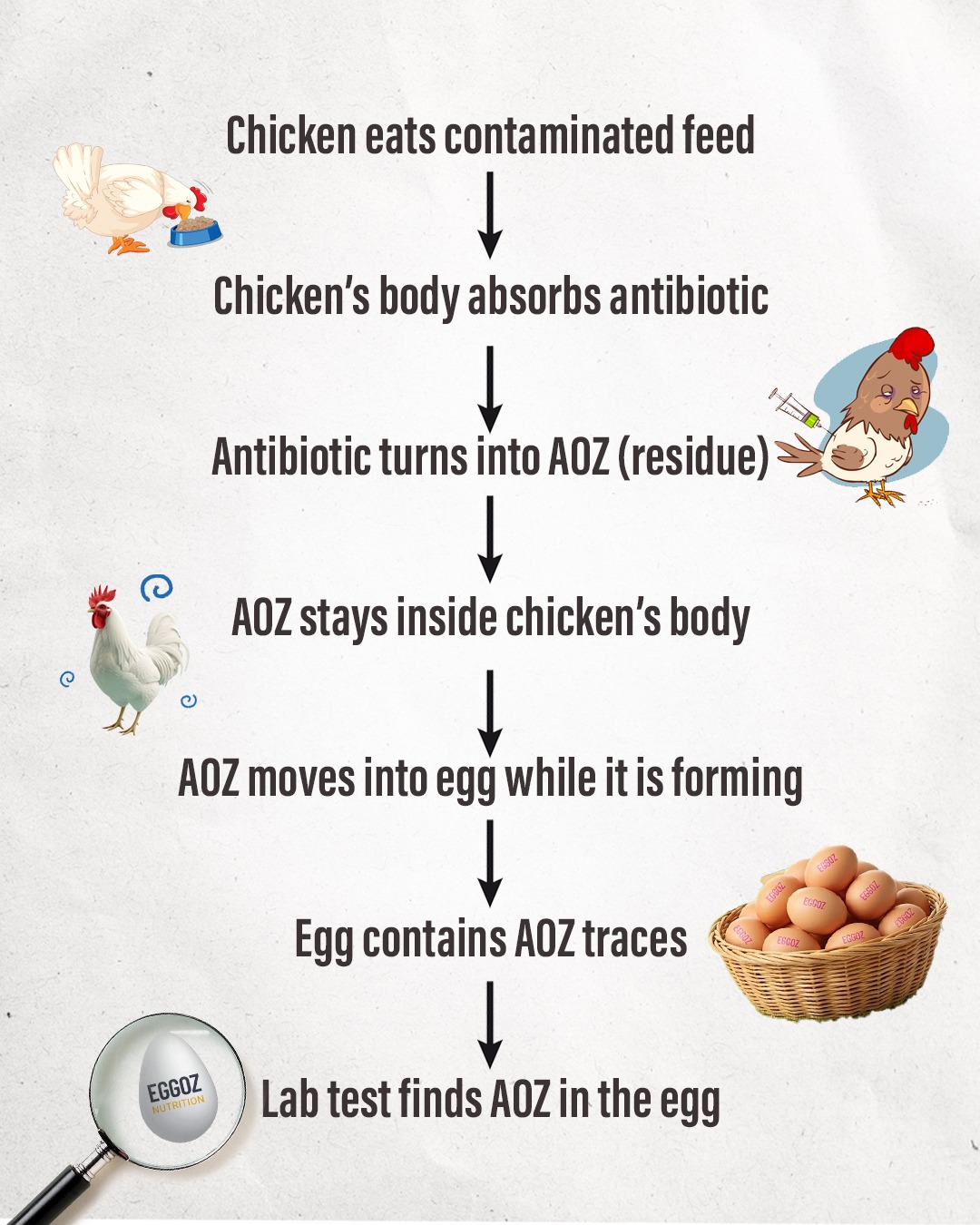
The presence of AOZ in an egg sample almost always indicates recent exposure to the banned parent compound, either through direct medication or through accidental cross-contamination in the feed or farm handling process.
Doctors have clearly said that there is no need to panic, but transparency is necessary.
The company clarified that the eggs are safe and compliant.
On December 9, Eggoz Nutrition released a statement on Instagram. The company said:
— Eggoz Nutrition (@EggozNutrition) December 9, 2025
• Our eggs are completely safe.
• We follow all FSSAI norms.
• Very small amounts may appear due to environmental factors.
• We follow a zero antibiotic policy in our supply chain.
• We have sent samples to a NABL-accredited lab for additional testing.
The company released the lab report online.
On December 11, Eggoz shared a link on Twitter.
The quality reports are now publicly displayed on the company’s website.
We would like to reassure that our eggs are completely safe for consumption. We are sharing our most recent report here for everyone’s reference at the following link : https://t.co/MYt6S5rO8J pic.twitter.com/7wZKwREPvE
— Eggoz Nutrition (@EggozNutrition) December 11, 2025
The company wants to show that its eggs meet all technical standards.
“Legally safe” vs. “completely chemical-free”
Experts say the two are different:
Legally safe: Very low levels, permissible under FSSAI rules.
Completely chemical-free: No trace of any chemicals.
People buy expensive eggs with the expectation that they are free of chemicals.
It is the trust issue that has given rise to this controversy.
Conclusion
The Eggoz controversy shows that Consumers want transparency and trust, not just taste.
Premium brands should conduct continuous quality checks and provide clear information.
For now, the company’s clarifications and released reports have calmed the controversy somewhat, but the debate continues.
The Delhi Police on Monday removed Jantar Mantar from the list of officially designated protest sites. The police...

The Supreme Court on Monday clarified that it has not passed any judgment on the Election Commission's (ECI)...

The Kerala Assembly passed a resolution demanding the removal of Chief Election Commissioner (CEC) Gyanesh Kumar from his...
Amidst heavy security and barricades by the Delhi Police, INDIA Bloc leaders began a protest march towards the...

The Reserve Bank of India (RBI)'s new measures to curb speculation in the rupee and maintain stability in...

Gold exchange-traded funds (ETFs) witnessed a sharp rise in investor interest in September, with net inflows surging 71.4...

Aries: The day will be auspicious...