Last Updated: October 31, 2026
Last Updated: October 31, 2026





Patel’s Institutional Legacy: National Unity, Inclusive Development and Viksit Bharat
As India marks Rashtriya Ekta Diwas, the legacy of Sardar Vallabhbhai Patel invites a larger reflection on national integration, inclusive development and the responsibilities of a diverse democracy.
National unity is often remembered through the events that created a nation. Its enduring strength, however, depends on how succeeding generations preserve and renew that achievement. For India, where languages, cultures, religions and regional identities coexist within a constitutional democracy, unity is not simply a historical accomplishment. It is a continuing political and social responsibility.
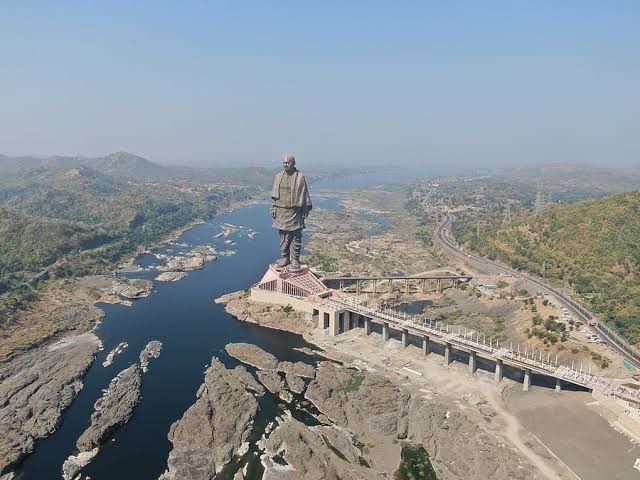
This is what makes Ekta Nagar in Gujarat particularly significant as India observes Rashtriya Ekta Diwas on October 31, commemorating the birth anniversary of Sardar Vallabhbhai Patel. Dominated by the 182-metre Statue of Unity, the world’s tallest statue, Ekta Nagar commemorates the statesman whose contribution to India’s political consolidation remains foundational. Yet its larger significance lies in the question it poses to contemporary India: how can the unity secured through political statesmanship be translated into shared prosperity, social cohesion and a common national purpose?
The achievement that made India possible
At independence in 1947, India’s survival as a unified political entity was far from assured. The British withdrawal left the country confronting the challenge of integrating more than 560 princely states, each with its own ruler, administrative arrangements and relationship with the departing colonial power.
As independent India’s first Deputy Prime Minister and Home Minister, Patel, working closely with V P Menon and other colleagues, brought political negotiation, administrative competence and strategic determination to this extraordinary undertaking. Most princely states acceded to India, while the more complicated cases of Junagadh and Hyderabad required different responses. The integration of the states laid the territorial and administrative foundations of the Indian Union.
Patel’s achievement was not the work of an individual in isolation. It was part of a larger national effort involving the political leadership of the time, civil servants and the people of a newly independent country. Recognising this collective dimension does not diminish his contribution; it places his statesmanship in its proper historical context.
His legacy also offers a lesson about the relationship between national unity and political pragmatism. Integration required a firm commitment to the country’s territorial integrity, but it also demanded negotiation, accommodation and an understanding of local circumstances. Unity was pursued not through a single formula, but through a combination of political persuasion, institutional arrangements and decisive action.
That combination remains relevant to a country whose diversity cannot be reduced to uniformity.
Beyond the monument
Inaugurated on October 31, 2018, the Statue of Unity gives physical expression to Patel’s stature in India’s national imagination. Its scale is striking, but a monument’s historical value cannot be measured in metres alone. Its enduring worth depends on whether it encourages citizens to engage with the ideas and choices that shaped the nation.
The transformation of Kevadia into Ekta Nagar has extended this commemorative purpose. The area has developed into a tourism and public-engagement destination incorporating museums, gardens, ecological attractions and facilities that bring visitors into contact with the landscape and history of the Narmada region.
The significance of this transformation is twofold. First, it makes an important chapter of India’s history accessible to a wider public, particularly younger generations. Second, it illustrates how heritage can become an instrument of regional development rather than remaining confined to a ceremonial site.
The museum and exhibition facilities can help visitors understand the complexities of political integration, the challenges faced by the leadership after independence and the institutional foundations of the Indian state. Such engagement is especially valuable at a time when historical figures are frequently reduced to competing political symbols. Patel’s legacy deserves neither uncritical glorification nor partisan appropriation, but serious engagement with the historical circumstances in which he acted.
A national memorial should inspire pride, but it should also encourage historical understanding.
Development must reach beyond the visitor
Ekta Nagar’s evolution also reflects a broader development strategy: using tourism, connectivity and public infrastructure to create economic opportunities in a region outside the country’s principal metropolitan centres.
The surrounding attractions, including the Valley of Flowers, Arogya Van, Vishwa Van, Ekta Nursery and Jungle Safari, broaden the destination’s appeal. The proximity of the Sardar Sarovar Dam and the Narmada landscape adds another dimension, bringing together infrastructure, ecology and tourism.
There are encouraging indications of an economic dividend. According to a September 2026 report by the Press Information Bureau, officials associated with the Statue of Unity area development authority reported approximately 1,800 direct and 7,000 indirect employment opportunities generated through tourism-led development. The same account highlighted the participation of tribal communities, including women engaged in e-rickshaw services, food outlets and other tourism-related activities.
These developments point to the potential of tourism to support livelihoods, encourage entrepreneurship and widen access to economic opportunities. But they also raise a question that should inform the next phase of development: how widely and sustainably are its benefits being shared?
Employment figures alone cannot establish whether surrounding communities are experiencing lasting improvements in income, skills and economic security. The quality and continuity of jobs, opportunities for local enterprises, access to training and the participation of tribal communities in decisions affecting their lives deserve equal attention.
The environmental dimension is equally important. A destination built around the Narmada’s landscape must balance visitor infrastructure with ecological safeguards, water management, waste reduction and the protection of natural resources. Green mobility initiatives, including electric buses and e-rickshaws, offer a useful direction, but sustainability must be assessed through outcomes rather than appearances.
Ekta Nagar’s success should therefore be measured not only by visitor numbers or the expansion of tourism facilities, but also by improvements in local livelihoods, environmental quality and community participation.
A monument dedicated to national unity acquires deeper meaning when the prosperity it generates is shared by the people who live around it.
Unity is a democratic undertaking
Rashtriya Ekta Diwas provides an opportunity to consider the meaning of national integration in circumstances very different from those of 1947.
India’s political boundaries have been consolidated, and its democratic institutions have endured major social, economic and political transformations. Yet national cohesion requires continuous attention. Regional disparities, social tensions, economic inequalities and disagreements over language, identity and cultural expression can weaken the sense of common belonging if they are not addressed through democratic institutions and public policy.
The answer is not to deny differences in the name of unity. India’s strength lies in its capacity to accommodate diversity within a shared constitutional framework. Respect for different languages and cultural traditions, equal citizenship, the rule of law and confidence in public institutions are essential to sustaining that framework.
Patel’s legacy is relevant here not because every challenge facing contemporary India resembles those of the immediate post-independence years, but because his political achievement demonstrated the importance of placing the larger national interest above narrower calculations.
Unity, moreover, cannot be sustained by appeals to patriotism alone. It must be reinforced by institutions that command public confidence, opportunities that are not restricted to a privileged few and a development process in which citizens across regions and communities have a meaningful stake.
For young Indians, this is perhaps the most important lesson of Ekta Nagar. Nation-building did not end with independence, nor did it conclude with the integration of the princely states. Each generation inherits the responsibility of strengthening the institutions, relationships and shared aspirations that hold the country together.
From Ekta Nagar to Viksit Bharat
As India pursues the ambition of Viksit Bharat by 2047, Ekta Nagar offers a compelling connection between historical achievement and future aspiration. The political integration of the country created the conditions for a common national project. Its developmental promise can be realised only when economic progress, social cohesion and institutional strength advance together.
The Statue of Unity will continue to command attention because of its extraordinary scale. But the more enduring measure of Patel’s legacy will be found elsewhere: in the confidence citizens place in their institutions, the opportunities available to communities at the margins and the ability of a diverse society to pursue common goals without erasing its differences.
On Rashtriya Ekta Diwas, Ekta Nagar should remind India that unity is neither a finished historical event nor a slogan reserved for ceremonial occasions. It is a living commitment, renewed through democratic conduct, inclusive development and respect for the country’s plural character.
Patel helped bring together the political units that became modern India. The task before the nation today is to ensure that its people, in all their diversity, continue to share in the promise of that union.
New Delhi: Prime Minister Narendra Modi on Saturday paid tributes to Sardar Vallabhbhai Patel on his birth anniversary,...
Atlanta: External Affairs Minister S. Jaishankar held bilateral meetings with his counterparts from Canada, Brazil, Argentina, Mexico and...
Every year, October 31 brings back painful memories of the events of 1984, opening a Pandora’s box of...
BJP leaders, Union ministers, and the Rashtriya Swayamsevak Sangh (RSS) on Friday expressed deep grief over the demise...
Catch all the major updates with The Savera Times Evening Bulletin. Get the latest news from Punjab, India...

Tamil Nadu Chief Minister C. Joseph Vijay on Friday announced a five-year relaxation in the maximum age limit...
Aries: The day will be auspicious...