Last Updated: October 21, 2026
Last Updated: October 21, 2026





Sheena Sandhu
For decades, India’s power sector has carried the weight of accumulated subsidies, rising technical losses, and chronic inefficiencies. Farmers, paradoxically, have been both beneficiaries and victims of this system: beneficiaries of subsidised tariffs, and victims of poor quality supply, unpredictable outages, and delayed connections.
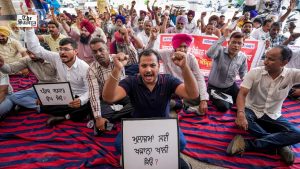
The draft Electricity Amendment Bill seeks to rewrite this script. Yet, farmer unions have mounted a loud opposition campaign, warning of tariff shocks, corporatisation, and erosion of rights. These anxieties are not trivial. But they are also not fully aligned with what the Bill actually proposes.
At its core, the Bill attempts to restore financial viability to the distribution sector, while preserving the State’s ability to subsidise electricity for priority consumers—including agriculture. It promises what has been missing for years: sustainability.
The promise: more reliable supply for agriculture
The most urgent problem rural India faces today isn’t tariff—it is reliability.
From Punjab to Maharashtra, farmers repeatedly complain of:
All of this stems from one fact: DISCOMs are financially stressed beyond repair.
Reforms that stabilise DISCOM finances hold a direct promise for agriculture: better quality supply, predictable hours, lower hardware losses, and reduced downtime.
That is not a minor gain.
Subsidies are not being scrapped — they are being formalised
A central claim of protesting farmer groups is that subsidies will disappear. The Bill does not say that.
Subsidies will continue—only the route will change:
instead of discounts being embedded inside tariffs, States will transfer the subsidy amount directly to DISCOMs in a transparent manner.
This matters.
It ensures:
If anything, subsidy certainty works in farmers’ favour.
Competition is not automatically privatisation
Another charge is that the Bill will “hand over power to private companies”.
Competition in distribution does not automatically mean privatisation of assets.
It means farmers can demand better service standards, and regulators can benchmark performance.
The farmer’s objective is not who supplies power—it is how reliable, affordable and timely the supply is.
The present monopoly has not served them well.
Why resistance is understandable — but incomplete
Farmer unions carry the memory of structural shocks.They also worry about creeping tariffs.
Their mistrust of reform is rooted in experience.
These concerns deserve attention, not dismissal.
But the question is:
Should reform be rejected outright, or shaped in a way that strengthens farmer protections?
Insisting on scrapping the Bill entirely risks locking farmers into the same poor supply regime for another decade.
That would be the greater injustice.
What farmers should demand instead
Instead of an absolutist rejection, farmer bodies could press for:
These are achievable, negotiable, monitorable.
They would transform the Bill from a fear into a guarantee.
The bottom line
Reform is always uncomfortable. Status quo is always easier to defend. But the status quo has failed the farmer. The Electricity Amendment Bill is not flawless. But to label it anti-farmer is to miss the larger point.If implemented with accountability and safeguards,it can deliver what farmers need most:
predictability, reliability, sustainability.
The opportunity lies not in rejecting the Bill—but in shaping it.
And for the farmer, that could be the difference between dependency and empowerment.
(The writer is a retired civil servant, views are personal.)
Punjab government employees are observing a two-day mass casual leave protest on October 21 and 22. The agitation...
Punjab Police have arrested seven people in a suspected drug, arms and explosives smuggling case in Amritsar. A...

Punjab has reported 404 stubble-burning incidents, with Tarn Taran and Amritsar accounting for the highest numbers. Authorities have...

The CBI has taken over the investigation into anti-drug activist Parvinder Singh Jhota’s killing in Mansa and registered...

Punjab Chief Minister Bhagwant Mann was allegedly detained for three hours at Delhi airport upon his return from...

The Punjab Vigilance Bureau (VB) during its ongoing drive against corruption in the state, has apprehended Inspector Gulshan...
Aries: The day will be auspicious...