Last Updated: October 24, 2026
Last Updated: October 24, 2026





-Harjot Singh Sandhu
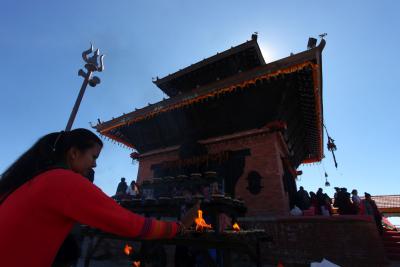
In 2022, I had the privilege of visiting Nepal and paying obeisance at the sacred Pashupatinath Temple, one of the oldest and holiest temples in Kathmandu. Nepal, often referred to as the “Roof of the World,” is home to eight of the world’s highest mountain peaks, including Mount Everest and Kanchenjunga. It is also one of the few nations that has never celebrated an Independence Day, having never been colonized by a foreign power. Kathmandu, its historic capital, has long been admired for its rich cultural and spiritual heritage. While travelling through Nepal, my thoughts turned to an extraordinary chapter in the shared history of Punjab and Nepal—a time when the Maharaja of Punjab and the King of Nepal enjoyed cordial relations.
I also reflected upon the remarkable journey of a queen who, stripped of her kingdom, crossed mountains and forests to reach Kathmandu as a sanyaasan (ascetic). That queen was Maharani Jind Kaur, affectionately remembered as Mai Jindan. After the annexation of the Sikh Empire by the British, Mai Jindan was imprisoned in Chunar Fort near Benares (Varanasi). Refusing to accept captivity, she made a daring escape and reached Patna. The British were relentlessly searching for her, and to evade capture she adopted the appearance of a wandering ascetic. Draped in a saffron saree, rubbing river sand into her hair to make it appear matted, she transformed herself beyond recognition. That night, she sought shelter in a Gurdwara in Patna, where free food and accommodation were offered to all. Realising that Patna was no longer safe, she resolved to seek refuge in Nepal. Her trusted aide, Avatar, went to arrange horses and supplies for the journey but never returned. Mai waited for three anxious days, only to learn that the British were combing the streets in search of rebels. Before departing, she informed the Gurdwara granthi that she wished to undertake a pilgrimage to the revered Pashupatinath Temple in Nepal.
The granthi offered her directions, a worn blanket, some bread, and a little money. Alone and uncertain, she began the long journey north, hoping to join a group of pilgrims. None came. The journey was unforgiving. Her footwear gave way, leaving her feet bruised, blistered, and bleeding. When she had money, she survived on milk and bread; when it ran out, she begged for food. As settlements became fewer, even alms became scarce. Much of her route passed through dense forests, where she feared attacks from wild animals. She carried stones to defend herself if needed.
At night, wrapped in a tattered blanket, she slept beneath trees or in caves. Days and nights merged into one another as she pressed on through exhaustion and uncertainty. Eventually, she reached the mountains. Bitter cold replaced the heat of the plains. Many mornings, she awoke to find her blanket covered in snow. Food became scarce, the trails steeper, and every step more painful. Weak and exhausted, she began to believe she would not survive. One day, while resting beneath a rocky outcrop, a group of pilgrims on their way to Pashupatinath found her. Believing her to be a destitute ascetic, they offered food and kindness. To protect her identity, Mai simply told them, “The death of my son has made me a sanyaasan.” Against all odds, after nearly a month of relentless travel, Mai Jindan arrived in Kathmandu. She eventually reached the palace of Rana Jung Bahadur. As the Rana was leaving for court, he noticed the weary woman and, assuming she was a beggar, offered her some coins. Mai refused. Surprised and somewhat offended, Rana Jung Bahadur asked sternly, “Who are you?” Her reply was calm yet powerful: “I am Rani Jindan, the widow of Maharaja Ranjit Singh, who was once a friend of your kingdom.”
The Rana was stunned. Looking closely at her face, he listened as she recounted her escape from British imprisonment and the perilous journey she had endured. Deeply moved, Rana Jung Bahadur stepped down from his chariot and bowed before her. “You are a brave woman, Mai Jindan,” he is said to have remarked. “We still remember with warmth and gratitude the friendship extended by Sarkar, Maharaja Ranjit Singh (Sarkar-e-Khalsa) in earlier times. Though we are far from Punjab, we have heard how the British seized your kingdom and mistreated your son. Welcome to Nepal.” Nepal became Mai Jindan’s refuge for the next eleven years. As age and failing eyesight overtook her, the British eventually permitted her to reunite with her son, Maharaja Duleep Singh, then twenty-two years old, at Spence’s Hotel in Calcutta. Mother and son later travelled together to England. On 1 August 1863, Maharani Jind Kaur passed away at Abingdon House in Kensington.
Since cremation was illegal in Great Britain before 1885, Duleep Singh was not permitted to perform her last rites there. Her body was temporarily interred at Kensal Green Cemetery. In the spring of 1864, he finally secured permission to take her remains to Bombay, where he cremated his mother according to Sikh tradition. Her wish of organising her cremation at Lahore was not fulfilled. Mai Jindan’s story is one of extraordinary courage, endurance, and dignity. Her month-long journey from captivity to sanctuary remains one of the most remarkable yet lesser-known episodes in the history shared by Punjab and Nepal a powerful reminder of resilience in the face of overwhelming adversity
The Indian Army on Friday rejected claims on social media that the Army had taken action against the...

Abdul Majid Hakim Elahi, Iran's Supreme Leader's representative and senior diplomat, said on Friday that the US has...
New York, USA: The New York City Council has passed a law to ban horse-drawn carriages, naming the...

Washington: US President Donald Trump suggested that further military action against Iran remained possible, while acknowledging that the...

Lhasa: Sixteen people were killed and 32 others injured after a 7.0-magnitude earthquake struck Tibet on Thursday, according...
More than two weeks after the Yemeni government launched a major offensive against the Houthi group, front lines...

Aries: The day will be auspicious...