Last Updated: October 16, 2026
Last Updated: October 16, 2026





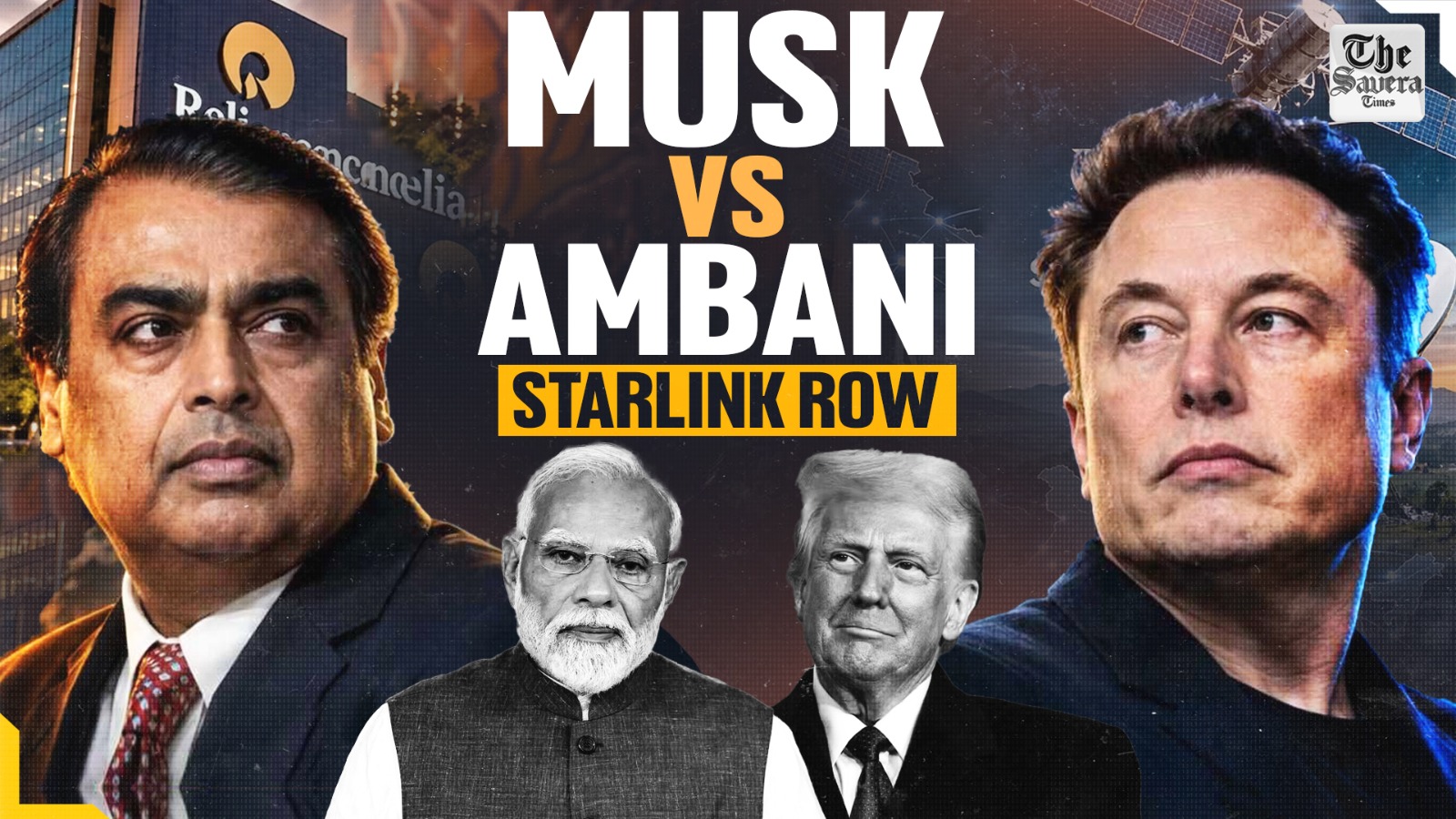
What happens when the world’s richest business leaders clash over one of the world’s biggest internet markets? A fight over satellite internet has now turned into a debate about business power, government approvals and fair competition in India.
Tesla and SpaceX chief Elon Musk has accused powerful business interests of blocking his Starlink internet service in India. His remarks have raised questions about Reliance Industries chairman Mukesh Ambani and his telecom company, Jio.
But is Ambani really blocking Starlink? Is the Indian government favouring domestic companies? Or is this a case of regulatory approvals taking time? Let’s understand the controversy.
What Is Starlink, and Why Does Musk Want India?
Starlink is a satellite-based internet service operated by SpaceX, the American aerospace company founded by Elon Musk. Unlike conventional internet services that largely depend on mobile towers and fibre-optic cables, Starlink uses satellites in low Earth orbit to provide internet connectivity.
This technology can be particularly useful in remote villages, mountainous regions and places where building traditional internet infrastructure is difficult.
India is an attractive market because millions of people need reliable internet, including those living in areas with limited connectivity. However, Starlink cannot begin commercial operations simply by launching satellites. It must meet India’s licensing, security and spectrum-related requirements.
What Is Jio, and Why Is Ambani Part of This Debate?
Reliance Jio is one of India’s biggest telecom companies, owned by Mukesh Ambani’s Reliance Industries. It provides mobile internet, telephone and broadband services to more than 530 million customers, according to Reuters.
Jio changed India’s telecom market by introducing low-cost data plans. Now, its satellite internet plans could put it in direct competition with Starlink.
The competition is important because satellite internet could open a new market in remote areas while also challenging existing internet providers.
Musk Targets Ambani on X
On October 7, Musk posted on X that unnamed powerful business figures were blocking Starlink to protect their market dominance. He called it a “crime against the people of India”.
The following day, he questioned why Starlink was still waiting to begin operations despite years of compliance efforts. He directly referred to Ambani, asking whether he was the “real boss of India”.
An important clarification: These statements were made by Elon Musk, not Donald Trump.
Musk’s central argument is that Starlink could improve internet access and that delaying its entry would limit competition. However, he has not publicly provided evidence proving that Ambani or Reliance deliberately blocked Starlink’s approval.
What Has the Indian Government Said?
The government rejected Musk’s allegations. The Ministry of Communications said India’s satellite communication rules are fair and non-discriminatory.
Telecom Minister Jyotiraditya Scindia also said India does not allow monopolies in any sector.
The key point is that Starlink has received certain licences and regulatory approvals, but it still needs the required security clearance and spectrum assignment to launch commercial services. Jio’s satellite business and Bharti-backed Eutelsat OneWeb are also awaiting the necessary clearances.
Authorities have cited security requirements, including concerns about control over satellite services and the protection of Indian users’ data.
October 16: Reliance Responds to Musk
The controversy took a new turn on October 16, when Reliance publicly responded to the allegations for the first time.
According to Reuters, the company said it welcomed competition, including from Starlink, and that its own satellite services were also awaiting government clearance.
Reliance’s position is that all companies should follow the same rules. This response challenges the suggestion that Jio has already received preferential treatment, although it does not independently settle every question about the approval process.
So, Is Starlink Being Blocked Unfairly?
As of October 16, there is no publicly established evidence proving Musk’s allegation that Ambani is deliberately preventing Starlink from entering India.
At the same time, the delay is real, and questions about transparency, competition and the speed of regulatory approvals deserve scrutiny.
The issue goes beyond a personal clash between two billionaires. It concerns whether India can attract new technology companies while protecting national security and ensuring fair competition.
Ultimately, Indian consumers have the most to gain from genuine competition. If Starlink launches, it could provide another option, especially in poorly connected regions. But its actual prices, performance and reach will determine how useful it becomes.
The central question is not simply whether Musk or Ambani wins. It is whether the rules are applied fairly, transparently and consistently to every company seeking to connect India.
Good Afternoon Readers! Stay updated with The Savera Times Afternoon Bulletin, bringing you the latest news from Punjab,...

New Delhi: Cockroach Janta Party (CJP) founder Abhijeet Dipke on Friday defended the party’s protests, asserting that peaceful...
Security has been tightened in central Delhi ahead of the CJP’s ‘Lehra Do Tiranga’ march. Central Park is...

New Delhi: The Supreme Court on Thursday referred the cheque dishonour cases against actor and comedian Rajpal Yadav...

Farmers and supporters protested at Amritsar’s Golden Gate during the Punjab bandh over Parvinder Singh Jhota’s murder and...

The India-BrazilSouth Africa Maritime Exercise (IBSAMAR) remains an important platform for strengthening naval interoperability, maritime security cooperation and...

Aries: The day will be auspicious...