Last Updated: September 22, 2026
Last Updated: September 22, 2026





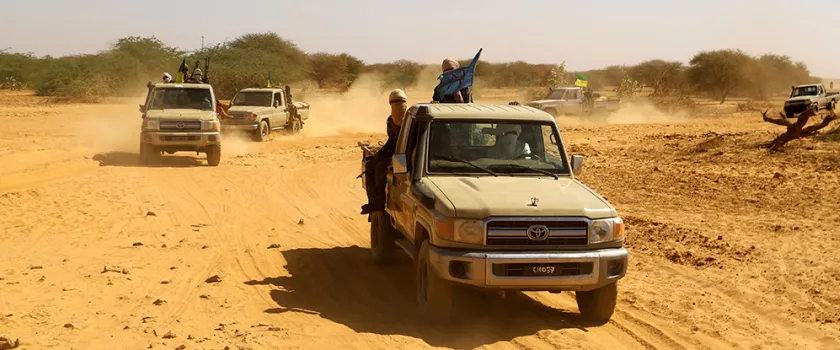
Mali’s security crisis is deepening as armed groups linked to al-Qaeda extend their control across large areas of the country and place growing pressure on the capital, Bamako. The latest incident highlighting this volatility is the kidnapping of five Indian nationals on Thursday near Kobri in western Mali.
The individuals were working for a company involved in electrification infrastructure projects. According to a security source who requested anonymity, the workers were taken by unidentified gunmen while carrying out their duties in the region. The company later confirmed the abduction, stating that the safety of their staff had become an immediate concern.
The remaining Indian employees associated with the same firm have since been relocated to Bamako as a precautionary measure. So far, no group has claimed responsibility, and there have been no confirmed details on the condition or location of the abducted workers. This incident aligns with a pattern that has become increasingly common in Mali.
Foreign nationals, aid workers, and professionals involved in development or humanitarian projects have frequently been targeted in kidnappings over recent years. The captors often aim to use hostages as leverage, whether for ransom or political concessions.
The state’s limited ability to secure remote and rural areas has opened opportunities for militant groups to operate with relative freedom. Government authority outside major cities is fragmented, and in many regions, non-state actors exercise greater control than official security forces.
A significant driver of Mali’s instability is the rise of Jama’at Nusrat al-Islam wal-Muslimin, commonly known as JNIM. This coalition of armed factions affliated with al-Qaeda was formed in 2017. It brought together groups including al-Qaeda in the Islamic Maghreb, Ansar Dine, Al-Murabitun, and the Macina Group. Their merger allowed for coordinated operations across northern and central Mali as well as border regions shared with Burkina Faso and Niger. JNIM’s leadership is closely linked to longstanding political and military movements in northern Mali. Its most prominent figure, Iyad Ag-Ghali, played a central role in Tuareg rebellions in the 1990s before founding Ansar Dine in 2012.
His influence has been a defining element of militant expansion in the country.The roots of the current conflict trace back to the 2012 rebellion in northern Mali. Though international military intervention pushed back some militant factions, many fighters adapted their strategy. They embedded themselves in rural communities where government presence was minimal or inconsistent.
Over time, JNIM extended its influence through a combination of guerrilla attacks, targeted assassinations, negotiations with local leaders, and control of supply routes. Armed groups have also damaged infrastructure such as school buildings and road networks to undermine state authority.
Human rights organisations have documented widespread violence against civilians, particularly those accused of collaborating with government forces. Reliable casualty data remains difficult to establish due to limited access and inconsistent reporting, but the conflict has resulted in thousands of deaths since 2017. In recent months, the crisis has intensified further with a blockade imposed by JNIM on major fuel supply routes leading into Bamako. The capital depends heavily on fuel transported by road from Senegal and Ivory Coast. Fighters have prevented oil tankers from reaching the city, disrupting the commercial and daily activities that rely on a stable fuel supply.
This blockade followed the government’s ban on informal fuel sales in rural areas. Authorities introduced the ban in an attempt to prevent militants from accessing fuel used to power vehicles and motorcycles. In many parts of Mali, informal traders purchase fuel in bulk and resell it in smaller quantities. The restrictions disrupted that market and, in response, JNIM moved to cut off fuel access to the capital. Fuel shortages have since become severe. Residents have struggled to acquire gasoline, and long queues have formed at stations where supplies are still available. Public transportation and private commuting have been affected, while commercial operations relying on vehicle transport have slowed.
The fuel crisis has also worsened electricity shortages in Bamako, contributing to more frequent power outages. The combined impact has placed significant strain on daily life and has intensified public concern about the government’s ability to manage the crisis. Mali now faces a heightened risk of further destabilisation. The spread of militant control, recurring kidnappings, and disruption of critical supply routes underscore the challenges confronting both authorities and civilians. The trajectory of the conflict suggests that without a substantial shift in strategy, security conditions are likely to continue deteriorating.
US President Donald Trump addressed the UN General Assembly amid the Iran war, Strait of Hormuz tensions and...

The Bombay High Court has warned Vijay Mallya against posting court documents on social media while his petitions...
Iran has said it could reopen the Strait of Hormuz within seven days if the United States eases...

Fresh Pakistan-Afghanistan tensions have emerged along the disputed Durand Line following airstrikes, civilian casualties and renewed accusations over...
A controversy has erupted over a 90-foot-tall statue of Lord Hanuman in Texas, USA.
California has declared a state of emergency as authorities prepare for a potentially historic El Nino season that...

Aries: The day will be auspicious...