Last Updated: October 20, 2026
Last Updated: October 20, 2026





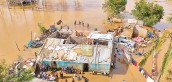
African nations are experiencing rapidly escalating health impacts linked to climate change despite contributing the least to global greenhouse gas emissions, according to a new report by the Lancet Countdown Africa, part of an international research collaboration. The study warns that rising temperatures, extreme weather events, food insecurity, malnutrition, vector-borne diseases and displacement are already placing severe strain on communities across the continent.
The Lancet Countdown is launching a new initiative to strengthen regional research capacity and connect experts across disciplines. The aim is to build robust evidence, coordinate data and support African institutions working at the intersection of health and climate.
The report highlights that climate change is intensifying deadly extreme weather events. High temperatures and prolonged heatwaves are increasing illness and death across vulnerable groups, particularly children under five and adults over 65. Mortality linked to extreme events surged in 2023, with deaths rising from about 4,000 in 2022 to 15,000 in 2023.
Floods were among the deadliest disasters. In September 2023, catastrophic flooding in Libya killed an estimated 11,300 people. The same year, floods in Rwanda and the Democratic Republic of the Congo resulted in 3,000 deaths. Drought has been equally devastating. Between 2020 and 2023, countries in the Horn of Africa endured the region’s worst drought in four decades, triggering acute water shortages, rising food insecurity and widespread malnutrition.
Such repeated crises force high-risk countries into a cycle of emergency response. Sparse public health resources are repeatedly diverted to disaster relief, slowing progress in long-term development and health system strengthening.
Despite facing steep risks, many African countries remain underprepared for escalating climate pressures. Adaptation efforts have lagged due to financial constraints and limited technical capacity. Funding gaps are significant. From 2014 to 2018, Africa received only 16.5 billion dollars for climate adaptation, half the 30.6 billion dollars allocated for mitigation projects during the same period. Health adaptation funding remains particularly scarce.
Researchers argue that sustainable adaptation requires scaled-up and flexible financing that supports systems central to public health, including urban planning, disaster risk reduction, emergency response and core health services.
To address these challenges, the Lancet Countdown has launched a regional centre in Africa. The new hub will bring together African researchers and institutions to generate context-specific data and monitor climate-linked health indicators. It aims to equip policymakers with reliable evidence to guide decisions as the effects of climate change intensify.
Professor Tafadzwa Mabhaudhi, director of the regional centre, said the initiative will help ensure African perspectives shape global climate discussions and support turning international commitments into concrete action.
Congress leaders continued their protest outside the Jaipur Police Commissionerate on Tuesday, demanding the registration of a zero...

On the auspicious occasion of Vijayadashami, Prime Minister Narendra Modi on Tuesday called on the countrymen to unite...

A historic milestone was achieved on Tuesday in the expansion of Chhattisgarh's rail networkA historic milestone was achieved...

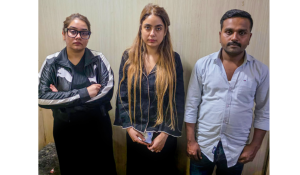
Model Shraddha Dubey, one of the main accused in the death of Lucknow businessman Shiv Sharma, has been...
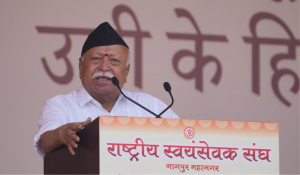
Rashtriya Swayamsevak Sangh (RSS) chief Mohan Bhagwat on Tuesday called for strengthening national unity, social harmony, indigenous practices...
Amidst comparisons of youth protests in India to political movements and regime changes in France, Nepal, and Bangladesh,...

Aries: The day will be auspicious...