Last Updated: October 21, 2026
Last Updated: October 21, 2026





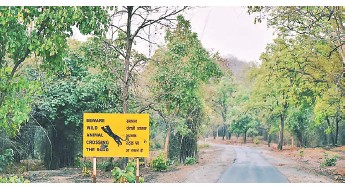
New research is raising concerns that the rapid global expansion of protected areas is creating a misleading sense of progress, with biodiversity continuing to decline inside many sites that are officially designated for protection. Scientists and policy analysts warn that headline gains in protected area coverage are masking deeper structural weaknesses in how conservation is designed, funded and enforced.
The concerns are highlighted in the State of International 30×30 Funding report released in December 2025, which calls for a fundamental shift in conservation finance. The report urges governments and donors to prioritise long-term, predictable funding for management, enforcement and ecological restoration, rather than focusing primarily on expanding protected area boundaries.
Under the Kunming–Montreal Global Biodiversity Framework adopted in 2022, countries committed to protecting 30 per cent of land and oceans by 2030.
According to UN Environment Programme data, around 17.6 per cent of land and inland waters and 8.4 per cent of oceans are currently under some form of protection. While these figures suggest steady progress, researchers caution that many protected areas exist largely on paper. Scientific studies show that biodiversity loss continues within many protected boundaries, as climate change, invasive species, habitat degradation and extractive activities remain insufficiently controlled. In marine environments, a 2025 study published in npj Ocean Sustainability found that many marine protected areas allow industrial fishing and bottom trawling, with success often measured by area covered rather than ecological recovery. In the European Union, more than 80 per cent of marine protected areas have weak restrictions, and in some cases fishing pressure inside protected zones exceeds that in surrounding waters.
On land, climate change is undermining conservation efforts. A 2025 Nature Sustainability study tracking invasive plant spread in India found rapid expansion even within protected forests, threatening wildlife habitats and local livelihoods. Another global study in Nature showed that protected areas can deliver ecological benefits beyond their boundaries, but only when management quality is high.
Funding shortfalls remain a central challenge. The 30×30 funding report found that international support for protected areas in developing countries reached just over $1.1 billion in 2024, far below the estimated $6 billion needed annually by 2030. Much of the funding is short-term, unevenly distributed, and focused on expanding coverage rather than strengthening existing sites.
A fire in a hut in Nonapar village of Deoria district claimed three lives, including those of a...

Amit Shah paid tribute to police personnel who died in the line of duty at the National Police...

Reduced water levels at Har Ki Pauri and other Haridwar ghats have inconvenienced pilgrims during the Upper Ganga...

Six people returning from a Dussehra Mela were seriously injured when a car hit them on National Highway...

A bus travelling from Pachiound to Ramnagar fell into a gorge at Gulli Gula in Udhampur district. Nine...

Start your day with The Savera Morning Brief, bringing you the latest news from India and around the...

Aries: The day will be auspicious...