Last Updated: October 6, 2026
Last Updated: October 6, 2026





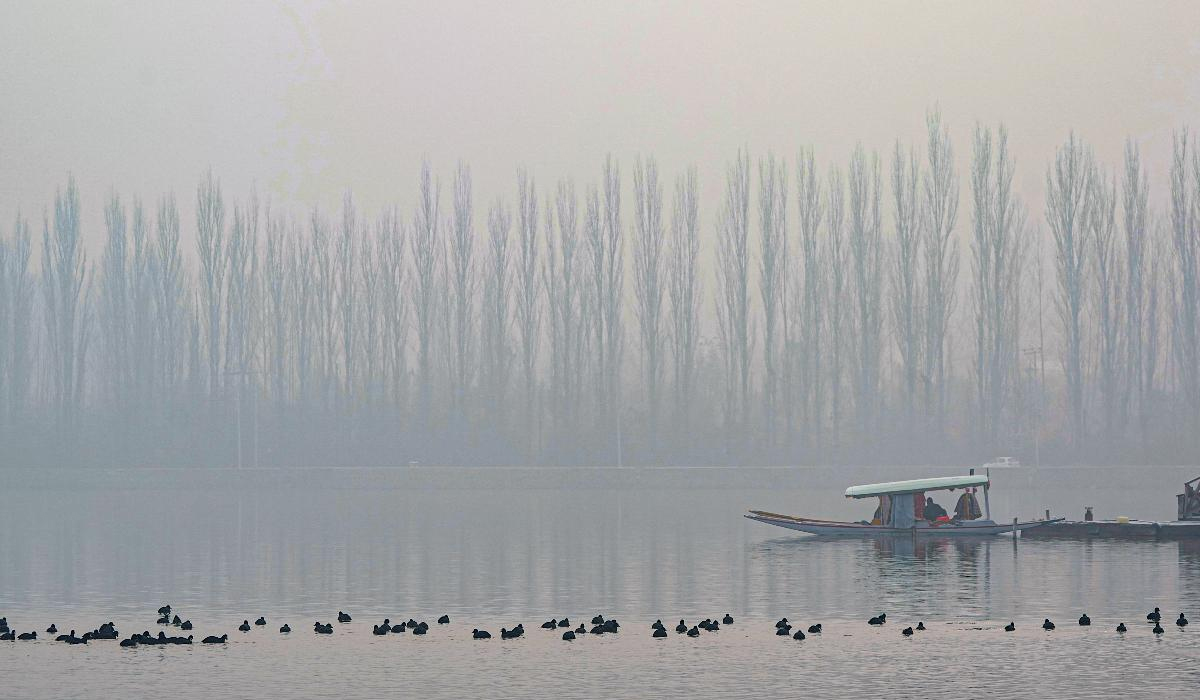
Kashmir is once again witnessing a revival of its long-celebrated tourism. Shikaras glide gracefully across Dal Lake, meadows in Pahalgam and Gulmarg echo with laughter, and the region’s cinematic allure from decades past draws visitors in ever-growing numbers. Yet, beneath this picturesque veneer lies a stark ecological reality that demands immediate attention. Dal Lake, the symbolic heart of Srinagar’s tourism, is under threat from escalating pollution, and unless urgent steps are taken, its charm and ecological integrity may be irreparably compromised.
Recent findings by the J&K Pollution Control Committee (J&K PCC) and observations from the National Green Tribunal (NGT) paint a worrying picture. Dal Lake and its adjoining channels, Nayadyar and Jogilankar, are nearly anaerobic, burdened by a high organic load and rampant untreated sewage. Despite the presence of six Sewage Treatment Plants (STPs) in the vicinity, their operational inefficiencies and non-compliance with prescribed effuent standards mean that partially treated or untreated wastewater continues to flow into the lake.
The Brari Nambal STP, for instance, is poorly designed and fails to treat the sewage effectively, adding to the lake’s deteriorating condition. The consequences of this pollution extend beyond mere aesthetics. Dal Lake is a vital ecological system supporting aquatic life, houseboats, and surrounding livelihoods. The high levels of Biological Oxygen Demand (BOD), total coliform, and faecal coliform indicate a serious threat to both human and environmental health.
Additionally, with over 900 houseboats discharging waste directly into the lake, the problem compounds daily. The romanticized image of Dal Lake, a cornerstone of Kashmir’s tourism economy, increasingly clashes with the grim realities of environmental neglect. While tourism is vital for the region’s economy, unchecked growth without environmental safeguards is unsustainable. The current situation reflects a systemic failure: infrastructure projects like STPs, intended to mitigate pollution, have been implemented more as engineering exercises than as comprehensive ecological interventions. Connecting all sewerage to non-compliant STPs inadvertently incentivizes pollution. Households capable of constructing septic or soakage pits often forgo them when a sewer line conveniently channels waste directly into the lake.
This misalignment between infrastructure and ecological reality has accelerated degradation rather than alleviated it.The path forward requires a combination of science-driven policy, community participation, and accountable governance. First, a comparative data analysis of Dal Lake’s water quality before and after STP installations is critical. Only through this can authorities assess the actual effectiveness of these interventions and identify gaps. Second, reducing the sewage load is imperative. Households in the catchment with suffcient land should be encouraged, or even mandated, to install septic or soakage pits.
This would significantly lessen the strain on the lake’s limited dilution capacity. Third, soil erosion in the surrounding catchment must be controlled to limit silt deposition, which exacerbates the lake’s pollution and reduces its ecological resilience. Finally, instead of channeling untreated or partially treated sewage directly into Dal Lake, leftover areas could be connected to the Jhelum River, which has greater dilution potential and can handle effuent more sustainably. The NGT’s establishment of a Joint Committee involving senior officials from the Ministry of Environment, Forests & Climate Change, Central Pollution Control Board, J&K PCC, and the Lake Conservation and Management Authority is a positive step.
Coordinated action, coupled with technology upgrades and stricter operational standards for STPs, is essential. Yet, beyond bureaucratic measures, there must be a cultural shift. Residents, tourists, and local businesses must recognize that Dal Lake is not merely a scenic backdrop but a fragile ecosystem demanding respect and careful stewardship. Kashmir’s revival as a tourist destination is undoubtedly a boon for local livelihoods, but long-term prosperity hinges on environmental sustainability. Dal Lake should not become a casualty of short-term economic gains or engineering complacency. Preserving the lake’s health is not just an ecological imperative but a moral one—a responsibility to future generations who will inherit the same waters, mountains, and meadows that have inspired artists, poets, and travelers for centuries. Tourism and ecology need not be opposing forces. With foresight, stringent policy enforcement, and community engagement, Dal Lake can remain both a cultural jewel and a thriving ecosystem. Its conservation is not optional; it is a necessity. The time to act is now—before this iconic lake, a symbol of Kashmir’s natural and cultural heritage, becomes a casualty of neglect and mismanagement.
Mumbai: Orient Cables shares plunged 10 per cent to hit the lower circuit at Rs 364.50 on Tuesday,...

Good Afternoon Viewers! Get all the latest updates with The Savera Times Afternoon Bulletin, covering the top news...

Lucknow: All eight Rajya Sabha candidates of the Bharatiya Janata Party (BJP) from Uttar Pradesh filed their nominations...

Indore: Two people were detained after stones were allegedly pelted at police and a civic body team during...

Patna: BJP national president Nitin Nabin arrived in Patna on Tuesday. Party leaders and workers welcomed him at...

Srinagar: The Jammu and Kashmir government has approved the provision of land for the installation of mobile towers...

Aries: The day will be auspicious...