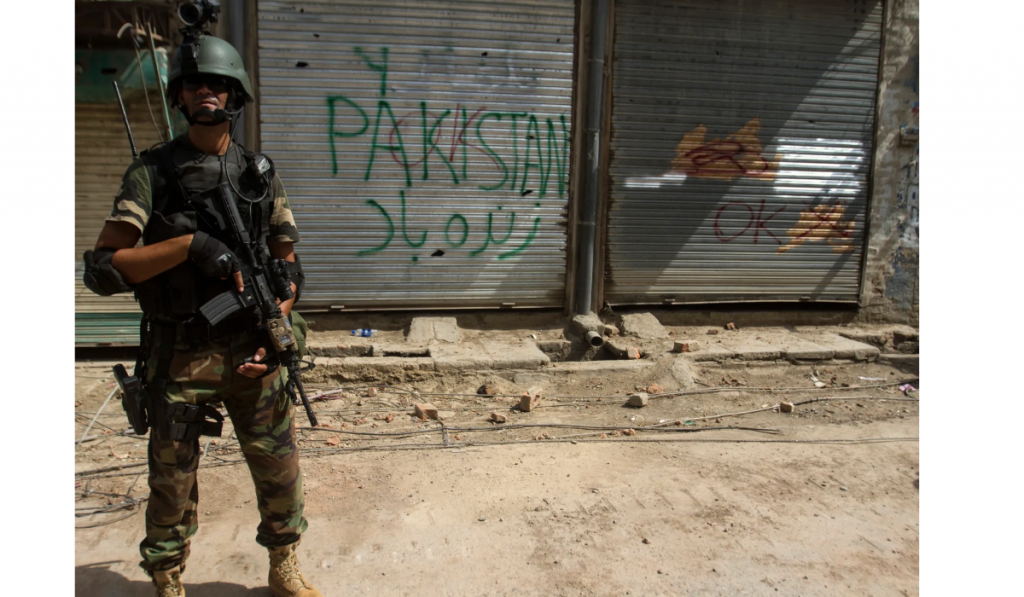
Highlighting that Khyber Pakhtunkhwa Chief Minister Sohail Afridi has been named in an antiterrorism case, linking him to the expanding list of lawmakers currently implicated under antiterrorism legislation in Pakistan, a report has detailed that political showdown continues in the country as lawmakers from the opposition are being implicated under the 1997 anti-terror law while terrorists roam freely. Pakistan is home to numerous terror groups. However, anti-terrorism legislation is systematically used in cases involving politicians. Former PM Nawaz Sharif faced charges under it in 2000, as did General Pervez Musharraf, who overthrew Sharif in a military coup a year earlier. Ironically, Pakistan’s army was behind the downfall and sentencing of Sharif. The army also meddled in the country’s 2018 elections. Former PM Imran Khan, who is currently in jail, is also facing terrorism charges. In recent years, Kashmiri, Pashtun and Baloch activists were also accused of terrorism. Since its implementation, the anti-terrorism law has been amended multiple times to expand its definition and powers of law enforcement. The law can be misused to try any individual, including lawyers, politicians and human rights defenders. Human rights lawyers Imaan Zainab Mazari-Hazir and Hadi Ali Chattha have remained in prison since January and are being tried under anti-terrorism legislation. Each of them have been sentenced to 17 years of imprisonment in total, with the longest being a 10-year sentence. Meanwhile, the United Nationsdesignated terrorists roam freely, give speeches and raise funds in Pakistan to support terror activities. Pakistan has a history of allowing terror groups and radical Islamic parties, particularly those from the Tehreek-e-Labbaik Pakistan (TLP) to operate in Pakistan. A striking example of how Pakistan’s government gave in to Islamic supremacists’ demands is when Charlie Hebdo cartoons were republished in France in 2020. Thousands of TLP supporters clashed with police on the edge of the capital, Islamabad, in protests over the display of the cartoons in France. The TLP only called off the protests, saying the Pakistani government had agreed to their demand for a boycott of French products. Later, the Pakistani government declared TLP as a terrorist group. Following Pakistan’s decision, the TLP called for a march towards Islamabad, during which clashes erupted between police and protesters. Pakistan government once again agreed to the TLP’s demands and released hundreds of its members. Pakistan’s Interior Ministry also lifted the ban on the TLP, saying the party would now be allowed to participate in mainstream politics in the “larger national interest.
Fate of Anti-terrorism Legislation in Pakistan