Last Updated: October 15, 2026
Last Updated: October 15, 2026





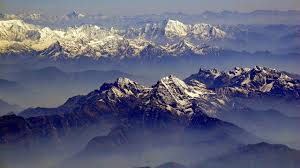
The Hindukush Himalaya (HKH) lost 12% of its overall area from 1990 to 2020, according to a new analysis by the International Centre for Integrated Mountain Development (ICIMOD). In terms of ice concentration, it lost 9 per cent of its total ice reserve at the same time.
“The rate of loss accelerated markedly after 2010, particularly in the eastern and central HKH, where smaller glaciers have been most affected. The most substantial losses occurred in these eastern and central parts of the region,” the report Changing Dynamics of Glaciers in the Hindu Kush Himalayan Region from 1990 to 2020 said.
Outside the polar regions, HKH — often called the Third Pole — holds the largest concentration of snow ice and is the source for multiple river basins, thereby playing the most critical role in sustaining river ecosystems.
More worryingly, the report observed that the Ganga and the Brahmpautra river basin “experienced the greatest total area loss over the past three decades, with reductions of approximately 21 per cent and 16 per cent, respectively”.
Rivers east of the HKH region have done far worse — The Yellow, Yangtze, and Salween river basins lost approximately 22 per cent, 23 per cent, and 33 per cent of their glacier area over the past three decades, respectively.
“The changes documented here translate directly into growing uncertainty for water availability, increasing exposure to hazards such as glacial lake outburst floods (GLOFs), avalanches, landslides, and debris flows, and mounting risks for downstream communities and infrastructure, thereby reinforcing the inextricably linked future of food, water, energy and livelihood security in the overall
region with the future of the glaciers in the high mountains,” the report warned.
The HKH, according to ICIMOD, is a high topographical region with an area of over 55,000 square kilometers and spanning across eight countries. The region is also the source of 10 large river basins. (Courtesy: DTE
Singapore: Two Singapore-registered container vessels were reportedly struck by unknown projectiles while transiting the Strait of Hormuz on...

Shimla: The Himachal Pradesh government has constituted a four-member commission to examine the reorganisation of administrative units in...

New Delhi: The Supreme Court on Wednesday listed for November 17 the appeal filed by self-styled godman Asaram...

Ranchi: Doctors in Jharkhand launched a protest on Wednesday over a slew of demands concerning their safety and...

Greater Noida: Police and Anti-Narcotics Team in Uttar Pradesh’s Greater Noida have seized ‘ganja’ worth Rs 1 crore...

New Delhi: The Enforcement Directorate (ED) has attached assets worth Rs 2,032.81 crore belonging to Reliance Power Ltd...
