Last Updated: October 21, 2026
Last Updated: October 21, 2026





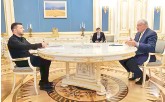
The United States Special Envoy for Ukraine, Keith Kellogg, said on Saturday that negotiations aimed at ending the war in Ukraine have reached an advanced stage, with a potential settlement now closer than ever. However, he cautioned that two major unresolved issues continue to block the conclusion of a deal. Kellogg made the remarks at the Reagan National Defense Forum, where he discussed the diplomatic efforts led under the outgoing Trump administration to push both Kyiv and Moscow toward an agreement.
Kellogg described the talks as being in what he called the final ten metres of a long and difficult diplomatic journey. According to him, this phase is often the hardest part of any negotiation, as it involves decisions that carry significant political and territorial consequences. He said the two central obstacles are the future governance of the Donbas region and the fate of the Zaporizhzhia Nuclear Power Plant, Europe’s largest, which remains under Russian occupation. He indicated that if these specific issues are resolved, the remaining components of a settlement could be finalised with relative ease.
The envoy’s comments come at a time when the war continues to inflict a heavy toll on both sides. Kellogg, a retired Lieutenant General, called the scale of casualties unprecedented for a modern regional conflict. He estimated that Russian and Ukrainian forces have together suffered more than two million casualties, including both those killed and those wounded, since the Russian invasion began in February 2022. He described these numbers as horrific and said they reflect the urgent need for a negotiated resolution that stops further loss of life.
Kellogg has been a central figure in shaping the administration’s approach to resolving the conflict. He has previously supported a strategy that places significant pressure on both parties to make concessions. This approach, which he has described as grounded in American strategic interests, includes linking US military assistance for Ukraine to its participation in peace talks. At the same time, the proposals recommend that Russia be offered targeted sanctions relief and a delay in Ukraine’s efforts to join NATO as part of a negotiated settlement.
According to Kellogg, these ideas have formed the basis of discussions with Ukrainian officials, who have shown willingness to consider several difficult concessions in the interest of halting the war. He said that while Kyiv has signalled openness on a number of major issues, the main challenge now lies with Moscow. In earlier comments, he said the diplomatic effort has brought Ukraine to a point of readiness, and that it is now up to Russia and its leadership to reciprocate. He suggested that Russian President Vladimir Putin’s next steps will determine whether the opportunity for a settlement can be secured.
Russia currently controls close to one fifth of Ukrainian territory, including the Crimean Peninsula, large sections of the Donbas, and the site of the Zaporizhzhia nuclear plant. The status of these regions poses some of the most complex and sensitive questions in the negotiations. While the Ukrainian government has consistently stated that it will not cede territory, the prolonged nature of the conflict and the scale of destruction have created an environment in which various diplomatic options are being explored behind closed doors. Kellogg did not specify what territorial arrangements are being considered, but he stressed that both sides must be prepared to accept outcomes that may be politically difficult.
The Zaporizhzhia Nuclear Power Plant remains a central concern for international observers because of the security risks associated with its continued operation under Russian military control. Kellogg indicated that any settlement must include a clear and enforceable arrangement for the safe management of the facility. He said the plant’s future has become one of the non-negotiable issues for both Ukraine and the wider international community, making it a critical element in the final phase of talks.
As the administration prepares to transition to a new envoy, Kellogg said his successor will inherit a negotiation process that is closer to resolution than at any point since the war began. However, he warned that the final decisions required to secure a ceasefire are the most delicate and will require firm commitments from both governments. Despite the challenges, Kellogg said he remains cautiously optimistic. He reiterated that the progress achieved so far reflects a rare alignment of interests, which could provide a path to stopping a conflict that has devastated communities, displaced millions and reshaped global security dynamics.
State Bank of India has confirmed that 3,897 customer records containing personal information were found on the dark...

A fire in a hut in Nonapar village of Deoria district claimed three lives, including those of a...

Amit Shah paid tribute to police personnel who died in the line of duty at the National Police...

Reduced water levels at Har Ki Pauri and other Haridwar ghats have inconvenienced pilgrims during the Upper Ganga...

Six people returning from a Dussehra Mela were seriously injured when a car hit them on National Highway...

Two people were killed and ten injured after a passenger bus met with an accident at Gala Pachound...

Aries: The day will be auspicious...