Last Updated: October 15, 2026
Last Updated: October 15, 2026





Jyoti Verma
Indian rivers have been under sustained ecological stress for decades. In the last 20 years, courts, policy regulators, and public investments have focused on testing different solutions to tackle this persistent problem, but the conditions of India’s rivers have not improved much in practice. Untreated wastewater, industrial waste, and solid waste still find their way into these crucial waterbodies, causing them serious ecological stress. The Central Pollution Control Board (CPCB) has repeatedly found many polluted sections of rivers across India. It considers a river stretch to be polluted if its Biochemical Oxygen Demand (BOD) is above 3 mg/L, which makes the water unsafe for direct contact. In its most recent 2025 report, the CPCB identified as many as 296 polluted stretches in 271 rivers.
However, there are several corrective measures that are being put into place to address this at the source. Along with the creation of required infrastructure, regulatory measures like the Polluter Pays Principle have been invoked more often. This requires those responsible for the pollution to take accountability and pay environmental compensation to enable cleanup, i.e., those who cause environmental harm must pay to fix it.
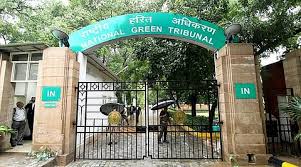
Over the past decade, the National Green Tribunal (NGT) has ordered several environmental compensations from city governments, water utilities, and private companies that fail to meet environmental standards, especially in those cases where rivers and water bodies have been acutely harmed as a consequence of their neglect. But this brings an important question forward: if compensation is being ordered and sometimes even collected, why has there been no significant improvement in river health?
How environmental compensation works
The NGT or pollution control authorities usually impose environmental compensation for ongoing problems like dumping untreated sewage into rivers, non-functional sewage plants, or illegal groundwater extraction. Unlike regular fines, environmental compensation is meant to cover the real costs of pollution and help fund cleanup and recovery.
Through its rulings, the NGT has made environmental compensation an enforcement tool and allowed CPCB to create ways to assess and collect compensation for environmental harm. CPCB is also responsible for using these funds through specific plans to protect the environment and work towards its restoration. It was in the Paryavaran Suraksha Samiti & Anr. vs Union of India & Ors. case, where the NGT directed CPCB and State Pollution Control Boards to charge compensation from those who break environmental laws. The Tribunal said that the CPCB has the authority to collect and manage these funds in a separate account and use them for environmental protection plans.
In 2019, the NGT issued guidelines for this, according to which environmental compensation funds can be used for several activities. These include research on pollution control, building infrastructure for water and air monitoring, upgrading labs, listing pollution sources, preparing project reports for cleaning up contaminated sites, sponsoring studies ordered by the NGT, and training staff. These steps provide a clear plan for using compensation funds to help manage rivers and reduce pollution.
Environmental compensation in urban river cases
The enforcement action of environmental compensation has yielded several high-profile enforcement actions, particularly in the case of urban rivers where the major sources of pollution are untreated sewage and industrial effluents. CPCB is monitoring around 445 rivers in 29 states and six Union Territories under the National Water Quality Monitoring Programme, on which the impact can be mapped. (Courtesy: DTE)
The Supreme Court is set to hear opposition leaders’ petition seeking transparency in the Election Commission’s SIR decisions,...

Congress MP Angomcha Bimol Akoijam has been summoned by Delhi Police for questioning over sexual harassment allegations involving...

President Droupadi Murmu will inaugurate the national-level SARAS Mela at Punnami Ghat in Vijayawada on October 15. The...

Ankita Bhandari’s parents were detained during an overnight protest near India Gate in Delhi and released around 5...
New Delhi: Prime Minister Narendra Modi is scheduled to interact with the Indian contingent that participated in the...
New Delhi: The Central government has defended its decision to suspend mobile internet services in parts of central...
Aries: The day will be auspicious...